In March 1943, meat went on the ration list in the United States. Steaks, roasts and chops cost precious points, and a single steak could use up half a month's allowance. Hearts, liver, kidneys and brains cost as little as one point a pound. Families with money called them poor people's food.
So two social scientists, the anthropologist Margaret Mead and the psychologist Kurt Lewin, were asked to find out why. Part of the answer was plain unfamiliarity. People didn't know what organ meats tasted like or how to cook them. The advice was gentle: print the recipes, and ask families to try them once a week, for variety. The name stuck, and organs were marketed as "variety meats". The Office of War Information made a poster for it: "Meet These V-Meats." Lewin also tested how to change what families cooked, and found that housewives who talked it through in a group and decided for themselves changed far more than those who were given a lecture.
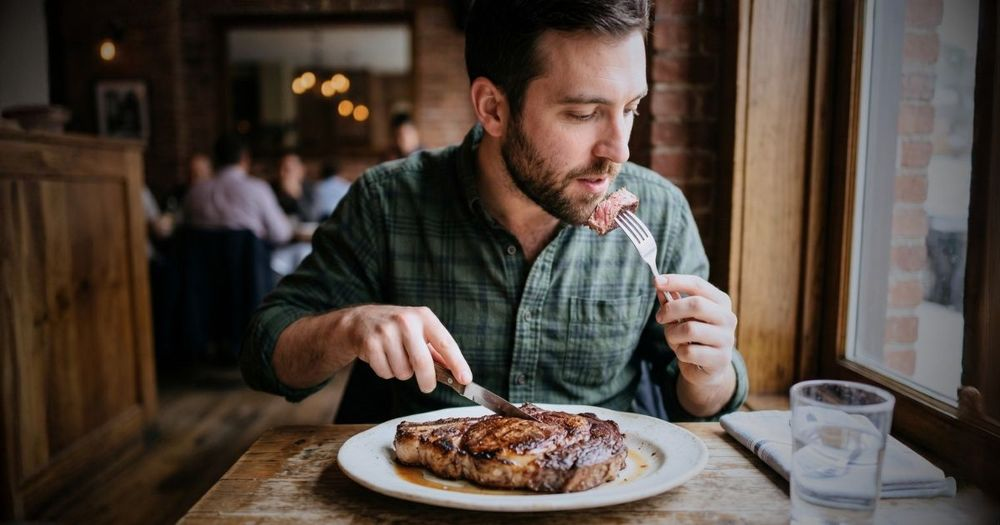
It didn't last. When the war ended the steaks came back, the posters had shown steaks, roasts and chops all along, and organs slipped off the American plate, except perhaps liver and onions. More than eighty years on, the parts of the animal that carry the most are the parts we leave at the butcher's, and the nutrients in them are sold back to us in capsules. They're also the plainest answer to what a plant-based diet promises and can't deliver.
What the series took away
This is the last article in a series about what sits in and on modern food. It began with Plant Toxins: Why Vegetables Fight Back When You Eat Them, on the lectins, oxalates and phytic acid plants use to defend themselves. The Food Additives Europe Banned and America Kept went down the ingredient list. Hidden Food Contamination: BPA, Microplastics, and Heavy Metals in Your Clean Diet followed what gets in through packaging, soil and water. How Fluoride, Chlorine, and Bromine Displace the One Mineral Your Thyroid Needs dealt with the elements that crowd iodine out of the thyroid.
Lay those lists side by side and look for fresh meat, eggs and animal fat. They barely appear, and where they do, the problem is how the meat was processed or cooked, or how big the fish was, not the food itself. A steak has no oxalate, no phytic acid, no emulsifier and no ingredient list. That doesn't make every animal food perfect, because how it was raised and where it lived still matter. It does mean that a plate built on animal foods takes away most of what the series warned about, and puts something better in its place.
Having it isn't absorbing it
A nutrient table tells you what's in a food. It doesn't tell you how much of it gets into you. Iron is the classic case. The body takes up between 15% and 35% of haem iron, the form found in meat, and less of the iron in plants, which has to be chemically changed before the gut can take it in. Zinc runs the same way. Beans and grains carry phytates that cut how much zinc the body absorbs, which is why the US government's own fact sheet says vegetarians and vegans might benefit from zinc supplements.
On a plant-based diet the same pattern holds for vitamin A, the omega-3 fats and the rest. The plant version needs converting, the conversion is unreliable, and the animal version arrives ready to use. Why Eating Well Isn't Enough Anymore works through them in turn, and Is Plant Protein as Good as Meat? does the same for protein. What neither has room for is the part of the animal where those nutrients are most concentrated.
Liver
The liver is the animal's chemical plant and its storeroom, and it keeps what it stores. It's rich in iron, copper, the B vitamins and ready-made vitamin A. It holds so much B12 that it helped lead to the vitamin's discovery.
That richness cuts both ways. A single slice of beef liver carries more than twice the safe upper daily limit for ready-made vitamin A. Eaten every day, liver can do harm, and too much vitamin A in pregnancy has been shown to harm the baby. The livers of polar bears, huskies and some seals hold even more, and by several accounts they have poisoned Arctic travellers. Liver is a food for small portions, not a daily steak. Britain's NHS warns that eating it more often than weekly risks too much vitamin A, and that liver and anything made from it, pâté included, should be avoided in pregnancy.
Heart
Heart is a muscle that never rests, and it eats like one: lean, dense and much closer to steak than to liver. It's usually cheap, too, which says more about our habits than about the heart. The organs that work hardest, heart, liver and kidney, carry the most coenzyme Q10, the molecule mitochondria use to turn food into energy. In 1957 it was isolated from the mitochondria of beef heart, where it was shown to carry electrons, and it's now sold as a supplement, though we make our own and it isn't counted as an essential nutrient. Heart gives you some with dinner. Frying knocks off between a seventh and a third of it, and heart takes well to a slow braise anyway.
Kidneys
Kidneys have been on the menu for thousands of years. Cooked kidneys were found among the dishes laid in a noblewoman's tomb at Saqqara in ancient Egypt, food for the afterlife. Of all the meats and organs, kidney and liver carry the most riboflavin, and kidney adds B12, iron, zinc and even a little vitamin C. It's lean and easy to overcook. Kidneys from small animals are best grilled or fried, those from bigger ones stewed, and steak and kidney pie is the British answer to both.
Marrow and bones
Before our ancestors were good hunters, they may have been good scavengers, and marrow was the prize left in a lion's kill. Hand-sized stones for cracking bones open go back almost two million years. In Qesem Cave in Israel, people stored bones with the marrow still inside to eat later, somewhere between 420,000 and 200,000 years ago. Neanderthals were rendering fat from marrow in large amounts as early as 125,000 years ago. By the 18th century, European diners had a silver marrow scoop made for the job.
Marrow is mostly fat, which is why it was prized. Simmered, the bones around it give up gelatin, the cooked form of collagen, and about half of that is three amino acids, glycine, proline and hydroxyproline. Late in the 17th century the French inventor Denis Papin found a way to boil gelatin out of bones, and in the early 19th century the French government saw it as cheap, easy protein for the poor of Paris. A few decades later, Peter Cooper's "Portable Gelatin", a powder that needed only water, began the line that ended in Jell-O. Pho, osso buco and pot-au-feu are all built on marrow bones, and none of them was invented as a health food.
Oysters
Oysters are the zinc food. The same US fact sheet singles them out as having very high amounts of it. They're also filter feeders, pulling up to 190 litres of water a day through their gills in ideal conditions, which is why the water they grew in matters as much as the oyster.
The easiest organ to keep in the cupboard is a tin of cod liver, packed in its own oil and spread on toast in several European countries. It's rich in vitamin D as well as vitamin A, so count it as the week's liver, not an extra.
The rest of the world kept eating them
Outside the English-speaking world, organs never left. Italy boils lampredotto, the fourth stomach of the cow, in broth with parsley sauce and chilli. Spain cooks kidneys in sherry. In the Philippines, bopis is pork lung and heart sautéed with tomatoes and chillies. In Zimbabwe, as across most of sub-Saharan Africa, little of a slaughtered animal goes to waste. Armenia's khash, made from cow's or pig's feet, was a nourishing winter food for the poor and is now a festive delicacy, which is the American story run backwards.
Sweetbreads are neither sweet nor bread. The name covers the thymus or pancreas of a calf or lamb, and the origin of the name is unclear. American cookbooks kept them after the war, too. James Beard's 1949 cookbook has sweetbread recipes, and the 1961 French classic by Julia Child and her two co-authors has six. In Iran they're grilled as street-food kebabs.
Japan calls the less prized parts horumon. The folk story says the word comes from Osaka dialect for "things to throw away". The likelier origin is the opposite: offal sold as a food rich enough to help the body make hormones.
Brain is the one organ this article leaves on the counter. Mad cow disease spread through British herds in the 1980s and 1990s because cattle were fed meat-and-bone meal made from other animals. In people, the highest risk comes from eating brain, spinal cord or gut, and normal cooking doesn't destroy the misfolded protein that carries it. Only 233 human cases have been recorded worldwide, but there's no cure, and it's one more reason how an animal was raised matters as much as which part you eat.
Making liver taste good
Liver is easy to try once and give up on, and when that happens it's usually the cooking's fault. It turns bitter and grainy when it's overdone. Slice it thin, soak it in milk or cold water to draw out some of the blood and take the edge off, then cook it fast in a hot pan with plenty of fat, so the middle stays pink. Liver and onions, the one organ dish that arguably survived America's war, works for a reason, and calf's liver with bacon works for the same one: sweetness and fat cover what the soaking left. Pâté is the gentlest start, and a little minced liver stirred into minced beef disappears completely. If even that's too much, is dried liver in a capsule, the one supplement here that is simply food.
The plate
Put it together and the plate is simple. Ruminant meat, beef, lamb and goat, at the centre, grass-fed where you can get it. Organs beside it, liver in small portions, heart and kidney as cheap extra meals. Oysters for zinc. Small oily fish such as sardines and mackerel, low enough in the food chain to carry little mercury. Eggs, the yolk above all, for choline, which the body can't make enough of and without which the liver fills with fat. And animal fat to cook it in. holds together at frying heat that tears seed oils apart. For why, see From Soap Factory to Frying Pan: How Seed Oils Got Here.
That isn't a strict carnivore plate for every reader. Tolerance to plants varies. What Happens to the Body When You Remove Most Plant Foods covers how the first weeks go and how to bring plants back if you want them.
One caution belongs beside the plate. Organs and shellfish are among the foods richest in purines, which the body breaks down into uric acid, and uric acid is what crystallises in the joint during gout. If you've had gout, bring them in slowly and see how you respond. Alcohol and sugary drinks raise uric acid too, and neither has a place on this plate anyway.
The fear that kept fat off the plate is its own story, told in What a Diet That Supports Your Health Looks Like, and the cholesterol number that usually comes with it is weighed in What a High Cholesterol Number Can and Can't Tell You. For the whole argument in one book, makes the case for well-raised meat on nutrition, health and the land.
The acid that does the absorbing
All of this assumes a stomach that makes enough acid. B12 has to be freed from food before the body can absorb it, and long-term use of acid-blocking drugs is a known cause of B12 deficiency. Acid tends to fall with age and with years on those drugs, and Why Acid Reflux Keeps Coming Back explains why heartburn can mean too little acid rather than too much. I keep drinks away from meals, so as not to water down what's there, and drink my water before or after.
The whole animal
The wartime planners had it right for the wrong reason. They wanted organs eaten because steak was scarce. The better reason was always what's in them, and it hasn't changed since 1943. Lewin's finding is worth borrowing, too: a lecture rarely changes what goes in the pan, and a decision you make yourself does. So make one. Pick an organ this week, cook it well, and judge it on the second try, not the first.
Still think vegetables are the safe part of the plate? Plant Toxins: Why Vegetables Fight Back When You Eat Them — lectins, oxalates and phytic acid, and what they do to the body that eats them.
Eating well and still short of something? Why Eating Well Isn't Enough Anymore — which nutrients a plant diet has to buy in pills, and why nose to tail needs none.
Know someone who eats the steak and leaves the rest? Send them the liver section first. The cheapest cuts at the butcher's counter are the ones carrying the most.
Tried something here, or got a question it didn't answer? Write to us at contact@allforlife.club. Your questions shape the next articles.
Disclaimer: This article is general information, not medical or nutritional advice. For advice about your own health, talk to a qualified health professional.
Affiliate Disclosure: This article contains affiliate links. As an Amazon Associate, All For Life earns from qualifying purchases, at no extra cost to you. We only link to products we would recommend without the commission.
Sources
National Park Service. Meat Rationing on the World War II Home Front. nps.gov
Lewin K (1943). Psychology and the Process of Group Living. The Journal of Social Psychology 17(1):113–131. doi.org/10.1080/00224545.1943.9712269
Wikipedia. Human iron metabolism. en.wikipedia.org
National Institutes of Health, Office of Dietary Supplements. Zinc: Fact Sheet for Consumers. ods.od.nih.gov
Wikipedia. Liver as food. en.wikipedia.org
NHS. Vitamin A. nhs.uk
Wikipedia. Coenzyme Q10. en.wikipedia.org
Wikipedia. Kidneys as food. en.wikipedia.org
Wikipedia. Bone marrow as food. en.wikipedia.org
Wikipedia. Gelatin. en.wikipedia.org
Wikipedia. Oyster. en.wikipedia.org
Wikipedia. Offal. en.wikipedia.org
Wikipedia. Sweetbread. en.wikipedia.org
Wikipedia. Bovine spongiform encephalopathy. en.wikipedia.org
Wikipedia. Choline. en.wikipedia.org
Wikipedia. Gout. en.wikipedia.org
Wikipedia. Vitamin B12 deficiency. en.wikipedia.org