At some point, the effort stops adding up. The organic produce, the filtered water, the glass containers, the ingredient lists read in supermarket aisles — all of it adds up to a way of eating that should, by any reasonable measure, produce better outcomes than it does. The explanation for the gap is usually attributed to stress, sleep, genetics, or age. The more accurate explanation is that an entire category of contamination operates through routes that food selection decisions never reach.
The gap persists because this contamination originates outside the food entirely. It comes from what the food touches — before it arrives, while it's being prepared, and from the ground it grew in regardless of how it was farmed. No label covers any of it. The question is what, specifically, and where it enters.
Five contamination routes bypass the food selection decisions entirely. For each one, there is a specific point where the actual leverage sits.

BPA, Phthalates, and the Packaging Your Food Lives In
Bisphenol A has been the subject of enough consumer awareness that many products now carry "BPA-free" labelling as a selling point. The reassurance is narrower than it appears.
BPA is an endocrine disruptor — a compound that mimics oestrogen closely enough to bind to hormone receptors, interfering with the body's own hormonal signalling. Phthalates — plasticisers added to flexible plastics including food packaging, cling wrap, and the tubing running through food processing equipment — work through the same hormonal mechanism. BPA enters from can linings, thermal receipts, and polycarbonate containers; phthalates arrive from the flexible packaging, processing lines, and printed inks on the packaging that handled the food before it reached the shelf. Both migrate into food through contact, accelerated by heat, acidity, and time — which is why canned tomatoes, a staple of clean-eating meal plans, deliver higher BPA exposure than most processed foods. The acid in the tomatoes leaches the can lining continuously from the moment of sealing. Thermal receipts — the ones printed by supermarkets, restaurants, and petrol stations — are coated in BPA that absorbs directly through the skin. Handling one after using hand sanitiser increases BPA skin absorption by as much as 185-fold, because the alcohol in the sanitiser opens the skin's absorption pathways. The safest approach is to decline printed receipts entirely and opt for digital where available.
The replacement compounds introduced as BPA-free alternatives — primarily BPS (bisphenol S) and BPF (bisphenol F) — share the same endocrine-disrupting mechanism. Research published in Environmental Health Perspectives found BPS similarly active at oestrogen receptors as BPA, and in some studies more resistant to metabolic breakdown. The "BPA-free" label addresses one specific compound while leaving the structural problem — plastic-derived endocrine disruptors migrating into food — entirely intact. A 2024 global study found 61 PFAS chemicals in food packaging that were not authorised for use in such products — meaning for the majority of the compounds present in packaging, no safety testing data exists at all. Consumers have no basis for any safety assumption about packaging that carries no specific chemical disclosure.
PFAS compounds — per- and polyfluoroalkyl substances, known as forever chemicals because they resist metabolic breakdown — enter food through non-stick cookware, microwave popcorn bags, fast food wrappers, and the water supply. They accumulate in the body's fatty tissue and organs over decades. Research published in 2026 found two specific PFAS compounds — PFNA and PFOSA — in 95% of participants in a nationally representative US study, and linked them to accelerated biological aging, particularly in men aged 50 to 64. The compounds are current replacements for earlier PFAS that were themselves banned for the same reasons — the newer versions carry the same accumulation profile as the ones they replaced.
The practical leverage here is specific — and the science confirms it works. A dietary intervention study found that switching from packaged to fresh foods with minimal plastic contact cut urinary BPA by 66% and phthalate metabolites by 53–56% within days. The highest migration scenarios are heating food in plastic containers and microwaving in plastic — both drive BPA and phthalate release at rates orders of magnitude higher than cold storage. Acidity compounds the effect: storing tomato sauce, citrus juice, or vinegar-based foods in plastic or damaged enamel cookware accelerates leaching significantly. The changes required: replace canned goods with fresh or frozen equivalents, particularly for high-acid foods. Replace non-stick cookware with cast iron, stainless steel, or carbon steel. Use glass or stainless steel for food storage and water, particularly for hot food and acidic food. Filter drinking water with a system rated for PFAS removal — standard carbon filters pass PFAS through entirely, but reverse osmosis and activated carbon block filters remove it.
A replaces the plastic containers and reheating vessels in one purchase — the most direct single swap for reducing daily BPA and phthalate exposure at home. For cookware, a is the most widely used replacement for non-stick pans — it releases no PFAS, improves with use, and lasts indefinitely.
For a documented account of exactly how much BPA, phthalates, and PFAS the average person accumulates from everyday packaging and cookware — with before-and-after blood testing — by Rick Smith and Bruce Lourie is the most specific resource available on this topic.
The packaging problem is about what leaches into food before it arrives. The microplastics problem is about what enters through water, the kitchen, and the environment — routes that run alongside the food rather than through it.
Microplastics: What the Water Brings
Microplastics are now present in every measured environment on earth — Antarctic ice, deep ocean sediment, human blood, placental tissue, and breast milk. The food supply delivers them through multiple routes simultaneously, which is why dietary changes that address some sources leave overall exposure largely unchanged.
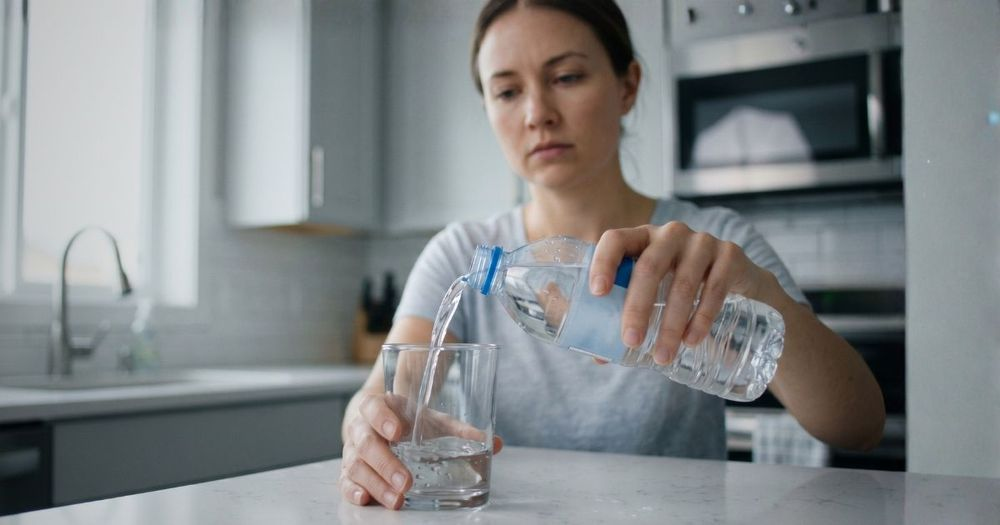
Tap water carries microplastics shed from pipes, water treatment infrastructure, and the plastic tubing used in modern plumbing systems. Bottled water delivers higher microplastic concentrations than tap water — a 2018 study by State University of New York tested 259 bottles across 11 brands and found microplastics in 93% of them, at concentrations roughly twice those found in tap water. The plastic bottle itself is a significant source, shedding particles into the water it contains, with migration increasing with heat and time. A bottle left in a warm car delivers higher microplastic concentrations than one kept refrigerated.
Sea salt, shellfish, and fish deliver microplastics absorbed directly from ocean water. Beer delivers them absorbed during the brewing process from environmental contamination. The kitchen adds a source most people never think about: plastic cutting boards. Studies show that cutting on a plastic board during normal food preparation releases significant quantities of microplastic particles directly into food — particles that bypass all the filtering and sourcing decisions made before the food reached the kitchen. Replacing plastic cutting boards with wood or bamboo eliminates this exposure route entirely.
The human gut absorbs a fraction of ingested microplastics — the smaller the particle, the more readily it crosses the gut wall into circulation. Nanoplastics, the breakdown products of larger microplastic particles, cross the gut barrier more readily still and have been detected in human liver and kidney tissue. A 2024 study in the New England Journal of Medicine found microplastics and nanoplastics in the carotid artery plaques of patients undergoing surgery — patients with detectable plastic in their plaques had a 4.5 times higher risk of heart attack, stroke, or death than those without. The mechanism is inflammatory — plastics in arterial tissue trigger immune responses that accelerate plaque formation and instability.
The leverage is partial rather than complete. A reverse osmosis filter reduces microplastic ingestion from tap water — standard pitcher filters and carbon block filters pass most microplastics through, their pore sizes too large to catch particles at the concentrations that matter. Glass or stainless steel bottles eliminate the single largest controllable source. Beyond that, the environmental ubiquity of microplastics makes total avoidance impossible — the goal is reducing the highest-concentration sources while the research on health effects continues to develop.
The cutting board swap is the simplest single change in this section. A produces no plastic particles during food preparation and outlasts plastic boards under normal use. For water, a eliminates the single largest daily microplastic source — the plastic bottle — and keeps water cold without the migration that increases with heat and time. For filtration, a countertop reverse osmosis system like the removes microplastics, PFAS, and heavy metals from tap water without installation — covering three of the contamination categories in this article simultaneously.
Microplastics arrive through water and the kitchen environment. Heavy metals take a different route — they enter through the crops themselves, accumulated in soil long before the growing season begins.

Heavy Metals: What the Soil Remembers
Heavy metals accumulate in agricultural soil from decades of industrial activity, pesticide use, and atmospheric deposition — and crops absorb them regardless of how they were grown. Organic certification governs what is applied to the soil during the current growing cycle. It says nothing about what the soil has accumulated over the previous century.
Arsenic concentrates in rice with particular efficiency because rice is grown in flooded paddies, and arsenic is highly soluble in water. The plant absorbs it through the same uptake mechanism it uses for water and silica. Research consistently shows rice contains approximately ten times more arsenic than other cereals. Brown rice carries more arsenic than white — arsenic accumulates preferentially in the outer bran layer, the same layer that makes brown rice nutritionally superior in most other respects. People eating rice daily carry significantly elevated blood arsenic levels compared to those who eat it rarely, regardless of whether the rice is conventional or organic.
Cadmium accumulates in leafy greens, root vegetables, tea, coffee, and particularly in cacao — the base ingredient for dark chocolate. The soil's cadmium content determines the crop's cadmium content. Consumer Reports tested dark chocolate products in 2022 and found cadmium above the maximum levels set by California's safe harbour threshold in 23 of 28 products tested — including products positioned as premium, organic, and single-origin. The health food positioning of dark chocolate as an antioxidant source coexists with a cadmium burden that most consumers have no awareness of. Tea and coffee — consumed daily as antioxidant and performance sources by people following exactly this kind of diet — are recurring cadmium contributors in food surveys, meaning the morning ritual that opens the day adds to the same accumulation as the evening square of dark chocolate. The honest recommendation for all three is removal or the lowest practical intake — the antioxidant case for each relies on plant compounds that carry their own separate burden beyond cadmium.
Leafy greens and root vegetables accumulate both cadmium and lead from contaminated soil — the same crops most associated with clean eating carry the heaviest soil-absorbed metal load. Spinach, kale, beetroot, carrots, and celery consistently appear in food surveys as significant cadmium and lead contributors. As daily staples they deliver a continuous low-level accumulation that organic certification leaves entirely unchanged.
Lead contamination follows similar patterns — atmospheric deposition from decades of leaded petrol, industrial emissions, and legacy paint has left detectable lead in agricultural soil across most populated regions. Root vegetables and leafy greens grown in contaminated soil absorb it directly. A 2023 report by the Clean Label Project found detectable lead in protein powders, including those made from organic plant sources — rice protein, pea protein, and hemp protein consistently test among the highest, concentrating the soil's contaminant load alongside its nutrients.
The leverage sits in removal and substitution rather than rotation. Grains as a daily staple carry arsenic accumulation that cycling through alternatives manages rather than solves — removing them entirely is the cleaner position. Leafy greens and root vegetables as daily staples deliver continuous cadmium and lead exposure that organic certification leaves entirely unchanged — the case for minimising them rests on the same contamination logic as the case against grains. Removing or minimising both categories simultaneously shifts the diet toward animal foods, which sit outside the soil accumulation cycle for arsenic, cadmium, and lead entirely. For those unwilling to remove rice entirely, cooking in a 6:1 water-to-rice ratio and draining the excess water reduces arsenic content by up to 57% — but this remains harm reduction rather than a solution. For protein, the recommendation is to switch away from plant-based powders entirely — rice, pea, and hemp protein concentrate the soil's contamination alongside its nutrients. Animal protein sources — meat, fish, eggs — sit outside that accumulation cycle entirely.
For a practical framework covering heavy metal accumulation, testing, and reduction — written by the founding president of Bastyr University — by Joseph Pizzorno ND covers the clinical side of what the dietary changes above address at the food level.
Heavy metals arrive through the soil before the growing season begins. Mycotoxins arrive after — during the storage and processing that happens between harvest and shelf.
Mycotoxins: What Forms During Storage
Mycotoxins are toxic compounds produced by mould that colonises crops during harvesting, transport, and storage. The contamination reflects storage conditions at every point along the supply chain — conditions the consumer has no visibility into and certification says nothing about.
Aflatoxins — produced primarily by Aspergillus mould on peanuts, corn, tree nuts, and some grains — carry the strongest carcinogen classification in food. IARC classifies aflatoxin B1 as Group 1: a known human carcinogen, the same category as tobacco smoke. The FDA sets maximum aflatoxin limits in food because the contamination arrives at some level in virtually every sample — the regulatory question is managing acceptable exposure rather than achieving zero. The daily exposure point for most people is peanut butter. Natural and organic peanut butter may carry higher aflatoxin loads than conventional, because conventional peanuts are typically treated with fungicides that inhibit mould growth during storage — a counterintuitive reversal of the usual organic premium.
Ochratoxin A — produced by Penicillium and Aspergillus moulds on coffee beans, wine grapes, cereals, and dried fruit — has been detected in roasted coffee across multiple countries. IARC classifies it as Group 2B. Coffee already delivers the largest single dietary dose of acrylamide. The two compounds arrive through completely different mechanisms — acrylamide from roasting chemistry, ochratoxin from pre-roast mould growth — which is why switching to a lighter roast addresses one without touching the other.
The leverage is specific where it exists. The honest recommendation for peanuts is to remove them entirely — the aflatoxin burden is inherent to the crop and its storage conditions, and no sourcing choice eliminates it. Tree nuts carry lower mould risk than peanuts, but aflatoxins are present across the nut category at varying levels, which is why keeping all nuts to minimal amounts is the more defensible position. For peanut butter specifically, choosing brands that test for and publish aflatoxin data is the most direct mitigation for those who keep it. For coffee, wet-processed or washed beans typically carry lower ochratoxin levels than dry-processed beans because the washing step removes mould-contaminated material before roasting. Beyond sourcing, storage at home matters: airtight containers, cool temperatures, and consuming nuts and grains within a reasonable timeframe reduce mould development after purchase.
Once nuts, grains, and coffee are open, storage determines whether mould develops. A set of keeps dry goods sealed from humidity and temperature fluctuation — the two conditions that accelerate mould growth after the packaging is opened.

Acrylamide and AGEs: What Cooking Creates
The final contamination category forms inside the food during cooking itself — produced by the chemical reactions that heat triggers between the food's own components, entirely independent of what the food contains or what surrounds it.
Acrylamide forms when starchy foods are cooked at high temperatures above approximately 120°C. The Maillard reaction between asparagine, an amino acid present in most plant foods, and reducing sugars produces acrylamide as a byproduct. The darker the colour, the higher the concentration: the brown crust on toast, the golden surface of roasted potatoes, the dark char on oven-cooked chips. Potatoes compound the problem further — storing them in the refrigerator triggers cold-induced sweetening, significantly increasing their sugar content, which produces substantially more acrylamide when cooked at high heat. The FDA specifically advises against refrigerating raw potatoes for this reason. The more direct recommendation is to remove potatoes from the diet entirely: they require high-heat cooking to be edible, that cooking reliably produces acrylamide, and they combine poorly with most other foods — which limits the contexts in which they appear to exactly the preparation methods that cause the problem. The National Toxicology Program classifies acrylamide as reasonably anticipated to be a human carcinogen based on animal studies; IARC classifies it as Group 2B, a possible human carcinogen. The human epidemiological evidence is genuinely contested — large cohort studies have returned inconsistent findings on cancer risk, and the animal studies used doses substantially higher than typical dietary exposure. What remains established beyond dispute: acrylamide is genotoxic in laboratory conditions, markers of exposure appear in the blood of 99.9% of the US population, and dietary intake is the primary source for non-smokers. Coffee is the single largest dietary contributor to acrylamide exposure, accounting for roughly 28% of dietary acrylamide intake in research studies — a figure most daily coffee drinkers have never seen attached to their morning cup. Acrylamide forms in the roasting of coffee beans, not during brewing, which means the acrylamide content arrives fixed — the preparation method the reader controls changes nothing. For coffee, the leverage is moderation rather than method.
Advanced glycation end products — AGEs — form when proteins and fats react with sugars under heat. They occur naturally in the body as a product of normal metabolism, but dietary AGEs from cooked animal products, particularly those prepared at high temperatures with dry heat, add significantly to the body's total AGE burden. Grilled, fried, and roasted meats carry the highest concentrations. Braised, poached, and slow-cooked preparations of the same foods carry a fraction of the concentration because water-based cooking limits the temperatures reached and reduces the glycation reaction. AGEs accumulate in tissues and are directly implicated in accelerated ageing, vascular stiffening, and the progression of diabetes and chronic kidney disease.
High-heat meat preparation produces two additional compound categories that operate through different mechanisms entirely. Heterocyclic amines form when amino acids and creatine in muscle meat react above approximately 150°C — the temperature routinely reached in frying, grilling, and broiling. More than 17 HCAs have been identified; the most abundant in cooked meat, PhIP, is classified as Group 2B. Polycyclic aromatic hydrocarbons form when fat and juices drip onto flames or hot coals and the resulting smoke deposits back onto the meat surface — the defining chemistry of outdoor grilling and smoking. Several PAHs carry Group 1 known human carcinogen classifications. The human epidemiological evidence linking both to colorectal, pancreatic, and prostate cancer is stronger than the evidence for acrylamide. Marinating meat before high-heat cooking reduces HCA formation by up to 90% in some studies — the acidic or antioxidant-rich marinade interrupts the reaction. For grilling, partially precooking meat before finishing on the grill reduces both the time at high heat and the fat drip that generates PAH smoke.
The leverage here is the highest of any category in this article because the exposure is entirely controlled by cooking method. Boiling and steaming produce negligible acrylamide and AGEs compared to frying, roasting, and grilling. Lower temperatures, shorter cooking times, and water-based methods reduce both simultaneously. A diet that rotates cooking methods — using high heat selectively rather than as the default — substantially reduces daily acrylamide and AGE intake without eliminating any specific food.
What This Category Actually Asks of You
The contamination in this article operates through a different set of variables than anything covered in food safety advice aimed at general consumers. Certification stops at the food itself. Label reading addresses ingredients, not containers. The effort already invested in eating carefully produced real results — it addressed real problems. The five routes described here ran alongside that effort the entire time, through the container rather than the contents, through the cookware rather than the ingredient, through the soil's history rather than the current season's growing practice, through the storage conditions no label records, and through the cooking chemistry that forms regardless of what the food originally was.
The practical decisions this produces are straightforward: replace non-stick cookware with cast iron or stainless steel; replace plastic cutting boards with wood or bamboo; filter water with a reverse osmosis system — standard filters pass both microplastics and PFAS through unimpeded; store food in glass rather than plastic, particularly anything hot or acidic; decline printed thermal receipts; remove grains as a daily staple or reduce them to the lowest practical amount; remove potatoes entirely; remove or minimise leafy greens and root vegetables as daily staples; switch plant-based protein powders for animal protein sources; remove peanuts entirely and keep all nuts to minimal amounts; remove or minimise dark chocolate, tea, and coffee; choose wet-processed coffee over dry-processed if keeping it; default to lower-temperature, water-based cooking as the norm rather than the exception; marinate meat before any high-heat preparation.
All of this works within what you already eat. It requires changing some of the conditions under which you eat it — the containers, the cookware, the water, the heat. That is a smaller category of change than it first appears, and one that reaches the contamination routes that careful food selection, however rigorous, leaves entirely untouched.
Why does a plant-based diet make heavy metal exposure worse, not better? Healthy Eating's Blind Spot: The Plant Toxins Your Diet Is Built Around — the defense compounds the plant builds in specifically to avoid being eaten.
Why do people who avoid processed food end up with the highest exposure to some of the most damaging compounds in the modern food supply? What Gets Added to Your Food Before It Reaches You — glyphosate, oxidised seed oils, and synthetic additives in the products health-conscious people trust most.
Do you know someone who has overhauled their diet and still gets no clear answers from their doctor? This covers the contamination routes that organic certification, label reading, and careful shopping were never designed to reach — and most people won't find it unless someone sends it to them.
Disclaimer: This article is for informational purposes only and does not constitute medical, nutritional, or dietary advice. The research cited covers documented mechanisms and compounds — individual responses vary, and any significant dietary changes should be discussed with a qualified healthcare practitioner.
Affiliate Disclosure: This article contains affiliate links. If you purchase through these links, we may earn a small commission at no additional cost to you. We only recommend books and products we consider genuinely valuable for the specific topics discussed.