
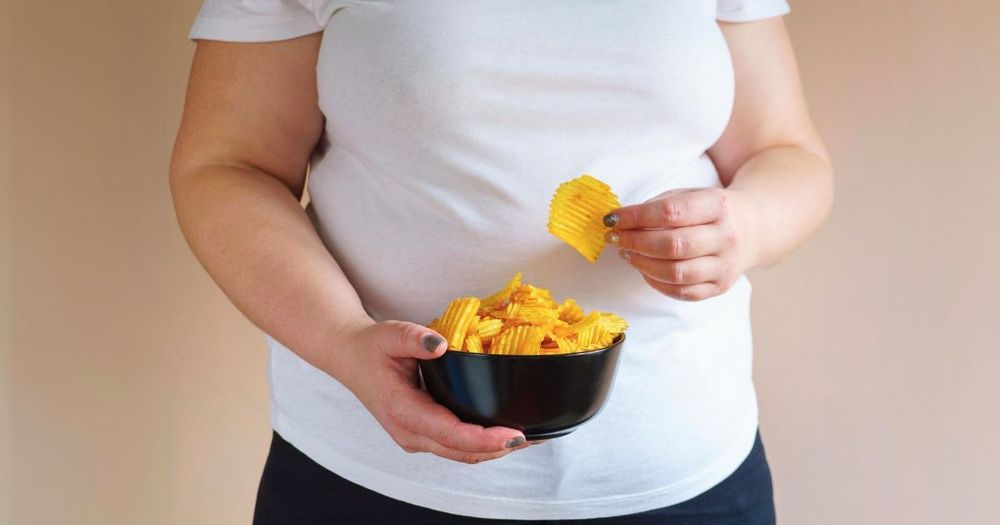
In an ideal world, your diet would give you everything your body needs. Our ancestors had little choice: they ate what they hunted, raised or traded for, and they cooked it themselves or went without.
Modern life is fast-paced, and it has changed how we eat as much as what we eat. With limited time for meal prep, fast food and takeaways became the easy answer, meals shrank into snacks, and the first meal of the day turned into a pastry eaten on the way out of the door.
It did not happen in one go. It happened one convenience at a time, and each one left the diet a little less nutritious than it looks. Each one is worth looking at, because each one can be undone.
Where fast food began
Fast food started with meat. In 1921, in Wichita, Kansas, a cook called Walter Anderson and an insurance and property man called Billy Ingram opened White Castle. It is usually credited as the world's first fast-food hamburger chain, and its small square hamburgers sold for five cents each.
Their first problem was trust. In 1906 Upton Sinclair's novel The Jungle had exposed the filth of the meat-packing industry, and Americans had grown wary of ground beef. So the two men built small white buildings with stainless steel inside, and put their staff in spotless uniforms. Everything about the place was meant to say clean. Fast food's first sales pitch was hygiene. It has been changing the subject ever since. In 2001, Eric Schlosser's drew comparisons with The Jungle for what it found in the industry, from the packing plants to the counter.
The patty was there from the first day. What changed is what came to sit around it.
What grew around the patty
The early menus were short. In 1948 the McDonald brothers rebuilt their restaurant around speed. They fired their 20 carhops, the waiters who carried food out to the cars, swapped plates and cutlery for paper wrappings and cups, and cut the menu to nine items: hamburgers, cheeseburgers, three soft drinks in one 12-ounce size, milk, coffee, potato chips and pie. "Our whole concept was based on speed, lower prices, and volume," Richard McDonald said later.
Nine items was the starting point. Researchers gathered the menus of 10 popular fast-food chains from 1986, 1991 and 2016. Over those 30 years, the number of main dishes, sides and desserts on offer went up by 226%. Main dishes grew by about 13 grams a decade, and desserts by about 24. Calories and sodium went up in all three, and desserts gained the most, about 62 calories a decade.
The burger got bigger. The bun, the sauce, the fries, the drink and the pudding grew with it, and the menu that offered them more than tripled. Somewhere along the way, the side dish stopped being on the side.
The frying fat changed too. From Soap Factory to Frying Pan: How Seed Oils Got Here has why one chain's fries left beef tallow in 1990.
Same person, different day
By 2007–2010, fast food made up about 11% of the calories Americans ate. What does it do to the rest of the day? The usual comparison sets fast-food eaters against everyone else, and that mixes up the food with the people who choose it. One survey did better. It asked 17,370 American adults and children to describe everything they ate on two separate days, and for those who ate fast food on one day and not the other, it compared the two days.
On the fast-food day, the same people took in more calories, more fat, more sodium and more fizzy drinks, and less vitamin A, vitamin C and milk.
Quick-service meals are loaded with empty calories, sugar and seed oils, and offer little in the way of nutrition. Here it shows within the same person, a day apart. Same person, same appetite, different tray.
Children showed the same pattern. In a survey of 6,212 American children and teenagers aged 4 to 19, 30% ate fast food on a typical day. Those who did took in 187 calories more than those who did not, with 26 grams more added sugar and 228 grams more sugary drinks, about two-thirds of a can. The same held for the same child on a fast-food day against a day without.
Four weeks of it
The best-known fast-food test was a film. In Super Size Me, released in 2004, Morgan Spurlock set out to eat nothing but McDonald's food for 30 days. He gained 11.1 kg, 13% of his body weight, his cholesterol rose to 230 mg/dL, and fat built up in his liver. He later disclosed that he had also been abusing alcohol, which leaves the liver part of the story an open question. Some of what the fries got blamed for may have been poured, not fried.
The film still left a mark. Six weeks after its debut, McDonald's dropped its Super Size portions, though the company said the decision had nothing to do with the film.
A film is not an experiment. In Sweden, 18 healthy young men and women, with an average age of 26, agreed to eat at least two fast-food meals a day for four weeks. They aimed to double their usual calories, and kept to fewer than 5,000 steps a day. A matched group carried on as normal.
Their weight went from 67.6 kg to 74 kg on average. The more telling number was in the blood. ALT, an enzyme that leaks out of liver cells when they are under strain, went from an average of 22 to an average peak of 97, and in 11 of the 18 it stayed above the normal limit during the experiment. The fat stored in their livers more than doubled. In the group that carried on as normal, ALT did not move.
Be fair about what was tested. This was doubled calories and a sofa, not a burger. And the extra calories did not track the rise in ALT. Neither did the fat or the protein. Carbohydrate did, and sugar most closely: the more sugar they ate in the third week, the further the enzyme climbed. The burger has been doing time for the milkshake.
Four weeks is a short time. The long version comes from 3,031 young Americans, aged 18 to 30 when they joined a study in 1985–86, who were followed for 15 years. Those who ate at fast-food restaurants more than twice a week, both at the start and at the end, gained an extra 4.5 kg compared with those who went less than once a week. Their insulin resistance, the state that comes before type 2 diabetes, rose twice as much. That is a link, not proof, but it points the same way as the Swedish test.
The kitchen went quiet
Fast food filled a gap, and the gap was in the kitchen.
When American food surveys and time-use surveys from 1965 to 2008 were put side by side, the share of the day's calories that came from food at home fell in every income group, and so did the time spent cooking. The biggest drop came between 1965 and the early 1990s. By 2007–2008, only 54% to 57% of adults did any cooking on a given day. The oven became the most expensive cupboard in the house.
The meal moved into the car as well. The first known drive-through opened in 1947, at Red's Giant Hamburg in Springfield, Missouri. By the 1970s, drive-throughs had overtaken the drive-ins where carhops brought the food out, and in 1975 McDonald's built its first, in Sierra Vista, Arizona, near an army base, for soldiers who were not allowed out of their cars off the base in their fatigues. The car and the desk are where a meal goes unnoticed.
The Hidden Ingredient That Changes Every Meal You Cook has what happens when someone does cook: homes where dinner was cooked six or seven nights a week ate fewer calories and less sugar than homes where someone cooked once a week or less. It also has what eating while distracted does to how much you eat later.
Money is the other reason given for fast food. It does not hold up well. In Seattle, 437 adults were asked how often they cooked dinner at home and what they spent on food. Those who cooked most often spent less per person, about $273 a month against $330, and they spent no more on food for the home. Those who ate out most spent more, $364 against $261. It is one survey in one city, but the takeaway was not the bargain.
Grazing
The other change was in how often we eat. Meals get skipped, snacks low in essential nutrients fill the gaps, and the day turns into one long nibble. Grazing suits cows. They have four stomach chambers and no snack aisle.
A snack rarely brings what a meal would have. It is usually something sweet or starchy from a packet, and it does not stop the next meal from happening. The Hidden Power in Every Bite, linked below, has why soft, sweet food leaves you hungry again so soon.
Why Snacking and Small Meals Can Sabotage Your Weight Loss has how far the snacking spread in thirty years, and why two or three meals without snacks do better than six.
Breakfast, honestly
Breakfast, often called the day's most important meal, is easily replaced by a sugary pastry or skipped altogether. Both get blamed. Only one deserves it.
The "most important meal" has been put to the test. In Bath, 33 lean adults were randomly assigned to six weeks of a big breakfast every morning, or nothing to eat until lunch. The breakfast did not speed up their metabolism: their resting energy use stayed the same. They ate about 540 calories a day more, and they also moved more, burning roughly 440 more through activity. Their weight and body fat came out the same either way. The breakfast group did have steadier blood sugar in the afternoon and evening.
So breakfast is not magic, and skipping it is not the harm. The pastry is. A croissant is a dessert that got up early. If you eat in the morning, make it eggs and meat, not something sweet out of a packet.
10 Quick and Healthy Breakfast Ideas for Energy That Lasts has where the "most important meal" came from, and ten breakfasts worth eating. The Hidden Science of Sugar Cravings has what a protein first meal does to the cravings that follow.
Fast, without the fast food
The answer to fast food is not slow food. It is food you cooked earlier. The drive-through cannot beat a fridge that is already full.
Cook ahead. Roast a tray of chicken thighs, cook a pot of mince, or boil a dozen eggs, and pack them into . The fridge now holds the next few quick meals. Warm them in a pan or the oven.
Keep a short list. Eggs fried in butter, a steak, a piece of fish under the grill. Each is on the plate in about ten minutes.
Take lunch with you. Warm last night's meat in the morning and pack it in an . It is still warm at lunch, and it skips the queue.
When you do eat out, order the meat. The patty is the part worth eating. Drop the bun, the fries and the fizzy drink, and save your water for later, away from the meal. Fast-food chains fry in seed oil, so skip what comes out of the fryer. PFAS Forever Chemicals, linked below, has what was found in the wrappers. Sit-down restaurants are not much different, because their kitchens use seed oils for nearly all cooking. Where Seed Oils Are Hiding in Your Food — and How to Read Labels Around Them has how to order around them.
Feed the children the same way. The same container of warm meat works for a school lunch, and water between meals works better than juice.
Make the first meal real. Eggs and bacon, or the chicken thighs from the fridge. Not a pastry.
How to Detox From Processed Foods has how to clear the kitchen of the rest, and what to restock it with.
Fast can be eggs in a pan
Modern life has made eating well more complicated, but it has not made it impossible. The fast part was never the problem. Eggs in a pan are fast food too. The trouble is what came along with it: the bigger sides, the sugar, the frying oil, the snacking, the quiet kitchen and the pastry in place of a meal.
This week, cook enough meat on one evening to cover the next two lunches.
Hungry again an hour after eating? The Hidden Power in Every Bite: Why Some Foods Fill You Up — protein and fat as the hunger switches, why ultra-processed food keeps you eating, and what a filling plate looks like.
Wondering what is in the wrapper? PFAS Forever Chemicals: Where They Hide — why they stay in the body for years, what the companies knew, where they hide in water, food and the home, and how to get them out.
Know someone who lives on the drive-through? Send them this, and cook them lunch.
Disclaimer: This article is general information. For advice about your own health, talk to a qualified health professional.
Affiliate Disclosure: This article contains affiliate links. As an Amazon Associate, All For Life earns from qualifying purchases, at no extra cost to you. We only link to products we would recommend without the commission.
Sources
Wikipedia. White Castle (restaurant). en.wikipedia.org
Wikipedia. Fast Food Nation. en.wikipedia.org
Wikipedia. McDonald's. en.wikipedia.org
McCrory MA, Harbaugh AG, Appeadu S, Roberts SB (2019). Fast-Food Offerings in the United States in 1986, 1991, and 2016 Show Large Increases in Food Variety, Portion Size, Dietary Energy, and Selected Micronutrients. Journal of the Academy of Nutrition and Dietetics 119(6):923–933. doi.org/10.1016/j.jand.2018.12.004
Paeratakul S, Ferdinand DP, Champagne CM, et al. (2003). Fast-food consumption among US adults and children: Dietary and nutrient intake profile. Journal of the American Dietetic Association 103(10):1332–1338. doi.org/10.1016/s0002-8223(03)01086-1
Bowman SA, Gortmaker SL, Ebbeling CB, et al. (2004). Effects of Fast-Food Consumption on Energy Intake and Diet Quality Among Children in a National Household Survey. Pediatrics 113(1):112–118. doi.org/10.1542/peds.113.1.112
Wikipedia. Super Size Me. en.wikipedia.org
Kechagias S, Ernersson Å, Dahlqvist O, et al. (2008). Fast-food-based hyper-alimentation can induce rapid and profound elevation of serum alanine aminotransferase in healthy subjects. Gut 57(5):649–654. doi.org/10.1136/gut.2007.131797
Pereira MA, Kartashov AI, Ebbeling CB, et al. (2005). Fast-food habits, weight gain, and insulin resistance (the CARDIA study): 15-year prospective analysis. The Lancet 365(9453):36–42. doi.org/10.1016/S0140-6736(04)17663-0
Smith LP, Ng SW, Popkin BM (2013). Trends in US home food preparation and consumption: analysis of national nutrition surveys and time use studies from 1965–1966 to 2007–2008. Nutrition Journal 12(1):45. doi.org/10.1186/1475-2891-12-45
Wikipedia. Drive-through. en.wikipedia.org
Tiwari A, Aggarwal A, Tang W, Drewnowski A (2017). Cooking at Home: A Strategy to Comply With U.S. Dietary Guidelines at No Extra Cost. American Journal of Preventive Medicine 52(5):616–624. doi.org/10.1016/j.amepre.2017.01.017
Betts JA, Richardson JD, Chowdhury EA, et al. (2014). The causal role of breakfast in energy balance and health: a randomized controlled trial in lean adults. The American Journal of Clinical Nutrition 100(2):539–547. doi.org/10.3945/ajcn.114.083402