
Do you really know what's in the food on your plate? It is a fair question, and it is an old one. People have been asking it for at least 200 years, usually after someone had been poisoned.
The food we eat plays a critical role in how we feel, function and age, and for as long as food has been sold by strangers, some of those strangers have been stretching it, colouring it and preserving it with whatever was cheap. A good share of the food rules we have today exist because someone made a scandal of it first.
That story is worth knowing, because it tells you who the rules protect, and how much of the job is still left to you.
Death in the pot
The trouble is older than any law. Romans boiled grape juice down in lead pots to make syrups for their food, and sugar of lead went into wine to sweeten it, even though the engineer Vitruvius warned that lead was harmful. The idea that this brought down Rome is thoroughly disputed, but the sweetness was real, and so was the lead.
In 1820 a German chemist living in London, Friedrich Accum, published A Treatise on Adulterations of Food and Culinary Poisons. The line that has stayed with it comes from the Bible: "There is death in the pot."
Food was moving out of the farm and the kitchen and into factories, new chemicals were arriving, and no law said what could be done with them. Accum listed the tricks. There was lead in Spanish olive oil, from the containers used to clear it. Bright green sweets sold on London's streets got their colour from copper. Vinegar was sharpened with sulphuric acid. Dried peas were ground into coffee.
Beer got special attention. Porter, London's favourite, was among the most adulterated drinks of all, he wrote, and it could be mixed with molasses, honey, vitriol, pepper and even opium. Fishberries, the source of a poisonous stimulant, went in for the extra kick. A pint of porter came with a small pharmacy in it.
He put the moral case in one sentence. "The man who robs a fellow subject of a few shillings on the high-way, is sentenced to death; while he who distributes a slow poison to a whole community, escapes punishment."
A thousand copies sold within a month. He also made enemies among London's food makers, and after a lawsuit he left England and spent the rest of his life teaching in Berlin. The law stayed as it was. The book sold well. The vinegar stayed sharp.
Humbug Billy
Thirty-eight years later, the bill came due in Bradford.
William Hardaker, known locally as Humbug Billy, sold sweets from a market stall. His supplier, Joseph Neal, made peppermint lozenges, and to save money he replaced some of the sugar with powdered gypsum, a chalky mineral known in the trade as "daft". Sugar cost 6½d a pound. Daft cost ½d. That saving was the whole idea.
In October 1858 Neal ran out and sent his lodger to a druggist's shop for more. The druggist was ill in bed. His assistant, a few weeks into the job, went up to the attic and scooped twelve pounds of powder from a cask. There were two identical casks. The other one held daft. The one he chose held arsenic, and it was labelled only on the base.
The man who made the lozenges was sick while he worked. Neal, who tasted them, was sick too. Neither connected it to the sweets. Hardaker thought they looked darker than usual, and he got a discount for it. He ate some and fell ill, and his assistant kept the stall open until it closed for the night.
About 20 people died, and over 200 were poisoned. The first deaths were put down to cholera. All three men charged were acquitted, because the judge decided it was an accident and no one had a case to answer.
The evidence was already on the table. In the early 1850s Arthur Hill Hassall had taken a microscope to food, and his reports had run in The Lancet. Bradford supplied the deaths, and Hassall the proof.
Parliament passed the Adulteration of Food or Drink Act in 1860. It was criticised as too vague and its penalties as too low to deter anyone. But it was a start, and it had taken twenty deaths and forty years since Accum to get it. Bee Wilson's follows the long history of food fraud from there.
The Poison Squad
America came to the fight later, and it brought a stranger method.
Harvey Wiley was the chief chemist at the US Department of Agriculture. He had spent years documenting what was going into American food: formaldehyde in milk, known as "embalmed milk", and copper sulphate to keep tinned beans green. Little changed. So in 1902 he got $5,000 from the government and tried something else. He recruited 12 volunteers, offered them free meals and $5 a month, and fed them the preservatives. It remains one of the odder job offers in government history.
Borax came first, the stuff used to firm up meat that was starting to go off. Some of the men got it in their meat and dairy, and some did not, so that the two could be compared. Later, in 1905, it was salicylic acid. The men became known as the Poison Squad, and the country followed along. Deborah Blum's tells the whole story.
The food makers fought back, though not all of them. Heinz changed its ketchup in 1902, replacing chemical preservatives with vinegar, and it joined Wiley's push for clean food. Ketchup led the way. Few would have bet on it.
Then a novel finished the job. Why Your Diet Isn't as Nutritious as You Think has what The Jungle did to the public's trust in ground beef. In 1906 the United States passed the Pure Food and Drug Act.
Wiley then used it against caffeine. The Hidden Cost of Your Daily Sugary Drink has the forty barrels and twenty kegs of Coca-Cola syrup he went after, and the fight that reached the Supreme Court.
The fight is not over
That act also made a dye called Red No. 3 legal in American food.
By 1990, the US regulator had banned it from cosmetics, from drugs applied to the skin and from some foods, after very high doses caused thyroid tumours in rats. It stayed in the rest: sweets, ice pops, bright red cherries and cake-decorating gels. Only in January 2025 did the regulator ban it from all food, and the ban is not enforced until 2027. A dye judged unfit for your lips went on being fit for your children's sweets for another 35 years.
Europe moved three decades sooner. Since 1994 it has allowed the dye only in processed cherries, pet food and, in small amounts, toothpaste.
Be fair about the risk. The doses in the rats were enormous, and Canada's regulator said in 2025 that the dye poses no health risk at the levels it allows. The point is the delay, not the dye.
The rules are also looser than they sound. Why Processed Food Is Designed to Work Against You has how, under a rule created in 1958, American food companies can declare their own new ingredients safe.
And poison for profit is not only history. In China in 2008, melamine was added to watered-down milk because it fooled the protein test. 300,000 children were affected, 54,000 went to hospital, and six babies died.
What's on the plate now
Think about the last time you grabbed a pre-packaged snack, thinking it was a quick and harmless option. The worries of today are quieter than arsenic. They are small amounts, eaten for years, and mostly they are legal.
This site has the current list, one article at a time. What Processed Food Is Really Made Of, linked below, has the additives, and the colours that made children more hyperactive in a controlled test. Hidden Toxins in Your Diet, also linked below, has which amounts matter and which you can ignore, from rice and arsenic to charred meat.
Hidden Food Contamination: BPA, Microplastics, and Heavy Metals in Your Clean Diet has what gets in from the packaging and the pan. PFAS Forever Chemicals: Where They Hide has the ones your body keeps for years. Why Your Fruits and Vegetables Deliver Less Than You Think has the pesticides, and how fast a change of diet shows up in your urine.
Beyond your plate
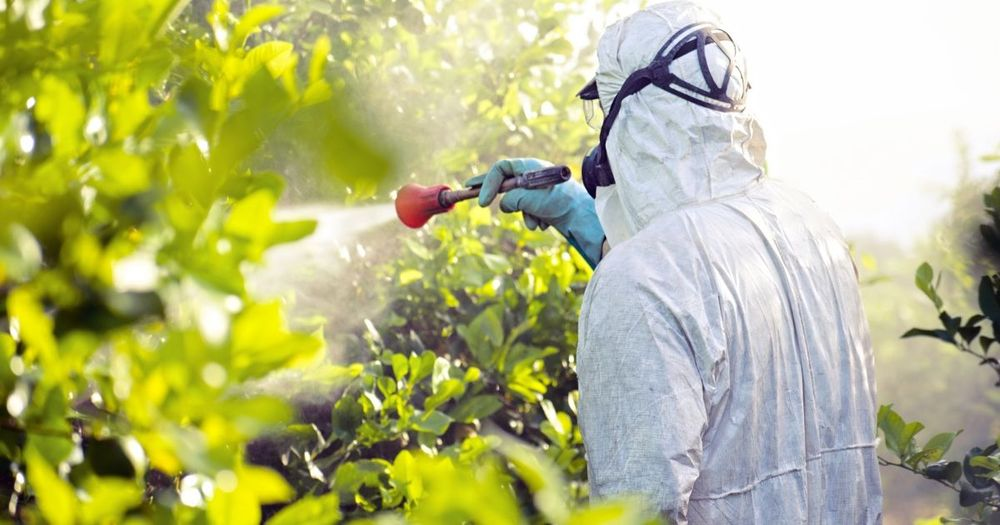
The damage goes beyond our health. Chemical farm runoff pollutes our waterways, feeding algae that use up the oxygen when they die and rot. The result is a dead zone, a stretch of water where sea life cannot survive. They are found in the Baltic Sea, the northern Gulf of Mexico and Chesapeake Bay, and by 2004 the United Nations had counted 146 of them. What runs off the field does not stop at the fence.
The pesticides had their own Accum. In 1962 Rachel Carson published Silent Spring, on the harm done by DDT. Chemical companies fought it fiercely. It swayed the public anyway, led to the US ban on DDT in farming, and helped create the Environmental Protection Agency.
Five steps
Buy food, not products. The older a food's recipe, and the shorter its label, the fewer chances anyone has had to improve it. Fresh meat needs no label at all, though the borax is a reminder to buy it from someone you can ask. Then cook it yourself. The Hidden Ingredient That Changes Every Meal You Cook has why: when you cook, you choose what goes in.
Put meat, fish and eggs first. A plate built on them has little room for what comes in packets, and nothing on it needs a colour, a preservative or a flavour enhancer.
Choose organic animal products when you can. are the easy place to start. If the budget is short, put it there, and on the plants you eat most often.
Buy closer to the source. Visit your local farmers' market, or join a farm box scheme. You can ask the person who raised the food how it was raised, which is more than any label lets you do. A label cannot look you in the eye.
Swap one thing a week. You don't need to make drastic changes overnight. Begin by swapping one product a week for a cleaner version. Over a year, that is most of the shop. Accum would have settled for that.
Take control of what's on your plate
We all deserve food that nourishes our bodies rather than harms them. The rules arrived late every time: after Accum's book, after Bradford, after the Poison Squad, 35 years after the cosmetics ban. They will go on arriving late. You don't have to wait for them.
Tonight, take one packet from your cupboard and read the label. If you can't picture what an ingredient is, put it on your list for this week's swap. What Processed Food Is Really Made Of, linked below, has how to read the list.
Not sure which amounts matter? Hidden Toxins in Your Diet: What's Really in Your Healthy Food — why the amount decides, rice and arsenic, big fish and mercury, pesticides on produce, and the ones you can ignore.
Want to read the label properly? What Processed Food Is Really Made Of — seed oils, emulsifiers, hidden sugars, preservatives and colours, and how to read an ingredient list for them.
Know someone who never reads a label? Send them this, and hand them the packet.
Disclaimer: This article is general information. For advice about your own health, talk to a qualified health professional.
Affiliate Disclosure: This article contains affiliate links. As an Amazon Associate, All For Life earns from qualifying purchases, at no extra cost to you. We only link to products we would recommend without the commission.
Sources
Wikipedia. Lead poisoning. en.wikipedia.org
Wikipedia. Friedrich Accum. en.wikipedia.org
Wikipedia. Anamirta cocculus. en.wikipedia.org
Wikipedia. 1858 Bradford sweets poisoning. en.wikipedia.org
Wikipedia. Arthur Hill Hassall. en.wikipedia.org
Wikipedia. Harvey W. Wiley. en.wikipedia.org
Wikipedia. United States v. Forty Barrels and Twenty Kegs of Coca-Cola. en.wikipedia.org
Wikipedia. Erythrosine. en.wikipedia.org
Wikipedia. Generally recognized as safe. en.wikipedia.org
Wikipedia. 2008 Chinese milk scandal. en.wikipedia.org
Wikipedia. Dead zone (ecology). en.wikipedia.org
Wikipedia. Silent Spring. en.wikipedia.org