
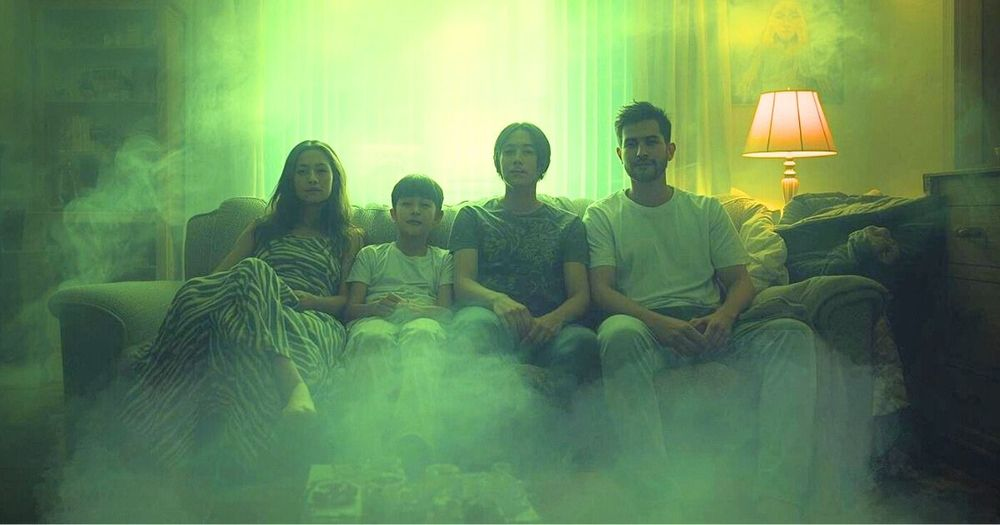
In 1984, an engineer named Stanley Watras set off the radiation alarms at the Limerick nuclear power plant in Pennsylvania. It was a strange thing to happen, because the reactor had never been fuelled. He wasn't picking up radiation at work. He was bringing it in with him, from home.
His basement turned out to be full of radon, a natural radioactive gas that seeps up from the ground. He was told that living there was the equivalent of smoking 135 packs of cigarettes a day. Even a determined smoker would struggle to find the time.
You've probably read a lot about the toxins in your home, in the sofa, the shower curtain, the sheets, the phone case. Almost none of those lists mention radon. That's the trouble with most of them. They give you forty things to fear, all in the same tone of voice, so you end up replacing your towels while something that could kill you goes untested.
So here's the guide the other way round. It starts with what in your home is known to do real harm, moves on to what's worth reducing if you can, and ends with what you can stop worrying about.
The ones that can kill you
Radon
You can't see it, smell it or taste it. It rises from the rock and soil beneath a building, and it collects indoors. The World Health Organization estimates that radon causes between 3% and 14% of a country's lung cancers, depending on how much radon there is and how many people smoke. The US Environmental Protection Agency puts it at about 21,000 deaths a year there, about 2,900 of them in people who never smoked.
The danger was known long before it had a name. In 1530, Paracelsus described a wasting disease in miners, and Georg Agricola recommended ventilating the mines to prevent it. In 1879, it was identified as lung cancer in miners at Schneeberg in Germany. Your basement isn't a mine, but it's the same gas.
In a pooled analysis of 13 European studies, lung cancer risk rose by 16% for every 100 Bq/m³ of radon in the usual home air, with no sign of a safe level below which it stopped. For lifelong non-smokers, the risk of lung cancer by age 75 went from about 0.4% with no radon to 0.7% at a high level. For smokers it went from about 10% to 16%. So if you smoke, this one is far more dangerous, and it's one more good reason to stop.
The fix is cheap. Test, because nothing else will tell you. In the US, a lab kit such as this costs little. Elsewhere, look for your national radon service. Levels vary between neighbouring houses, so your neighbour's result won't help.
A small detector left in place is all it takes. The World Health Organization prefers at least three months, because levels change from day to day and even hour to hour. A short test, like that kit, is useful when time is tight, such as a house sale, or as a first look. If yours is high, sealing and ventilating the foundations works, and it isn't a job you need to do in a panic.
Carbon monoxide
This one is also invisible and has no smell, and it comes from anything burning fuel badly: a boiler, a gas fire, a blocked flue, a generator, a car in an attached garage. In the US alone, it kills more than 400 people a year in non-fire cases, and sends more than 20,000 to emergency rooms.
The early symptoms are headache, dizziness and nausea, which feel like a cold or a bad day.
It can do stranger things too. In 1921, an ophthalmology journal described a family who heard footsteps and felt unseen presences in their new home. The children grew pale, and their plants died. The husband's brother suspected the furnace. It was found to be filling the house with carbon monoxide, and once it was fixed, the "ghosts" went away. Few hauntings are fixed by a heating engineer.
Buy an alarm, such as this . Have your boiler and chimney looked at. Never run a generator or a car in or near the house. If your garage joins the house, keep the connecting door shut, and never leave a car running in there, even with the big door open. Store fuel and solvents out there too, and not in the house.
If it sounds, don't go looking for the cause. Get everyone out into fresh air, and call the emergency services from outside. Don't go back in until it has been checked. And if headaches come on at home and ease when you've been away, take that seriously, and get your boiler looked at.
Fire and smoke
The risk of dying in a house fire is cut in half with a working smoke alarm. That's the best deal in this article, and the easiest thing here to do. Check that yours works. And stop taking the battery out when you burn the toast.
While we're on smoke, the one change that beats everything in this article is not smoking indoors, or at all. How to Shield Yourself from Everyday Environmental Toxins, linked below, has the wider picture.
The ones that do slow, proven harm
Lead
The World Health Organization says that no level of lead exposure is known to be without harm, and young children are the most vulnerable. If your home was built before lead paint was phased out, the risk comes from old paint as it flakes and turns to dust, especially around windows and doors and during renovation. Lead has been banned from household paint in the US since 1978, and the UK and EU have their own restrictions. So the date your house was built is your first clue, as old paint often sits under the new layers. Test before you sand.
If you suspect old paint, wipe sills and floors with a damp cloth, as a dry duster only moves the dust around. Taking your shoes off at the door also helps keep what's outside from coming in.
Old pipes and solder can add lead to your water too, and What's in Your Tap Water — and Why a Filter Under the Sink Solves Less Than You Think has why you should test first and filter afterwards. For the water, there's a lab test such as this .
Asbestos
The World Health Organization says that all forms of asbestos cause cancer. It was widely used in building materials, so it may still be in older homes, in roof tiles, insulation and textured coatings. It's mostly a danger when it's disturbed, as the fibres get into the air, and people working on old buildings can be at risk decades after it went in. So before you drill, sand or knock through anything in an old house, find out what it's made of, and leave any removal to a licensed specialist.
Damp and mould
Across pooled studies, damp and mouldy homes went with about 30 to 50% more respiratory and asthma problems. That's a real effect. It's also a long way from the stories of "toxic mould" and families walking away with only the clothes on their backs. The vast majority of moulds aren't hazardous, and allergic reactions are the most common problem.
So treat it as a water problem. Natural Ways to Cope with Allergies has why wiping the patch isn't the fix. Find the leak, ventilate the bathroom, keep humidity at about 30 to 50%, and leave a gap behind the wardrobe on a cold wall.
The ones worth reducing
Cleaning sprays
In a European study following adults over 20 years, women who did the cleaning at home, and those who cleaned for a living, lost lung function faster than women who did neither. It went with both sprays and other cleaning products. It's a link, and the same wasn't seen in men, but it's a reason to use less.
You don't need most of them. Vinegar and baking soda and a cloth will do most of the kitchen and bathroom, and hot water and soap do a lot more than the labels suggest. Pour rather than spray where you can, and open a window. And never mix products. Bleach with ammonia, or bleach with an acid such as vinegar, makes toxic gas, so keep bleach away from everything else.
Gas cooking
How to Make Your Home Smell Fresh Without Air Fresheners, linked below, has the figures: children in homes with gas cooking had 32% higher odds of asthma. Vent the hob outdoors with a proper extractor, and open a window. You don't need to rip out the hob.
New things
New furniture, carpet, paint and mattresses all give off chemicals, formaldehyde among them, and so does a new car. That smell is real, and it's strongest at the start.
So do what's obvious. Let a new item air in a well-ventilated room before you live with it. Paint with the windows open and sleep elsewhere if you can. Open the car windows for the first few weeks. Is an Organic Mattress Worth It? Blame the Cigarette has how flame retardants got into foam in the first place.
If you're replacing something anyway, start with the bedroom, because you spend more unbroken hours there than anywhere else. But there's no need to throw out a sofa that's already done most of its off-gassing.
Hot water
Legionnaires' disease is a serious pneumonia that you catch by breathing in mist from contaminated water, and it can grow in hot water tanks. The World Health Organization's advice is to keep hot water above 50°C, which means at least 60°C leaving the heater, and to run taps you don't use regularly. Take care with scalding if you have small children or older people at home.
Dry cleaning
Traditional dry cleaning uses perchloroethylene. Take the plastic off, and let clothes air outside or in a spare room before they go in the bedroom wardrobe.
Pests
Seal the cracks, fix the screens, and take away the food. That does more than any spray. If you do use boric acid for ants or roaches, keep it well away from children and pets, because "natural" doesn't mean harmless.
Keep every cleaner, pest product and bottle of essential oil up high or locked away, and in its original container. Small children and pets are on the floor, and they put things in their mouths.
The air in general
Get a breeze through the house for ten minutes, with a window open at each end. It's free, it works on nearly everything in this section, and it's the first thing to try before you buy an air purifier.
Covered elsewhere
Each of these has its own article, so briefly. Forever chemicals and non-stick pans: PFAS Forever Chemicals: Where They Hide. Skin care and fragrance: Hidden Toxins in Your Personal Care Products—And How to Avoid Them. What's in your food and its packaging: Hidden Food Contamination: BPA, Microplastics, and Heavy Metals in Your Clean Diet. As for plastic and heat, store hot food in glass or steel.
What you can stop worrying about
Houseplants as air cleaners. Keep them because they're nice. How to Make Your Home Smell Fresh Without Air Fresheners has how many you'd need to do what an open window does: anywhere from 10 to 1,000 per square metre of floor. That isn't a home, it's a jungle.
EMF. Why You Haven't Slept Your Best Night Yet (And How to Change That Tonight) has the 31 experiments on people who felt sensitive to Wi-Fi and phones. They mostly found nothing, so you don't need the router on a timer or a canopy over the bed.
The home tests. A white sock on a fan shows dust and nothing else. A candle flame shows draughts, not toxins. A glass of water can't reveal lead, and neither can the smell of warm plastic. If you want to know, use a proper test.
Flushing it out. You'll read that drinking more water flushes out the chemicals. What a Liver Detox Cannot Do That Your Liver Already Does has what your body does instead.
Everything being toxic at once. You'll also read that fatigue, brain fog and congestion mean that your house is slowly poisoning you. It can happen, with carbon monoxide or damp, which is why those come first. But these symptoms have dozens of causes, so don't start with your towels.
What to do, in order
This week. Buy a carbon monoxide alarm, check your smoke alarms, and open the windows.
This month. Test for radon. If your home is old, test for lead before you do any sanding, and test your water.
When you can. Fix any damp, use fewer sprays, and vent the hob outside.
When you're replacing things anyway. Choose the simpler option, and air it out.
If you rent, most of this still applies. Alarms and a radon kit are yours to buy, and you can ask your landlord for the boiler's service record. Report any damp in writing, and ask for a fix to the cause and not a coat of paint.
If you're moving, ask before you sign. How old is the paint? Has anyone tested for radon? When was the boiler last serviced? Is there any known asbestos, and has there been any damp? A seller who can't answer has told you what to test first.
Your home is mostly fine, and a few things in it matter a lot. Today, go and press the test button on your smoke alarm, and then order a radon kit.
Want the wider list of everyday toxins? How to Shield Yourself from Everyday Environmental Toxins — food, skin, receipts, air and water, and what to skip.
Want cleaner air without a gadget? How to Make Your Home Smell Fresh Without Air Fresheners — what's in the can, the open window, candles and gas hobs.
Know someone replacing their towels and ignoring their boiler? Send them this, and press their smoke alarm.
Disclaimer: This article is general information. For advice about your own health, talk to a qualified health professional. If a carbon monoxide or smoke alarm sounds, get everyone out and call the emergency services.
Affiliate Disclosure: This article contains affiliate links. As an Amazon Associate, All For Life earns from qualifying purchases, at no extra cost to you. We only link to products we would recommend without the commission.
Sources
Wikipedia. Radon. en.wikipedia.org
World Health Organization. Radon. who.int
US Environmental Protection Agency. Health Risk of Radon. epa.gov
Darby S, Hill D, Auvinen A, et al. (2005). Radon in homes and risk of lung cancer: collaborative analysis of individual data from 13 European case-control studies. BMJ 330(7485):223. doi.org/10.1136/bmj.38308.477650.63
Wikipedia. Carbon monoxide poisoning. en.wikipedia.org
UL Standards & Engagement. Ghosts, Ghouls, and Faulty Furnaces: These Things Go Bump in the Night. ulse.org
Today I Found Out. A Real Life Ghost Story. todayifoundout.com
Wikipedia. Smoke detector. en.wikipedia.org
World Health Organization. Lead poisoning. who.int
Wikipedia. Lead paint. en.wikipedia.org
World Health Organization. Asbestos. who.int
Wikipedia. Asbestos. en.wikipedia.org
Fisk WJ, Lei-Gomez Q, Mendell MJ (2007). Meta-analyses of the associations of respiratory health effects with dampness and mold in homes. Indoor Air 17(4):284–296. doi.org/10.1111/j.1600-0668.2007.00475.x
Wikipedia. Mold and human health. en.wikipedia.org
Svanes Ø, Bertelsen RJ, Lygre SHL, et al. (2018). Cleaning at Home and at Work in Relation to Lung Function Decline and Airway Obstruction. American Journal of Respiratory and Critical Care Medicine 197(9):1157–1163. doi.org/10.1164/rccm.201706-1311OC
Lin W, Brunekreef B, Gehring U (2013). Meta-analysis of the effects of indoor nitrogen dioxide and gas cooking on asthma and wheeze in children. International Journal of Epidemiology 42(6):1724–1737. doi.org/10.1093/ije/dyt150
World Health Organization. Legionellosis. who.int
Wikipedia. Tetrachloroethylene. en.wikipedia.org
Wikipedia. Boric acid. en.wikipedia.org
Cummings BE, Waring MS (2020). Potted plants do not improve indoor air quality: a review and analysis of reported VOC removal efficiencies. Journal of Exposure Science & Environmental Epidemiology 30(2):253–261. doi.org/10.1038/s41370-019-0175-9
Rubin GJ, Das Munshi J, Wessely S (2005). Electromagnetic hypersensitivity: a systematic review of provocation studies. Psychosomatic Medicine 67(2):224–232. doi.org/10.1097/01.psy.0000155664.13300.64