
Think of a home that smells wonderful. Bread in the oven, a window open after rain, clean sheets that dried outside. Now think of a plug-in called Ocean Breeze. One of these smells like a place where people live. The other smells like a hotel corridor trying hard.
Swapping the plug-in for something natural is a lovely idea, and the swaps are easy. A few surprises come first, though. The scent from a can reacts with the air in your room and makes pollution of its own. A natural oil in a diffuser does something similar. And the houseplants sold as air cleaners would need to cover your floor to do the job. The freshest homes smell of almost nothing, and getting there starts with the window.
What's in the can
An air freshener is a mix of scent chemicals and the means to spread them, and the label rarely tells you much more than "fragrance". Those scents evaporate into the room as volatile organic compounds, the same family of chemicals behind the smell of fresh paint. Some irritate the nose, throat and lungs on their own.
The bigger twist happens in the air itself. Many fragrances are built on terpenes, the chemicals that give pine and citrus their smell. When terpenes meet ozone, which drifts in from outdoors and builds up on sunny days, they react to make formaldehyde and clouds of ultrafine particles small enough to travel deep into the lungs. The scent you sprayed becomes a second batch of pollution you never sprayed at all.
Your body notices, too. In a nationally representative survey of American adults, 34.7 percent reported health problems such as migraines or breathing trouble when exposed to fragranced products, from air fresheners to cleaning sprays. If a scented room gives you a headache, take it seriously, because your body may be telling you something useful.
People with asthma feel it most. In a national survey of Australian adults, 55.6 percent of those with asthma reported health effects from fragranced products, against 23.9 percent of everyone else, and nearly one in four had an asthma attack. If anyone in your home has asthma, fragrance-free is the kindest choice for the air they breathe.
Even the gentlest label can mislead. Products sold as "unscented", and sometimes even "fragrance-free", can still contain fragrance chemicals, occasionally added just to cover the smell of the other ingredients. The ingredient list tells you more than the front of the bottle, so look for "fragrance" or "parfum" there.
Open a window first
Before adding any scent, change the air. Fresh air from outside is the best freshener there is, because it carries smells and fumes out of the house. Open two windows on opposite sides of the home for ten minutes and let a breeze cross through. Run the extractor fan while you cook and for a while after, and in the bathroom after every shower. In winter, short bursts of fresh air lose far less warmth than a window left open a crack all day.
Cooking on gas deserves its own window. A gas hob burns in the open kitchen and adds its own fumes to the air, and in the combined evidence, children in homes that cooked on gas had 32 percent higher odds of asthma. Use an extractor that vents outside, since a recirculating hood leaves the gases in the room, and open a window while the hob is on.
The smell of rain even has a name. In 1964 two Australian chemists, Isabel Joy Bear and Richard Thomas, called it petrichor, from the Greek for stone and the ichor said to flow in the veins of the gods. Part of it comes from geosmin, made by bacteria in the soil, which the human nose picks up at vanishingly low levels. Some of the best scent a home can have blows in through an open window, free.
Opening windows also does what houseplants are often credited with. When the numbers from decades of sealed-chamber tests were gathered up, it would take somewhere between 10 and 1,000 potted plants per square metre of floor to clean the air as well as an ordinary home already swaps it with the air outside. Keep your plants for the joy of them, and let the windows do the cleaning.
When the windows have to stay shut, because of traffic, pollen or a cold snap, a HEPA air purifier does the job the plants only promise. In the homes of children with asthma, two HEPA cleaners cut fine particles by 60 percent in the bedroom and 42 percent in the living room over a year.
Find the source
A bad smell is a clue, and a freshener only hides the clue. Follow your nose before you reach for anything else. The usual culprits are the kitchen bin and the bin lid, the drain and the overflow of the kitchen sink, the rubber seal of the washing machine door, damp towels, the back of the fridge, pet bedding, trainers, and the sponge by the tap.
Damp or mildew deserves more than a nice scent. It means moisture is sitting somewhere, behind a wardrobe, under a sink or around a window, and mould grows wherever moisture stays. Dry it, find where the water comes from, and the smell goes with it. It matters for more than the smell: damp, mouldy homes go with roughly 30 to 50 percent more breathing and asthma problems. Everyday moisture adds up fast, so keep lids on pans, dry laundry outside or in a room with the window open, and wipe the condensation off the windows on cold mornings.
Tobacco smoke is the hardest smell to shift, because it leaves a residue that soaks into fabrics and walls and keeps drifting back into the air. Cotton pillows left in the homes of people who had stopped smoking kept soaking up nicotine for weeks afterwards. No scent can cover that. Wash the curtains, cushion covers and bedding, wipe down walls and paintwork, and air the rooms, and the smell fades for good.
Laundry is the quiet one. Scented detergent, fabric softener and dryer sheets put fragrance into every room your clothes, towels and bedding go, and onto your skin all night. A detergent with no fragrance in its ingredients, no dryer sheets, and drying in fresh air or sunshine give you the clean-laundry smell without the perfume. ECOS makes a Free & Clear laundry detergent with no added fragrance, and soften the wash in the dryer with no sheets at all.
Soak up what's left
Some smells linger after the source has gone. Two simple things soak them up.
Baking soda. A bowl or open jar of plain bicarbonate of soda soaks up sour, acidic smells, the sort that come off old milk, sweat and the fridge. Put one at the back of the fridge, in the bottom of the bin, in the shoe cupboard and under the kitchen sink. Sprinkle some on a rug or a mattress, leave it for an hour, then vacuum it up. Swap the bowls every month or two, and use the old soda to scrub the sink. A big bag of covers the fridge, the bin and the rugs for months.
Activated charcoal. Charcoal is riddled with tiny pores that trap odour molecules on their surface. Little bags of it work well in wardrobes, gym bags, cars and near the litter tray. It has no scent of its own, which makes it ideal for anyone sensitive to perfume.
Gentle scents from the kitchen and garden
Once the air is clean, a little natural scent is a pleasure, and the kitchen and garden have plenty of it.
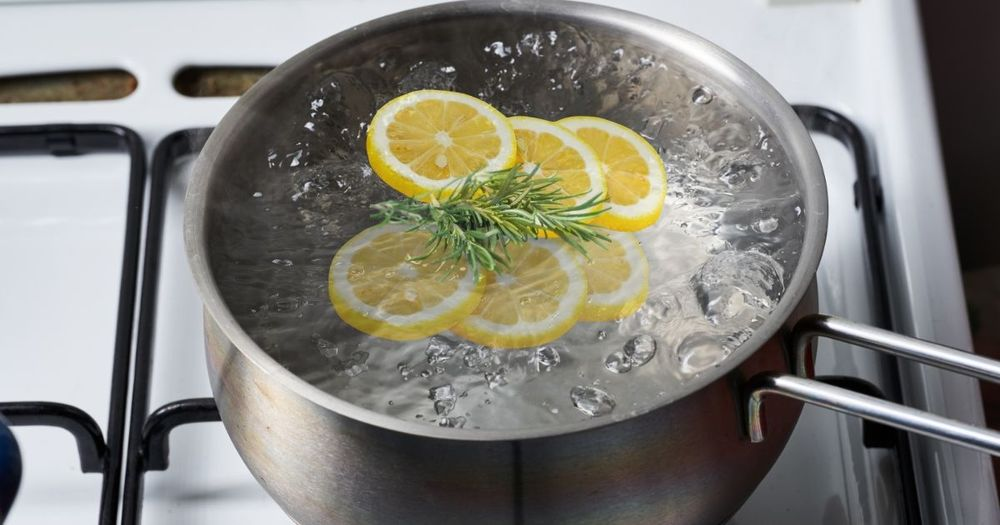
A simmer pot. Fill a small saucepan with water, add orange or lemon peel, a cinnamon stick and a few cloves, or a sprig of rosemary with lemon, and leave it on the lowest heat. The steam carries the scent through the house within minutes, and it smells like someone is baking. Top up the water so the pot never boils dry, and never leave it on when you go out.
Citrus vinegar. Pack a jar with citrus peel, cover it with white vinegar and leave it for a couple of weeks. Never mix vinegar or any acid cleaner with bleach, because together they release chlorine gas. Keep it off marble and granite too, since the acid etches stone.
Herbs and sachets. This is old wisdom. Tudor and Elizabethan households scattered strewing herbs over their floors, and Elizabeth I liked meadowsweet in her rooms above any other herb. People carried pomanders, little balls of fragrant resin, to mask bad smells and, they hoped, ward off infection. Today, small cloth bags of dried lavender, rosemary or orange peel keep drawers and wardrobes smelling clean for months. A squeeze of the bag wakes the scent up again, and a bag of makes plenty of sachets. An orange studded with cloves and left to dry makes a fragrant winter decoration in the same tradition.
Fresh flowers. A jug of sweet peas, stocks, freesias or a few sprigs of mint on the table scents a room gently and is gone when it's gone. Lilies are best left out of homes with cats, because eating even a little of the plant can cause kidney failure in a cat.
Essential oils, lightly
Essential oils are the most popular natural swap, and they deserve a little care. A diffuser full of lemon or eucalyptus oil sends more than scent into the room. Measured in a test chamber, a single diffuser released milligrams of limonene from lemon oil and eucalyptol from eucalyptus oil within 15 minutes, along with a fine mist of particles. Limonene is one of the terpenes that meet ozone and make formaldehyde. Natural, in the air, works much like synthetic.
Treat oils the way you'd treat perfume: a little, now and then. Run a diffuser in short spells, in a room with a window open, and give the air a rest in between.
Pets come first. Cats are especially sensitive to essential oils, because their livers break many of these compounds down poorly. Over ten years, a US animal poison helpline logged 443 dogs and cats made ill by pure tea tree oil, with drooling, wobbliness, weakness and tremors lasting up to three days, and young, small cats fared worst. Keep oils and diffusers out of rooms where pets sleep, never put oils on an animal, and wipe up spills.
Candles, incense and wax melts
A candle is a small fire, and any fire makes smoke. Burning candles release fine particles and gases whatever the wax, and the evidence that soy or beeswax burns meaningfully cleaner than paraffin is thin. Scent adds to it. When scented candles were warmed electrically, as in a wax melter, the levels of terpenes in the room rose by 16 to 30 times on average, so the flameless option carries its own load.
Incense is the smokiest scent of all. In small flats, incense sticks with a wooden core gave off the most benzene, and burning incense also released isocyanates, chemicals that irritate the airways. Burning a bundle of sticks for a "cleansing" smell does the opposite.
Enjoy candles as an occasional treat, and keep incense for the garden. Trim the wick short to stop it smoking, burn them in a room with some fresh air, and blow them out before bed.
A home that smells of home
A home was never meant to smell like Ocean Breeze. It should smell like itself: clean air, last night's dinner, washing and wood and the people who live there. Get there first by opening windows, finding the source of any smell and soaking up what lingers. After that, a simmer pot, a sachet in the drawer or a jug of flowers is all the scent a home needs.
This week, unplug the plug-in, open two windows for ten minutes every morning, and put a bowl of baking soda where the smell used to be. And the next time it rains, open a window and let the best scent of all come in.
Want to use essential oils well? Essential Oils: What They Can Do and How to Use Them Safely — a closer look at the popular oils and what they can do.
Clearing the clutter too? How to Declutter and Organize Your Home: 8 Simple Strategies for a Tidy, Stress-Free Space — simple steps to a tidier, calmer home.
Know someone with a plug-in in every room? Send them this. An open window and a bowl of baking soda might be all their home needs.
Disclaimer: This article is general information. For advice about your own health, talk to a qualified health professional. Keep essential oils and lilies away from pets, and if anyone at home has asthma, choose fragrance-free.
Affiliate Disclosure: This article contains affiliate links. As an Amazon Associate, All For Life earns from qualifying purchases, at no extra cost to you. We only link to products we would recommend without the commission.