"Fast" is a word about holding on. The Old English verb fæstan comes from the same root as fæst, firm or secure, the sense that survives in "fasten" and "steadfast". The religious meaning seems to have started in the Gothic church, where fastan meant to hold fast to the rule of abstinence. The Greek and Latin words it translated carry no such sense. Fasting as holding fast is the Goths' own idea.
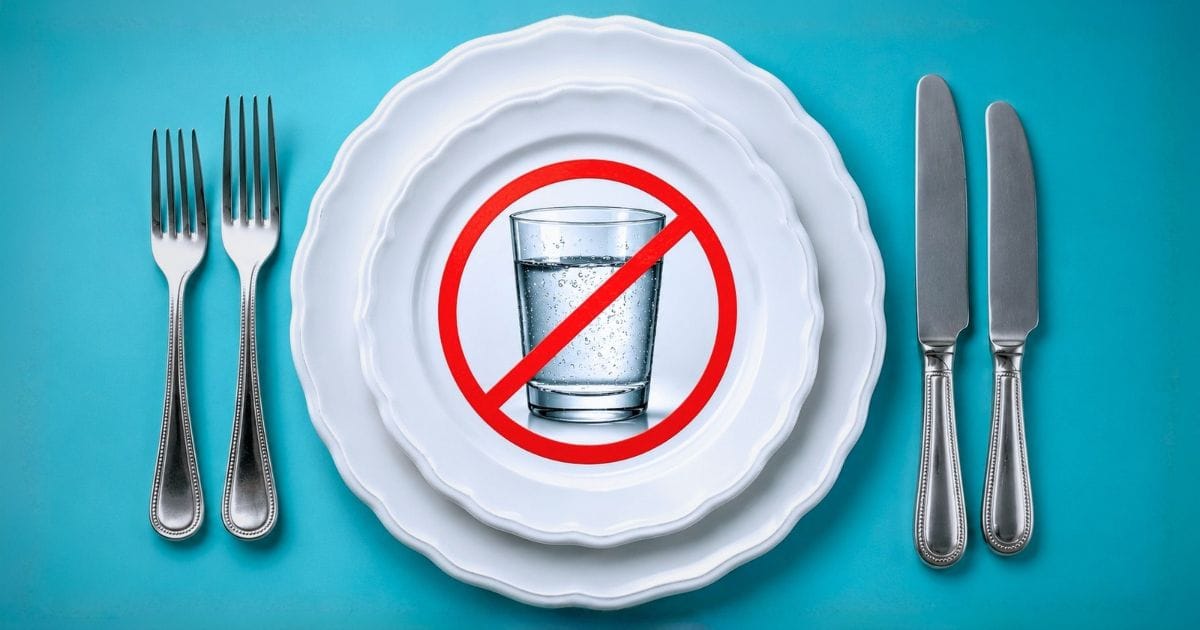
A dry fast holds back more than most, leaving out water as well as food. Done from dawn to dusk, it is one of the oldest religious practices there is. Done for days at a stretch, it is a different thing, and the line between the two is drawn by something more basic than willpower: the body can manage weeks without food, but only days without water. Every potential benefit of dry fasting, and every caution, comes back to that line.
The old daytime fasts
Through the month of Ramadan, Muslims take neither food nor drink from dawn to sunset, with a meal before dawn and another after dark. Yom Kippur and Tisha B'Av are 25-hour fasts with no food or liquid at all. In the Bahá'í Nineteen-Day Fast, food and drink stop from sunrise to sunset for the nineteen days of the month of Loftiness, and it only applies to those aged 15 to 70.
What these fasts share is a limit. They end each evening, or after a day, and they come with exemptions. Islam excuses the sick, the elderly, travellers, and women who are pregnant, nursing or menstruating. The Bahá'í fast excuses the ill and those travelling, and holds that in time of ill health fasting is not permitted at all. Jewish law has its own version, pikuach nefesh, the principle that saving a life overrides almost any other religious rule. The old rules were written by people who knew the difference between a hard day and a dangerous one. Each evening also brings water back, which is why studies of these fasts say little about several days without it.
Ramadan is also the most studied fast there is, and its weight result is modest. The pooled studies collected by Intermittent Fasting: What It Does and When It Works Best show a small loss by the end of the month, and most of it back within weeks.
Water is the deadline
The clearest way to see the difference between food and water is in the people who went without one or the other.
In 1981, ten Irish republican prisoners on hunger strike lived for 46 to 73 days on water and salt alone before they died. Two years earlier, in 1979, an 18-year-old named Andreas Mihavecz was put in a basement holding cell in Austria and forgotten by the three policemen responsible for him. Nobody brought him food or water. He survived 18 days by licking the condensation off the walls, and lost 24 kg before an officer noticed the smell and opened the door.
The Book of Exodus says Moses spent forty days and forty nights on the mountain and "did neither eat bread, nor drink water". The longest anyone has been measured surviving is Mihavecz's 18 days, with nothing but condensation, and Guinness World Records lists it as the record for going without food or liquids.
Weeks on water, days without it. The margins are narrow. A loss of 3 to 4% of the body's water usually passes without trouble. At 5 to 8%, tiredness and dizziness set in, past 10% body and mind start to fail, and a loss of 15 to 25% is fatal.
The water your fat makes
The most repeated claim in favour of dry fasting is that the body makes its own water when it burns fat, so it doesn't need a drink. The first half holds. The camel's hump is fat, not a water tank, and how that fat turns into water when it's burned is told in Think You’re Hydrated? Why Your Body Might Be Thirsty for More.
The second half doesn't add up. In a resting adult, the body's own metabolism makes about 300 ml of water a day. Skin and breath lose 500 to 800 ml a day before you count anything else, and the kidneys can't stop altogether, because they need some urine to clear the body's waste. So at rest, in the cool, skin and breath alone lose 200 to 500 ml a day more than the body makes, before urine is counted. Sweat adds to that, anything from a tenth of a litre a day to several litres, and at its fastest between 2 and 4 litres an hour. A dry fast runs a deficit from the first day, and the only question is how big it gets. Your fat does make water, the way a dripping tap fills a bath with the plug out.
What the dry-fasting studies found
For something with so many claims attached, dry fasting has little research behind it, and almost all of it is small.
In Houston, researchers followed 13 adults with a raised body weight through their yearly 30-day dawn-to-dusk religious fast. Several markers of inflammation fell, and so did their weight and hip size. There was no comparison group, and 13 people is a small sample, so it's a lead rather than a result. Public grants paid for it, and the authors declared no conflicts.
Kidney stones are the obvious worry, since less water means more concentrated urine. A 2020 review of Ramadan studies found only five worth comparing, of low quality, and their main trend was no difference in stone formation between fasting and not fasting. That's reassuring for a daytime fast, and says nothing about a fast that runs for days.
The longest continuous test went five days. Ten healthy adults took no food or water, lost about 1.4 kg a day, some 7 kg in all, and kept steady blood salts and blood pressure, and the authors called it safe. Ten people is a thin base for that word, and most of a 1.4 kg daily loss is water. It shows that ten people got through five days, not that it does anyone good. Neither study had a group that was allowed to drink, so the question that matters is still open: what does leaving out the water add?
The claims with nothing behind them
Autophagy, the body's recycling of worn-out cell parts, is the reason most often given for dry fasting. Intermittent Fasting: What It Does and When It Works Best explains why autophagy is so hard to measure in a living person, and nothing shows that taking water away speeds it up. The "mental clarity" claim fares worse. Nothing measured shows it, and over several days, as the losses build, what has been measured runs the other way: tiredness and dizziness from a 5 to 8% water loss, and mental decline past 10%.
The loudest voice for dry fasting is the Russian author Sergei Filonov. His book Dry Medical Fasting: Myths and Reality claims that a day of dry fasting is worth about three on water, and that each cell, short of water, turns into a "mini-furnace" burning off what it doesn't need. Its evidence is his own patients and their reviews, not trials. It even calls the darkening of the eyes on standing up "no danger", the same kind of sign the stop list below treats as the moment to drink.
The quick weight loss of a dry fast is real and mostly temporary. Water goes first, and water comes back with the first few drinks. On a dry fast, the scales mostly weigh how thirsty you are.
Each reason for fasting points to a different fast.
For weight. Fat comes off with time, and a water fast or a shorter eating window gives you that time without the deadline.
For the body's repair. Whatever fasting does for cell repair, nothing shows that leaving out water adds to it.
For a health problem. A fast may ease something while it lasts, and the cause is still there when it ends. Changing your food and your way of life works on the cause, and an eating window supports that without the risk of dehydration.
For discipline or faith. That's where the religious daytime fasts belong, each with its own reasons, and where their long record lies.
Who shouldn't try it
People with diabetes, above all on insulin or blood-sugar-lowering pills. Fasting while taking them is a known cause of a dangerous drop in blood sugar.
People with kidney disease, and anyone taking medicines that need food, or that change the body's water and salt, such as water tablets. The same goes for painkillers such as ibuprofen, since dehydration and these anti-inflammatory drugs are both known causes of sudden kidney injury.
Pregnant and breastfeeding women. The religious fasts exempt them, and Ramadan fasting while pregnant is associated with a risk of bringing on labour, and with diabetes of pregnancy.
Older people. Thirst fades with age, so the warning comes late. In a study that 7 Fun and Tasty Ways to Stay Hydrated Without the Boredom tells of, men aged 67 to 75 who went a day without water wanted it less than young men did, even though their blood said they needed it more.
People who get migraines. Going without food is a known risk for them, and a fast with no water runs longer than a skipped meal. In the Yom Kippur study described in Natural Migraine Remedies, two in three of those with a history of headaches got one during the fast.
Anyone working hard or out in the heat. At its fastest, sweat pours out between 2 and 4 litres an hour, so a single hour of heavy work in the heat can lose about a week's worth or more of the water the body makes for itself.
If you try a daytime dry fast
Keep it to daylight, and to a day. That's the version with centuries of practice behind it.
Prepare the evening before. Spread your water through the evening rather than drinking it all at once, and eat a proper meal of meat, fish or eggs, with good-quality unrefined salt, for example , so you start with something in reserve, or have that meal before dawn, as Ramadan does. With high blood pressure, ask a qualified health professional about the salt before you add it. Why salt and water belong together is set out in Why "Drink More Water" Is Incomplete Advice.
Stay cool and keep still. A dry fast is a day for sitting in the shade, not for the gym.
Know when to stop. Dizziness when you stand up, a racing heart, a headache that keeps building, or very little urine, or none at all, mean the fast is over. Drink. Fainting, confusion, or being unable to stand or think clearly is an emergency and needs help at once.
Break it gently. Water first, a little at a time, since after serious dehydration, rehydrating too fast carries a risk of its own, swelling in the brain. Then a cup of warm broth, which brings back water and salt together, and then a simple meal rather than a feast. A ready-made saves cooking one when you are at your hungriest.
Choose water fasting if you want to go longer. Fasting from food while still drinking keeps what fasting is known for and takes away the deadline.
Holding fast
The Gothic word had it right. A fast means holding fast to a rule. The old rules for dry fasting were short ones, sunrise to sunset, with the ill and the pregnant let off. Keep to rules like those and a dry fast is a hard day. Go past them, and you're up against a deadline the body can't move. Should you try one, keep it to a single day, in the cool, with water waiting at sunset.
Want fasting without the deadline? Intermittent Fasting: What It Does and When It Works Best — the eating window, the autophagy question, and what Ramadan shows about weight.
Wondering where your water really comes from? Think You’re Hydrated? Why Your Body Might Be Thirsty for More — the camel, the water hidden in food, and why a full bottle isn't the whole story.
Know someone planning a three-day dry fast? Send them "Water is the deadline".
Tried something here, or got a question it didn't answer? Write to us at contact@allforlife.club. Your questions shape the next articles.
Disclaimer: This article is general information, not medical advice. If you have diabetes, kidney or heart disease, are pregnant or breastfeeding, or take regular medicines, talk to a qualified health professional before any fast, and never fast from water for more than a day.
Affiliate Disclosure: This article contains affiliate links. As an Amazon Associate, All For Life earns from qualifying purchases, at no extra cost to you. We only link to products we would recommend without the commission.
Sources
Wiktionary. fast. en.wiktionary.org
Wikipedia. Fasting in Islam. en.wikipedia.org
Wikipedia. Fasting. en.wikipedia.org
Wikipedia. Nineteen-Day Fast. en.wikipedia.org
Wikipedia. Pikuach nefesh. en.wikipedia.org
Wikipedia. Hunger strike. en.wikipedia.org
Wikipedia. Andreas Mihavecz. en.wikipedia.org
Wikisource. Bible (King James)/Exodus. en.wikisource.org
Wikipedia. Dehydration. en.wikipedia.org
Wikipedia. Fluid balance. en.wikipedia.org
Wikipedia. Perspiration. en.wikipedia.org
Al Lami Z, Kurtca M, Atique MU, et al. (2024). Dawn-to-dusk dry fasting decreases circulating inflammatory cytokines in subjects with increased body mass index. Metabolism Open 21:100274. doi.org/10.1016/j.metop.2024.100274
Amjadi M, Soleimanzadeh F, Ghamatzadeh H, et al. (2020). Ramadan Fasting and Kidney Stones: A Systematic Review. Urology Journal 18(4):364–370. pubmed.ncbi.nlm.nih.gov/32981032
Papagiannopoulos IA, Sideris VI, Boschmann M, et al. (2013). Anthropometric, Hemodynamic, Metabolic, and Renal Responses during 5 Days of Food and Water Deprivation. Complementary Medicine Research 20(6):427–433. doi.org/10.1159/000357718
Filonov SI (2008). Dry Medical Fasting: Myths and Reality. archive.org
Wikipedia. Hypoglycemia. en.wikipedia.org
Wikipedia. Acute kidney injury. en.wikipedia.org