
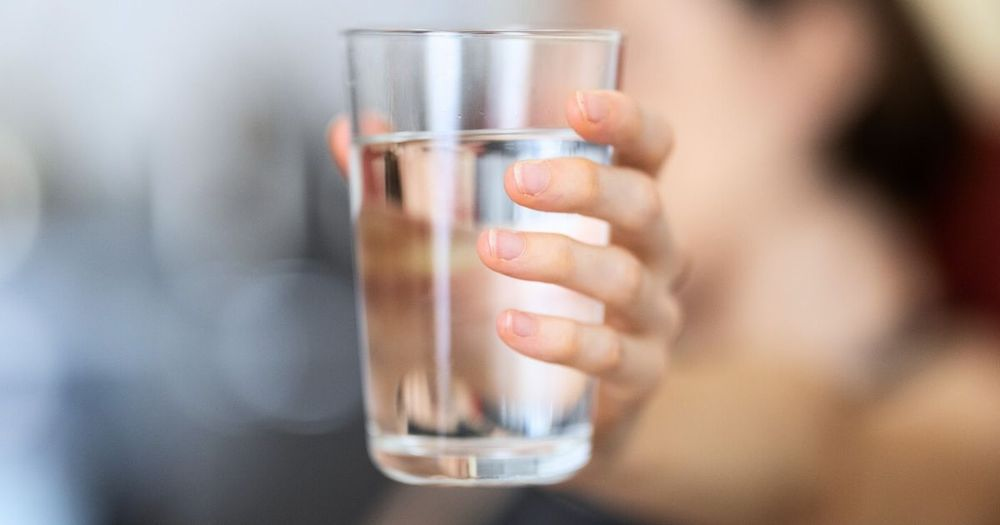
Twenty-nine people spent six hours walking and resting on a treadmill in desert heat, with water beside them the whole way. Each did the walk twice, once with the water cool and once with it warm. Some had plain water, some had water that tasted of iodine, and some had the iodine water with flavouring added. Cool and flavoured together, the water went down at more than twice the rate. The walkers left with warm iodine water drank so little that they dried out, and two of them ended up with heat illness.
Taste decides how much we drink. So if plain water bores us, the answer is to make it nicer, and it takes almost nothing.
It matters sooner than we'd think. Our bodies are about 60% water, and a small shortfall shows. When 25 young women lost just over 1% of their body weight in water, their mood dropped, tasks felt harder, their concentration slipped and headaches came on. Twenty-six young men at about 1.6% made more mistakes on a test of attention and felt more tired and more tense.
How much we need
The NHS guide is 6 to 8 cups or glasses of fluid a day. It's a guide, and we need more in hot weather, when we're active for a long time, when we're ill, and during pregnancy and breastfeeding.
A simpler check than counting is to drink enough that your pee is a clear, pale yellow. Dark yellow and strong-smelling means the body is asking for more. Thirst, a dry mouth, a headache, feeling tired or dizzy and peeing less often are the other early signs.
And the famous eight glasses of water a day? A reviewer went looking for the evidence behind that rule and found none. Surveys of thousands of healthy adults pointed the other way: people living ordinary lives in mild weather were doing fine on less. Food counts towards the total as well.
If you've been told to limit your fluids, as can happen with heart failure, that limit comes first.
1. Infuse it with fruit
If we love flavoured drinks and want to skip the added sugar, fruit in water is the easy answer. Slices of lemon, lime or orange, or a handful of berries, bring a little sweetness, a fresh taste and a splash of colour. It's an old pleasure: in 1676 a Paris company sent vendors into the streets with tanks of lemonade on their backs, selling it by the cup.
Citrus and berries do make water slightly acidic, though, and acid softens tooth enamel when it's sipped all day. Have the fruity jug with a meal, and keep plain water for the hours in between.
Fruit sitting in water is food, so treat the jug like food. Wash the fruit and herbs under running water, keep the jug in the fridge, drink it by the next day, and start a fresh one each time. Yesterday's jug gets emptied, never topped up.
Let the fruit steep for at least an hour so the flavour develops. Make a big pitcher the night before and it's cold and ready the next day. A holds the fruit in its own basket, so it lifts out when the flavour is right.
2. Experiment with herbs
Herbs belong in a glass as much as in a pan. Mint, basil and lavender each bring a gentle fragrance, on their own or alongside fruit. Mint has a trick of its own. Its menthol sets off the same sensors that cold does, so mint water tastes colder than it is.
Crush the leaves gently before they go in. That releases the oils, and the oils are where the flavour is.
3. Add some sparkle
Sparkling water began as an accident. In 1767 Joseph Priestley hung a bowl of water over a vat of fermenting beer at a brewery in Leeds, and the gas rising off the beer went into the water. He wrote of the "peculiar satisfaction" of drinking it.
For those of us who love fizz, sparkling water gives the feeling of a soda with none of the sugar. It hydrates just as well as still. When 72 men drank a litre each of 13 different drinks, sparkling water kept them as hydrated as plain water did.
It's kind to teeth too, as long as it's plain. Of 379 drinks tested for acidity, plain sparkling water landed in the mildest class. The flavoured sparkling waters sold in shops are another story: all of those tested were about as hard on enamel as orange juice, and some were harder.
Buy it plain and add the flavour at home, with a slice of cucumber, a few crushed berries or a sprig of mint. A makes plain fizz at home. Leave out the splash of fruit juice. The World Health Organization counts juice as sugar, the same as the kind from a bag.
4. Try cucumber slices
Anyone who has sipped cucumber water at a spa knows how refreshing it is. The word itself is a place: it comes from the Belgian town of Spa, where people have gone to drink the spring water since medieval times. Cucumber is 95% water itself, and a few slices give a mild, cooling taste and next to no sugar.
Pair cucumber with mint leaves for a small spa day wherever we happen to be.
5. Make it a morning ritual
A cup of warm water with a squeeze of lemon is a lovely way to start the day. It has been credited with boosting metabolism and waking up digestion, and there is nothing solid behind either claim. What it does do is get a glass of water into us before breakfast, and that's worth having.
Lemon juice is 5 to 6% citric acid, so this is the drink that deserves a little care. Lemon water is on the list of acidic drinks kept by a dental health charity.
Drink it in one go, use a straw if you have one, and wait an hour before brushing your teeth.
6. Get creative with ice cubes
Ice cubes can be pretty. Freeze berries, lemon slices or flowers sold for eating into them, and as they melt they flavour the water and colour it.
They earn their place for another reason. On that desert treadmill, warm water was drunk more slowly than cool. Cold makes us drink.
Try strawberry and basil, or blueberry and mint.
7. Brew it
Water can be hot, too. Herbal teas with no caffeine, such as peppermint, rooibos and hibiscus, count towards the day's fluid, and they're as good iced as they are steaming. One note for pregnancy: the NHS advice is no more than four cups of herbal tea a day, and none made with liquorice root, because so little is known about them.
Hibiscus goes by many names. In Egypt it is karkadeh, and weddings are toasted with it. In Mexico it is agua de Jamaica, and in Senegal bissap.
It has a finding of its own, too. Sixty-five adults with slightly raised blood pressure drank three cups a day for six weeks. The top number of their blood pressure fell by about 7 points, against 1 for those given a look-alike drink. None of them was on blood pressure tablets, so if you are, mention the tea when your medicine is next reviewed.
What about ordinary tea and coffee? In the 13-drink test they hydrated as well as water, and the NHS counts them. Caffeine brings costs of its own, though, with a dependence and a withdrawal headache among them, so we keep water as our main drink.
Brew a pot in the evening, let it cool, and put it in the fridge for tomorrow. A bag of is nothing but the dried flower, loose, and the infuser pitcher from the first tip will brew it.
Three more that need no recipe
Keep it in reach. When water fountains went into 17 German primary schools, along with a few lessons about drinking water, the children there ended up drinking about one more glass of water a day than children at schools without them. A jug on the table does the same job at home.
Eat it. Food carries water as well. Watermelon is 91% water, and a bowl of soup or a mug of bone broth counts as a drink.
Hang it on a habit. Tie each drink to something we already do: on waking, with each meal, when the kettle goes on. When 96 volunteers practised one small daily act in the same setting, it took anywhere from 18 to 254 days to become automatic, and missing a day did no harm.
What to leave out of the glass
Fruit juice and honey. Both are sugar, however natural they sound.
"Zero" waters and sugar-free squash. They taste sweet because of sweeteners, and the World Health Organization advises against relying on those to control weight.
Coconut water. It has a healthy name and it still carries sugar: 2.6 grams in every 100, about a quarter of what cola has.
Apple cider vinegar. It's said to aid digestion and boost energy, and there is no good support for either. Vinegar is on the same list of acids that soften enamel. Water with vinegar is an old drink, mind you. The Romans called it posca, and it was what soldiers, the poor and slaves drank, since wine tasted better.
Aloe vera juice. Nothing shows that drinking it hydrates us better than water or helps our skin. The leaf contains a laxative, and an extract of the whole leaf has been classed as a possible cause of cancer.
Who needs more
Thirst fades as we get older. After a full day without water, seven healthy men aged 67 to 75 were less thirsty than seven men aged 20 to 31, and drank less when water was offered, although their blood showed they needed it more.
So for an older parent or grandparent, thirst is a poor alarm. Babies and young children are at higher risk as well. The NHS suggests offering a drink at every meal, making it a social thing, and serving foods with plenty of water in them.
For children, the best drinks are water and milk. The NHS advice is no sugary fizzy drinks, squash or juice drinks for them at all.
And after a sweaty hour, water is the best way to put back what was lost. In the 13-drink test, a sports drink did no better than water.
If we eat low-carb, keto or carnivore
The first weeks of a keto diet can bring headaches, tiredness and dizziness, the "keto flu". In people's own accounts it peaks in the first week and fades within four. They are also signs of running dry, so those are the weeks to keep the glass full.
One finding helps here. In the 13-drink test, two drinks stayed in the body longer than water: a rehydration solution, which is water with salts in it, and milk. A mug of salted broth is water with salts in it, too.
Can we drink too much?
Yes. At the 2002 Boston Marathon, 13% of the runners tested at the finish had too little sodium in their blood, and the ones most at risk had gained weight during the race from drinking more than they sweated out. Healthy kidneys clear up to about a litre an hour, and water beyond that dilutes the blood.
Thirst and the pale-yellow check are the guide. There are no prizes for the most.
What we get for it
Fewer kidney stones. Of 199 people who had just had their first stone, half were asked to drink much more water and half were left alone. Five years on, 12 of the 99 drinkers had had another stone, against 27 of the 100 others.
Bladder infections, too. One hundred and forty women who kept getting them, and who drank little, were split into two groups, and one group added a litre and a half of water a day. Over the next year they had 1.7 infections each on average, against 3.2.
Easier trips to the loo. When 117 adults with constipation ate the same diet for two months, those asked to drink two litres of mineral water a day went more often and needed fewer laxatives than those who drank as they pleased.
An easier time losing weight. Among 48 dieters aged 55 to 75, those who drank water before each meal lost about 2 kg more over twelve weeks.
A steadier mood. Thirty people who usually drank little were given more water for three days, and felt less tired and less muddled. Twenty-two who usually drank a lot were cut back, and felt less calm and less content.
Maybe an easier time with headaches. When 102 people with frequent headaches were asked to drink more, they scored better on a quality-of-life questionnaire three months later. The number of headache days stayed the same.
Skin, a little. Across six small sets of findings, drinking more made skin slightly better hydrated, mostly in people who had been drinking little. The reviewers called the evidence weak.
Back to the treadmill
"Thousands have lived without love, not one without water," wrote W. H. Auden.
Those walkers in the heat had water with them the whole time. What some of them lacked was water worth drinking. That's the part we can fix at home, with a lemon, a cucumber, a few leaves and a tray of ice.
Tonight, fill a jug, drop in some cucumber and mint, and put it in the fridge.
Is the drink we're replacing a sweet one? The Hidden Cost of Your Daily Sugary Drink — what one sweet drink a day does, from our teeth to our liver, and how to stop.
Is coffee the one that's hard to put down? How to Quit Coffee: Getting Through Caffeine Withdrawal — what withdrawal feels like, and how to get through it.
Know someone who says water is boring? Send them this, and bring the mint.
Disclaimer: This article is general information. For advice about your own health, talk to a qualified health professional. If your mood has been low for weeks or you're having thoughts of harming yourself, reach out for help today.
Affiliate Disclosure: This article contains affiliate links. As an Amazon Associate, All For Life earns from qualifying purchases, at no extra cost to you. We only link to products we would recommend without the commission.
Sources
Hubbard RW, Sandick BL, Matthew WT, et al. (1984). Voluntary dehydration and alliesthesia for water. Journal of Applied Physiology 57(3):868–873. doi.org/10.1152/jappl.1984.57.3.868
Wikipedia. Body water. en.wikipedia.org
Armstrong LE, Ganio MS, Casa DJ, et al. (2012). Mild dehydration affects mood in healthy young women. The Journal of Nutrition 142(2):382–388. doi.org/10.3945/jn.111.142000
Ganio MS, Armstrong LE, Casa DJ, et al. (2011). Mild dehydration impairs cognitive performance and mood of men. British Journal of Nutrition 106(10):1535–1543. doi.org/10.1017/S0007114511002005
NHS. Water, drinks and hydration. nhs.uk
NHS. Dehydration. nhs.uk
Valtin H (2002). "Drink at least eight glasses of water a day." Really? Is there scientific evidence for "8 × 8"? American Journal of Physiology-Regulatory, Integrative and Comparative Physiology 283(5):R993–R1004. doi.org/10.1152/ajpregu.00365.2002
British Heart Foundation. How do I manage fluid restriction in hot weather? bhf.org.uk
Wikipedia. Lemonade. en.wikipedia.org
Oral Health Foundation. Dental erosion. dentalhealth.org
Ohio State University Extension. Infused Water with Ohio Local Foods. ohioline.osu.edu
Wikipedia. Menthol. en.wikipedia.org
Wikipedia. Carbonated water. en.wikipedia.org
Maughan RJ, Watson P, Cordery PA, et al. (2016). A randomized trial to assess the potential of different beverages to affect hydration status: development of a beverage hydration index. American Journal of Clinical Nutrition 103(3):717–723. doi.org/10.3945/ajcn.115.114769
Reddy A, Norris DF, Momeni SS, Waldo B, Ruby JD (2016). The pH of beverages in the United States. Journal of the American Dental Association 147(4):255–263. doi.org/10.1016/j.adaj.2015.10.019
Brown CJ, Smith G, Shaw L, Parry J, Smith AJ (2007). The erosive potential of flavoured sparkling water drinks. International Journal of Paediatric Dentistry 17(2):86–91. doi.org/10.1111/j.1365-263X.2006.00784.x
World Health Organization (2015). Guideline: sugars intake for adults and children. who.int
Wiktionary. spa. en.wiktionary.org
Wikipedia. Cucumber. en.wikipedia.org
Wikipedia. Lemon. en.wikipedia.org
Wikipedia. Herbal tea. en.wikipedia.org
NHS. Foods to avoid in pregnancy. nhs.uk
Wikipedia. Hibiscus tea. en.wikipedia.org
McKay DL, Chen CYO, Saltzman E, Blumberg JB (2010). Hibiscus Sabdariffa L. Tea (Tisane) Lowers Blood Pressure in Prehypertensive and Mildly Hypertensive Adults. The Journal of Nutrition 140(2):298–303. doi.org/10.3945/jn.109.115097
Juliano LM, Griffiths RR (2004). A critical review of caffeine withdrawal: empirical validation of symptoms and signs, incidence, severity, and associated features. Psychopharmacology 176(1):1–29. doi.org/10.1007/s00213-004-2000-x
Muckelbauer R, Libuda L, Clausen K, et al. (2009). Promotion and Provision of Drinking Water in Schools for Overweight Prevention: Randomized, Controlled Cluster Trial. Pediatrics 123(4):e661–e667. doi.org/10.1542/peds.2008-2186
Wikipedia. Watermelon. en.wikipedia.org
Lally P, van Jaarsveld CHM, Potts HWW, Wardle J (2010). How are habits formed: modelling habit formation in the real world. European Journal of Social Psychology 40(6):998–1009. doi.org/10.1002/ejsp.674
World Health Organization (2023). Use of non-sugar sweeteners: WHO guideline. who.int
U.S. Department of Agriculture. FoodData Central: sugars per 100 g in coconut water (FDC ID 170174) and cola (174852). fdc.nal.usda.gov
Wikipedia. Posca. en.wikipedia.org
National Center for Complementary and Integrative Health. Aloe Vera. nccih.nih.gov
Phillips PA, Rolls BJ, Ledingham JGG, et al. (1984). Reduced Thirst after Water Deprivation in Healthy Elderly Men. New England Journal of Medicine 311(12):753–759. doi.org/10.1056/NEJM198409203111202
Bostock ECS, Kirkby KC, Taylor BV, Hawrelak JA (2020). Consumer reports of "keto flu" associated with the ketogenic diet. Frontiers in Nutrition 7:20. doi.org/10.3389/fnut.2020.00020
Almond CSD, Shin AY, Fortescue EB, et al. (2005). Hyponatremia among Runners in the Boston Marathon. New England Journal of Medicine 352(15):1550–1556. doi.org/10.1056/NEJMoa043901
Wikipedia. Water intoxication. en.wikipedia.org
Borghi L, Meschi T, Amato F, et al. (1996). Urinary Volume, Water and Recurrences in Idiopathic Calcium Nephrolithiasis: A 5-year Randomized Prospective Study. Journal of Urology 155(3):839–843. doi.org/10.1016/S0022-5347(01)66321-3
Hooton TM, Vecchio M, Iroz A, et al. (2018). Effect of Increased Daily Water Intake in Premenopausal Women With Recurrent Urinary Tract Infections: A Randomized Clinical Trial. JAMA Internal Medicine 178(11):1509–1515. doi.org/10.1001/jamainternmed.2018.4204
Anti M, Pignataro G, Armuzzi A, et al. (1998). Water supplementation enhances the effect of high-fiber diet on stool frequency and laxative consumption in adult patients with functional constipation. Hepato-Gastroenterology 45(21):727–732. pubmed.ncbi.nlm.nih.gov/9684123
Dennis EA, Dengo AL, Comber DL, et al. (2010). Water consumption increases weight loss during a hypocaloric diet intervention in middle-aged and older adults. Obesity 18(2):300–307. doi.org/10.1038/oby.2009.235
Pross N, Demazières A, Girard N, et al. (2014). Effects of changes in water intake on mood of high and low drinkers. PLoS One 9(4):e94754. doi.org/10.1371/journal.pone.0094754
Spigt M, Weerkamp N, Troost J, van Schayck CP, Knottnerus JA (2012). A randomized trial on the effects of regular water intake in patients with recurrent headaches. Family Practice 29(4):370–375. doi.org/10.1093/fampra/cmr112
Akdeniz M, Tomova-Simitchieva T, Dobos G, Blume-Peytavi U, Kottner J (2018). Does dietary fluid intake affect skin hydration in healthy humans? A systematic literature review. Skin Research and Technology 24(3):459–465. doi.org/10.1111/srt.12454
Wikiquote. W. H. Auden. en.wikiquote.org