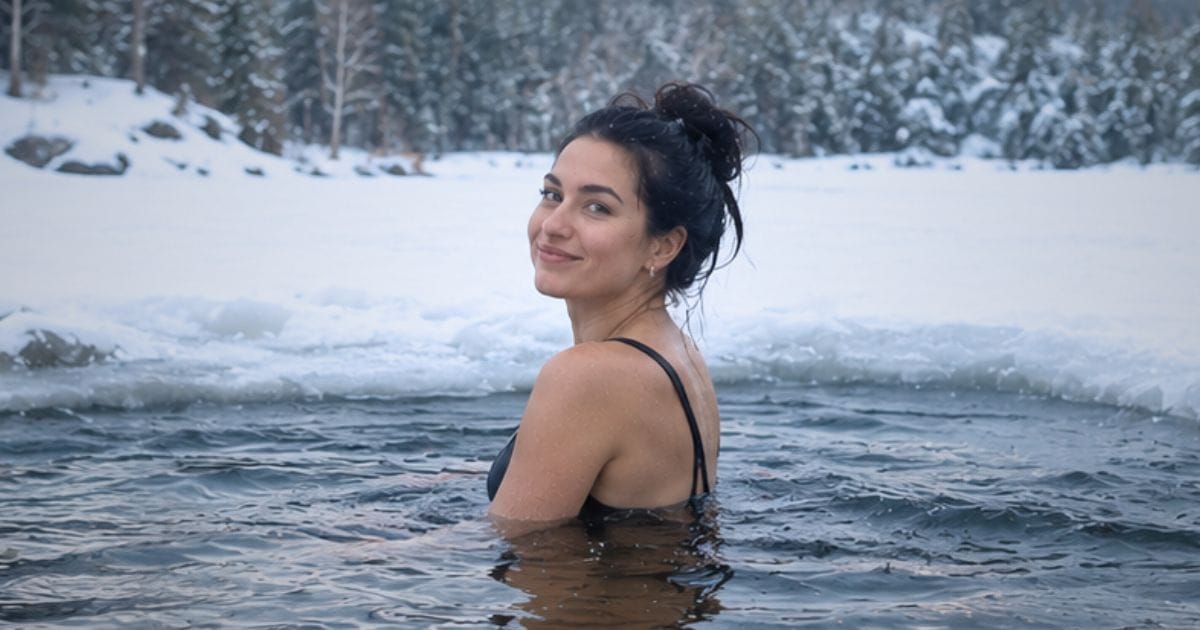
The session is done and your legs are shaking. Across the gym, someone lowers themselves into a tub of ice water with the face of a person doing the right thing. Ten minutes later they climb out, relieved that their legs already feel less sore. Whether that means they'll get more from the workout is another question.
The ice bath does help with one thing after training, and it can quietly cost another. The concern isn't a single plunge now and then. It's making the ice bath your usual finish after lifting. So the useful question is simple: what do you need the cold to do?
What the cold does after training
The best summary of the evidence on soreness is a Cochrane review of 17 small trials with 366 people. Compared with resting, sitting in cold water after exercise eased muscle soreness over the following days, from the next day out to four days later, and people felt less tired straight afterwards. The trials were small and their quality was low, and the few that compared cold water with warm water or alternating hot and cold found no clear difference.
Some of that may be belief. In a 2014 study, 30 men did a hard session of sprint intervals and then spent 15 minutes in cold water, in warm water, or in warm water with a placebo they were led to believe would aid recovery. Over the next two days, the placebo group recovered leg strength just as well as the cold-water group, and both did better than plain lukewarm water, close to skin temperature. Readiness, pain and vigour followed the same pattern.
A review of the reviews, published in 2026, pulled the evidence together. Less soreness was the most consistent finding, but most of the reviews were of low or critically low quality, and the effects on measured performance and inflammation were inconsistent.
So the relief is real, even if part of it comes from expecting to feel better. What's less certain is whether feeling less sore also means you're stronger, faster or fitter the next day. Christie Aschwanden's tours the strange science of recovery, ice baths included, and finds belief doing a good deal of the work.
What it costs
Soreness itself isn't what builds muscle. But the hours after training are when muscle switches on repair and building, and cold seems to turn that switch down.
In a 2015 study, 21 active men did strength training twice a week for 12 weeks. After every session, half of them sat in cold water for ten minutes. The other half did ten minutes of easy cycling instead. At the end, the cycling group had gained more strength and more muscle. Their fast-twitch fibres, the ones that drive strength and power, grew about 17% thicker than at the start, and the number of nuclei in each fibre, which support growth, rose by about a quarter. In the cold group, neither changed.
The same researchers looked inside the muscle with biopsies after a single session. With cold water, the stem cells that repair and build muscle and the signals that switch on growth were both dampened compared with easy cycling. Their conclusion was that regular ice baths after strength training should be reconsidered.
A later study looked at the step after that. Twelve young men trained their legs, then sat for 20 minutes with one leg in cold water at 8°C and the other in comfortably warm water, and drank a protein shake. The cooled leg turned less of that protein into new muscle in the hours afterwards, and built muscle protein more slowly over the following two weeks of training. Same man, same meal, two legs, and the cold one got less out of both.
Why that happens isn't settled, but blood flow is one candidate. In another study, ten minutes in 8°C water after exercise sharply cut blood flow in the thigh, more than a session in a cold-air chamber did. Less blood through the muscle could mean less of what it needs to rebuild arriving on time, though that link hasn't been proven.
A 2024 meta-analysis pulled together the eight studies on cold water and muscle growth. There was some evidence that training without cold water produced more growth than training followed by it, and the authors concluded that cold water immediately after lifting may blunt gains, while warning that the studies were of fair to poor quality. Another study from the 2015 team found that cold water did no better than easy cycling at calming inflammation inside the muscle either.
Two cautions. These studies tested cold water used after every session, straight after training, and they don't show that one occasional plunge changes your results. And they were done in young or active men. Women, and older adults trying to hold on to muscle, weren't tested, so the size of the cost for them is unknown.
When the cold earns its place
None of this makes cold water useless. It makes it a tool with a job, and the job depends on your goal.
If you're training for muscle or strength. Skip the ice bath after lifting. If you enjoy cold water, use it on days you don't lift.
If you're between events. During a tournament or a run of matches, easing soreness may be worth it. Whether it also restores the strength, speed or endurance you need for the next event is another matter, and on that the findings are less consistent.
If you're training for endurance. You have more room. A 2021 review that pooled eight training studies found that regular cold water held back gains in strength, but showed no effect on gains in endurance, such as time-trial performance or maximal aerobic power. It's still unnecessary after every run.
Say you play football in season, with one strength session and one match a week. After the strength session, skip the cold. After the match, a cool bath may help most when the next game comes soon. If the next one is a week away, there's little to be fresh for.
If you do use it, there's no need to go to extremes. The studies above used water at about 8 to 10°C for 10 to 20 minutes, and the latest review warns that the protocols tested are descriptions of what was tried, not a proven recipe.
Before you get in. Cold water causes a sudden gasp and racing breath, and it makes the heart work harder and blood pressure rise; according to the lifeboat charity RNLI, that shock can cause heart attacks even in the young and healthy. Get in gradually, don't plunge or swim alone, and with heart trouble or raised blood pressure, get the all-clear from a qualified health professional before your first plunge. Never combine cold water with the deep-breathing and breath-holding rounds of the Wim Hof Method. Blowing off carbon dioxide delays the urge to breathe, and you can black out without warning. How Breathing Affects Your Emotional State sets out that danger in full.
After lifting, keep it simple
You don't need to replace the ice bath with another ritual. The recovery basics are plain: enough food, with meat, fish or eggs as the protein at its centre, and enough sleep.
In the two strength studies above, the alternative to cold water was ten minutes of easy cycling, and it didn't take anything away from the gains. That's the real case for it. A 2018 review found that active cool-downs do little to speed recovery, ease soreness or improve the next day's performance, but done regularly they don't seem to blunt long-term training gains either. So if a few minutes of easy walking or cycling help you wind down, do them. If rolling tight legs on a feels good, that's a fine way to spend a few of those minutes too.
Soreness that settles over a day or two is normal. Sharp or growing pain in a joint isn't. What Your Workouts Are Doing to Your Joints sorts one from the other.
How long to wait, and what about showers?
The muscle-growth studies applied cold water within minutes of training. None of them tested a waiting period, so no safe interval has been established, and moving the plunge to a particular later hour isn't proven to remove the effect. Keeping cold water for days you don't lift is the cautious choice.
What about a cold shower straight after lifting? A shower is a shorter, milder dose than sitting in cold water, and these immersion studies don't tell us whether an ordinary brief cold shower affects muscle growth. If you like one for the jolt, there's no evidence either way on what it does to your gains.
Decide before you turn on the cold tap
If muscle growth is the priority, routine ice baths straight after lifting may work against it. If easing soreness between events matters more, cold water may have a place. Feeling better and getting a better result from training don't always come together, so decide which one you're after before you get in.
Sore after training, and not sure what's normal? What Your Workouts Are Doing to Your Joints — which pain to train through and which to stop for.
Curious about the breathing part? How Breathing Affects Your Emotional State — each kind of breath and its effect, the Wim Hof rounds included.
Know someone who ends every workout in an ice bath? Send them "What it costs".
Tried something here, or got a question it didn't answer? Write to us at contact@allforlife.club. Your questions shape the next articles.
Disclaimer: This article is general information, not medical advice. If you have a heart condition, high blood pressure or another health condition, talk to a qualified health professional before trying cold-water exposure or breathing techniques.
Affiliate Disclosure: This article contains affiliate links. As an Amazon Associate, All For Life earns from qualifying purchases, at no extra cost to you. We only link to products we would recommend without the commission.
Sources
Bleakley C, McDonough S, Gardner E, Baxter GD, Hopkins JT, Davison GW (2012). Cold-water immersion (cryotherapy) for preventing and treating muscle soreness after exercise. Cochrane Database of Systematic Reviews 2012(2):CD008262. doi.org/10.1002/14651858.CD008262.pub2
Broatch JR, Petersen A, Bishop DJ (2014). Postexercise Cold Water Immersion Benefits Are Not Greater than the Placebo Effect. Medicine & Science in Sports & Exercise 46(11):2139–2147. doi.org/10.1249/MSS.0000000000000348
Liang W, Ma X, Sun G, Liu C, Yan X (2026). Cold-Water Immersion for Post-exercise Recovery: An Overlap-Aware Umbrella Review. Sports Medicine - Open 12(1):159. doi.org/10.1186/s40798-026-01132-8
Roberts LA, Raastad T, Markworth JF, Figueiredo VC, Egner IM, Shield A, Cameron‐Smith D, Coombes JS, Peake JM (2015). Post‐exercise cold water immersion attenuates acute anabolic signalling and long‐term adaptations in muscle to strength training. The Journal of Physiology 593(18):4285–4301. doi.org/10.1113/JP270570
Fuchs CJ, Kouw IWK, Churchward‐Venne TA, Smeets JSJ, Senden JM, Lichtenbelt WDvM, Verdijk LB, van Loon LJC (2020). Postexercise cooling impairs muscle protein synthesis rates in recreational athletes. The Journal of Physiology 598(4):755–772. doi.org/10.1113/JP278996
Mawhinney C, Low DA, Jones H, Green DJ, Costello JT, Gregson W (2017). Cold Water Mediates Greater Reductions in Limb Blood Flow than Whole Body Cryotherapy. Medicine & Science in Sports & Exercise 49(6):1252–1260. doi.org/10.1249/MSS.0000000000001223
Piñero A, Burke R, Augustin F, Mohan AE, DeJesus K, Sapuppo M, Weisenthal M, Coleman M, Androulakis‐Korakakis P, Grgic J, Swinton PA, Schoenfeld BJ (2024). Throwing cold water on muscle growth: A systematic review with meta‐analysis of the effects of postexercise cold water immersion on resistance training‐induced hypertrophy. European Journal of Sport Science 24(2):177–189. doi.org/10.1002/ejsc.12074
Peake JM, Roberts LA, Figueiredo VC, Egner I, Krog S, Aas SN, Suzuki K, Markworth JF, Coombes JS, Cameron‐Smith D, Raastad T (2017). The effects of cold water immersion and active recovery on inflammation and cell stress responses in human skeletal muscle after resistance exercise. The Journal of Physiology 595(3):695–711. doi.org/10.1113/JP272881
Malta ES, Dutra YM, Broatch JR, Bishop DJ, Zagatto AM (2021). The Effects of Regular Cold-Water Immersion Use on Training-Induced Changes in Strength and Endurance Performance: A Systematic Review with Meta-Analysis. Sports Medicine 51(1):161–174. doi.org/10.1007/s40279-020-01362-0
RNLI. Cold water shock. rnli.org
Van Hooren B, Peake JM (2018). Do We Need a Cool-Down After Exercise? A Narrative Review of the Psychophysiological Effects and the Effects on Performance, Injuries and the Long-Term Adaptive Response. Sports Medicine 48(7):1575–1595. doi.org/10.1007/s40279-018-0916-2