
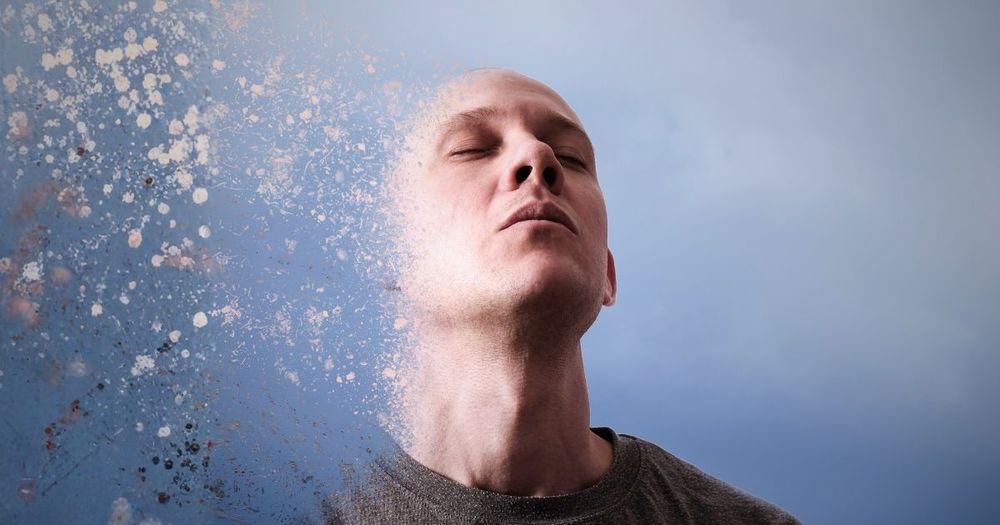
Of everything your body does under stress — heart rate, hormones, digestion, the cascade once it starts — breath is the only thing you can reach deliberately. That makes it the most useful tool available for working with your emotional state.
It also makes it the easiest thing to misuse.
The breath changed before you noticed the feeling. Before you registered the anxiety, the frustration, or the dread, your breathing had already shifted — shallower, higher in the chest, slightly faster, the exhale shortened. The body moved first, the emotional experience after.
That sequence runs in the other direction too. Change the breath deliberately and the emotional state follows — the nervous system reads the pattern and responds accordingly, regardless of whether the change was voluntary or reactive.
What most breathwork practice misses is the difference between using that access point to process what you're feeling and using it to move the feeling somewhere more convenient. Those are not the same thing. Over time, they produce opposite results.

What the Breath Is Actually Doing
Most of what the body does runs without permission — heart rate, digestion, hormonal release, the stress cascade once it starts. Breath is the exception. It runs automatically and you can also take it by the hand and walk it somewhere else deliberately. That dual nature is the access point: because breath sits at the junction of voluntary and involuntary, changing it consciously changes things that are otherwise outside reach.
The main pathway runs through a nerve called the vagus — the longest nerve in the body, connecting the brainstem to the heart, lungs, and gut. How well this nerve functions determines how quickly you recover after something stressful activates you. People with a well-functioning vagus nerve bounce back faster — the system fires when it needs to and settles when it doesn't. People with a sluggish one stay activated longer, find small stressors harder to shake, and tend toward persistent anxiety.
There's a second structure worth knowing: the insula, a brain region that reads your body's internal signals. Slow, deliberate breathing trains it to do that job more accurately — which is part of why regular breathwork improves the ability to recognise what you're actually feeling, rather than noticing it only after it's already shaped how you've acted.
The practical upshot: when the exhale is longer than the inhale, your heart rate slows slightly with each breath. That slowing sends a reliable signal to the nervous system that conditions are safe.
There's a second thing happening simultaneously — CO2 builds slightly during a completed exhale, acting as a natural vasodilator that widens blood vessels and increases oxygen-rich blood flow to the brain. This is why extended-exhale breathing produces mental clarity alongside calm, not just physiological settling. The nervous system responds to the signal, the brain gets better blood flow — both from the same exhale.
This is not a metaphor. It's physiology, and it's why controlled breathing practices appear in every ancient contemplative tradition independently — Pranayama in the Vedic traditions, prayer-breath practices in Eastern Orthodox Christianity, Sufi breathwork, Daoist qi cultivation. These traditions discovered the same access point through different routes. For readers who want to build CO2 tolerance and nasal breathing capacity systematically, by Patrick McKeown is the most practical guide available — where Nestor covers the research and history, McKeown covers the specific retraining exercises.
None of this requires a formal practice session. The highest-leverage change most people could make costs nothing and requires no technique: breathe through your nose during ordinary life. Habitual mouth breathing at rest keeps CO2 slightly lower than optimal, maintains a mild state of chronic low-level hyperventilation, and gradually erodes vagal tone over months and years. This isn't about exercise — it's about what the body does sitting at a desk, watching a screen, falling asleep.
A single five-minute deliberate practice session cannot compensate for sixteen hours of mouth breathing. The nasal passages warm, filter, and humidify air; they produce nitric oxide that relaxes blood vessel walls. The mouth does none of those things. Nasal breathing at rest is the baseline everything else builds on — not a technique, a condition. by James Nestor is the most thorough accessible account of this research — Nestor spent years investigating why modern humans breathe poorly and what the physiological consequences are across decades. The mouth tape recommendation comes directly from the clinical and athletic research his book covers.
One practical tool from sleep medicine and athletic training that general wellness articles skip: — a small strip over the lips to enforce nasal breathing during sleep. Simple, cheap, and the results most people notice within a week are deeper sleep and a lower resting heart rate in the morning.
The most common form this takes in daily life is micro breath-holds — the kind nobody notices. Reading an email with bad news, making a difficult decision, scrolling through something that activates low-level conflict — most people stop breathing momentarily, or shift to shallow upper-chest breathing without registering it. They arrive at the end of an hour at a desk inexplicably more activated than when they started, with no obvious cause. The breath was the cause. The activation accumulated in small increments across dozens of micro-interruptions, each resetting the nervous system upward without a corresponding release.
The Giving/Receiving Balance — What Your Breath Pattern Reveals
There's a way of thinking about breath that comes from bodywork and movement traditions — not widely known outside those circles — breath as a give-and-take. Inhalation is receiving — taking in. Exhalation is giving — releasing out. And the two exist in a relationship that often mirrors something deeper about how a person is oriented in the world.
People who have difficulty receiving — care, rest, support, the pause before they give something again — tend to have truncated inhales. The breath comes in partially and they exhale before it's finished arriving. People who have difficulty releasing — control, tension, the need to stay alert — tend to have truncated exhales. The breath leaves partially and the inhale starts before the release is complete.
Neither of these is a diagnosis. The pattern can emerge from a particularly difficult week or from decades of habitual holding. For many people, the truncation formed in childhood — in environments that required suppressing emotional expression, staying alert, not taking up space, or managing the emotional state of someone else. The breath learned to hold before the person knew it was learning anything. Understanding that context doesn't fix the pattern, but it changes the relationship to it. Working with a decades-old holding is different from working with something that started last month.
The breath tends to be honest in ways the conscious mind resists. You can tell yourself you're relaxed. Your exhale will tell a different story.
A full breath cycle, taken without rushing — inhale to genuine completion, a brief natural pause, exhale to genuine completion, another brief pause before the next inhale — is rarer than most people expect. Trying it right now usually surfaces one of the two truncations.
If you want to locate it specifically: truncated inhale lives as tightness in the upper chest, a plateau the breath reaches and doesn't expand past — the lower ribs never open. Truncated exhale lives as held tension in the belly or jaw, a reluctance to let the last air out, a floor the breath rests on rather than releasing through. Both are findable right now. The jaw is worth checking first — it and the breath are neurologically linked, the jaw relaxing on exhale and tightening during holding, which makes it a faster indicator of breath state than attending to the breath itself. If the jaw is clenched, the exhale is almost certainly truncated. For people who carry chronic jaw tension, a addresses the physical consequence — the teeth-grinding that often accompanies habitual holding during sleep — while the breathwork addresses the pattern underneath it.

The 90-Second Rule for Emotions
Brain scientist Jill Bolte Taylor documented something worth knowing precisely: the physical component of an emotion — the hormones and chemicals that generate the feeling in your body — takes about 90 seconds to move through your system and clear. Ninety seconds. After that, the emotion is finished unless you restart it. Taylor's full account of how she discovered this — during her own stroke, observing her brain's chemistry in real time — is in , which covers not just the 90-second mechanism but the broader architecture of how the two hemispheres process emotional experience differently.
What extends emotions past 90 seconds is the mind re-triggering the chemical response — by returning to the thought, replaying the scenario, building the narrative. Every time you return to the thought, the 90-second clock restarts. It works the same way a song gets stuck — not because the song keeps arriving, but because each conscious acknowledgment of it starts it over. The emotion is not persisting. The return to it is. An emotion that could have been a minute and a half of genuine physical experience becomes an hour-long loop.
Breath is what determines which version happens. Breath held or shortened during the initial emotional wave keeps the nervous system activated and makes re-triggering easier. Full breath — particularly a completed exhale — supports the chemical discharge that the body is trying to complete. There's a specific reason people who cry fully (not the suppressed kind) feel noticeably better afterward: the exhale-dominant breathing during crying is one of the most effective vagal stimulations available. The body knows how to process emotional waves. The obstacle is usually that people interrupt the process.
The practical implication: when something activates you, the first question is whether you are helping or obstructing the process the body is already trying to run. Shallow, held, or rapid breathing obstructs it. Slow, full, exhale-extended breathing supports it.
This is different from the common instruction to breathe through difficult emotions, which often functions as emotional suppression dressed in mindfulness language. Breathing through is not the same as breathing with. Through implies getting to the other side quickly. With means allowing the wave to complete, which takes the 90 seconds it needs and sometimes feels worse before it feels better.
Where Breathwork Goes Wrong
Breathwork styles are not interchangeable. The practices described in this article — extended exhale, slow-paced, diaphragmatic — are the ones with consistent evidence behind them. Fast-paced, high-volume breathing used without guidance can increase dysregulation rather than reduce it, particularly in people with anxiety or trauma history — the Wim Hof method is the most widely known example of this category. If a technique makes you more activated, more anxious, or light-headed, that's the correct signal to stop and return to normal breathing. More is not better with breath. If you're drawn to his approach, lays out the full practice with the safety context and progression that self-guided attempts skip.
The wellness industry has packaged breathwork as another tool in the performance optimisation stack — better focus, reduced anxiety, improved athletic recovery. These are real effects, and they're not the problem. The problem is the frame.
Used as a performance tool, breathwork follows the same logic as every other state management intervention: deploy it when the emotional signal is inconvenient, move the state in a more useful direction, continue. The emotional signal — whatever the anxiety or frustration or grief was trying to communicate — gets managed rather than processed.
The difference matters over time. Someone using breathwork to suppress the anxiety signal that their work situation is untenable will use it successfully for years. The breathing gets more skilled, the anxiety management more efficient. The work situation stays untenable. This is the use the original traditions specifically cautioned against — the application of practice to maintain a state that the deeper signals are trying to disrupt.
The question breathwork is actually equipped to answer is not "how do I feel calmer" but "what is this feeling trying to tell me, and how do I stay present long enough to find out." A longer exhale doesn't push the feeling away — it brings your nervous system down to a level where the feeling becomes something you can actually hear rather than something that's just noise. That's a different destination than calm. It's more like a lower volume on the static so the signal beneath it becomes clearer.
The specific cost of long-term suppression through breath is worth naming. When emotional signals are consistently regulated away before they're heard, the body escalates — signals return louder, through different channels. Physical symptoms that have no apparent cause, sleep disruption, sudden emotional floods that feel disproportionate to the trigger. Chronic jaw tension, or a persistent tightness in the chest that no amount of stretching resolves. These are often not separate problems — they're the same signal that was breathed past for months or years, arriving through the only route still available.
It's possible to get skilled at breathwork as suppression. What it builds, over time, is a more elaborate architecture for not knowing what's happening internally. The clinical framework for understanding what happens in the body when emotional signals are repeatedly suppressed — and how to begin metabolising what's been stored — is Peter Levine's somatic experiencing work. by Peter Levine covers the physiology of this directly: how the nervous system stores incomplete emotional responses, and what it takes to complete them.
The Practice at Its Simplest
A full breath cycle: inhale through the nose for four counts, pause for one, exhale through the nose or mouth for six to eight counts, pause for one. Repeat for five minutes. Most people notice a shift in state within three to five minutes; vagal tone changes that are measurable take weeks to months of consistent practice. The specific counts matter less than the ratio — the exhale should be noticeably longer than the inhale. Not twice as long as a strict rule, but enough that the exhale is given real time. Most people shorten it instinctively. The instruction is to not shorten it.
If there's one technique worth knowing specifically, it's the physiological sigh: double inhale through the nose — a full breath in, then a second short inhale to top up the lungs (almost a sniff — not a second full breath, just enough to feel the lungs fill completely) — followed by a long slow exhale. A 2023 Stanford study with 111 participants found five minutes of this daily improved mood more than mindfulness meditation over the same period. The mechanism is specific: the double inhale re-inflates small air sacs in the lungs that collapse under stress, and the extended exhale clears the CO2 that's been accumulating. The body already uses this pattern spontaneously — it's what happens when you sigh involuntarily after holding tension. Doing it deliberately, before the body triggers it automatically, is what the practice is.
Do this with something specific — not as a generic calm-down, but in relationship to a feeling or situation. Before the difficult conversation, not to suppress what you're carrying into it but to arrive regulated enough to actually be present during it. After the activation, not to push the feeling away but to allow the chemical wave to complete. During meditation when the noise is high and staying seems difficult.
One thing worth knowing before you try: when you deliberately extend the exhale during an emotional state, the feeling often gets slightly more intense for about twenty seconds before it passes. The exhale is completing the chemical discharge, and that completion has a peak. Most people hit that peak, conclude the technique is making things worse, and stop. They stop at the exact moment the process is working. The twenty seconds is the wave completing, not evidence the approach is failing. Staying through it is the practice.
If the exhale won't extend at all — when you're too activated for it even to start, the breath feels constricted, and trying harder creates tension rather than release — don't fight the exhale. Work with the inhale instead. A short, sharp standalone inhale through the nose — sharper than the top-up in the physiological sigh, taken from neutral — triggers a brief parasympathetic reflex that makes the following exhale accessible. Taking in more air to release more easily is counterintuitive, but the body responds to the sharp nasal inhale as a signal to prepare for release rather than as further activation. One or two of these and the longer exhale becomes reachable.
Someone says something in a meeting that lands hard. The chest tightens. The response is already forming before their sentence is finished — and the word that gets said is not the word that would have been said with one full exhale between hearing and responding. Everyone has been in that room.
The pattern is consistent: activation rises, breath shortens or stops, the ability to hear what's being said degrades, and the response comes from the activated state rather than from what's actually present. The intervention is not a five-minute breathing exercise during the argument. It's noticing the breath has shortened and making one deliberate, unhurried exhale before responding. That single exhale, taken honestly, is worth more than any standalone practice. It creates just enough of a gap between what was heard and what gets said next. Most of what people call poor communication is actually poor breath — responses generated from a body that never had a chance to settle.
The breath is access to a physiological state in which whatever is actually present becomes easier to be honest with. Calmer, yes — but calmer in the service of something, not as an end in itself.
What Consistent Breathwork Builds Over Time
Consistent breathwork practice changes vagal tone — measurably, over months. Heart rate variability — essentially a measure of how flexibly your nervous system responds to what's happening — increases with regular extended-exhale practice. Higher variability means the system shifts gears more easily: activating when it needs to, settling when it doesn't. It correlates with better emotional regulation, faster recovery from stress, and greater capacity to stay present with discomfort without it escalating.
This is the capacity side of what breathwork builds — parallel to what the meditation practice builds but entering through a different door. Meditation trains the relationship to thoughts. Breathwork operates one level lower — on the physical layer that determines how activated the nervous system gets in the first place, and how quickly it settles afterward. The two compound in a specific way: breathwork turns down the volume on your stress response in real time, while consistent meditation gradually rewires the underlying circuitry — so the stress response becomes less hair-triggered even when you're not actively doing either practice. Same target, different routes, different timescales.
A 2023 meta-analysis of twelve randomised controlled trials found breathwork produced significant small-to-moderate reductions in stress, anxiety, and depressive symptoms compared to controls — confirming that the physiological effects are real and measurable, not just felt. For readers who want a structured clinical framework for rebuilding vagal tone and nervous system regulation from the ground up, by Dr. Linnea Passaler covers the physiological mechanisms in accessible terms, with a progressive approach to capacity building that maps directly to what consistent breathwork practice is trying to achieve.
One specific application that rarely gets named: sleep-onset anxiety — the activated state many people experience when they lie down and try to fall asleep — is almost always accompanied by the chest-breathing pattern. Shallow breathing at bedtime keeps heart rate slightly elevated and body temperature from dropping the way it needs to for the transition into deep sleep. The physiological sigh done deliberately three to five times before sleep accelerates that transition: the double inhale followed by a long slow exhale triggers the vagal activation that lowers heart rate and begins body cooling. It doesn't require making sleep the goal. It just changes the physiological conditions so sleep becomes easier to arrive at.
Physical movement is one of the most accessible ways to start building breath awareness before bringing it into emotional situations. How someone breathes during exertion maps directly onto how they handle emotional load — the same patterns appear under both types of pressure. Defaulting to mouth breathing when walking fast. Holding the breath during the hard part of a physical effort. Breathing from the upper chest rather than the diaphragm under any kind of demand. Noticing this during exercise is lower stakes than noticing it mid-argument — the body is doing the same thing, but nothing consequential hangs on the response.
For readers already active, this is the most practical entry point: pay attention to breath during the workout before trying to work with it during emotional activation.
The breath also functions as a diagnostic. When you sit down to meditate and the breath is already shortened, the chest already tight, the exhale already truncated — that's information about what state you're arriving in. Reading it before you sit, rather than fighting it during, changes how the session goes. You're working with the system rather than against its current condition.
The body already knows how to process what you're feeling. The 90-second chemical wave runs its course and clears — every time, without exception — unless something interrupts it. The breath is usually what interrupts it. Hold it, shorten it, use it to move the feeling somewhere more convenient before it finishes arriving, and the wave restarts. The loop continues.
What this article describes removes the obstacle. A completed exhale gives the body the window it was already trying to open — one the body was already reaching for.
That's the distinction that changes how the practice works. Everything else — the ratios, the physiological sigh, the one exhale before you respond — is in service of one thing: not interrupting what the body is already doing.
Article 1 covered what the difficult meditation session is building. This covers why the breath is the most direct entry point into the same territory — and why the two practices compound rather than compete. The third piece in this cycle is the one that's harder to say: what happens when the practice itself starts working against you.
Want to understand what the difficult meditation session is actually building — and why quitting at the noisy moment costs more than most people realise? Why You Quit Meditation at Exactly the Wrong Moment — the piece that covers what the practice is actually for, and why the sessions that feel like failure are the ones doing the most work.
Curious why a consistent practice can start working against you — and why the people most drawn to spiritual work are often the most at risk? How Spiritual Practice Gets More Skilled and Less Useful at the Same Time — the third piece in this cycle, covering what happens when the practice itself becomes the problem.
Know someone who gets reactive in arguments and later can't explain why they said what they said? This is the piece that names what's actually happening in the body — and what one breath before responding actually does.
Know someone who's tried meditation apps, box breathing, or breathwork sessions and still feels like they're missing something? The issue is usually the frame, not the technique — and this covers why.
Disclaimer: This article is for educational and informational purposes only and does not constitute medical, psychological, or health advice. The breathing practices described here are general wellness information. If you have a respiratory condition, cardiovascular condition, trauma history, or anxiety disorder, consult a qualified health professional before beginning any breathwork practice. If you are in crisis, please seek professional support.
Affiliate Disclosure: This article contains affiliate links. If you purchase through these links, we may earn a small commission at no additional cost to you. We only recommend resources we have reviewed and believe provide genuine value.