
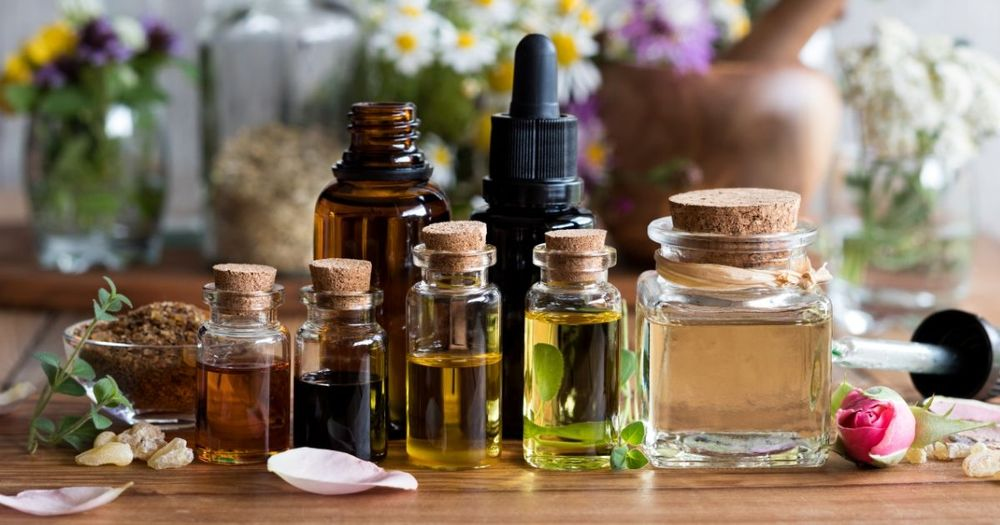
Open a bottle of lavender oil and the room changes before you've decided what to do with it. That's the charm of essential oils. A few drops carry a whole field of flowers, and it's easy to believe they can do anything.
Some of them do more than you'd guess. Peppermint oil rubbed on the temples has held its own against a standard headache tablet. Lavender has a solid record for easing anxiety. But the same little bottles carry surprises in the other direction too. Tea tree oil tops the list of essential oils behind reported skin allergies, and it gets worse as the bottle ages. And in one Australian state, eucalyptus oil was a leading cause of poisoning in toddlers.
Both things are true at once. These are real remedies and real hazards, in bottles small enough to lose in a handbag, and knowing which is which is the whole skill.
What's in the bottle
An essential oil is the scent of a plant, concentrated. Most are made by steaming leaves, flowers or bark and catching the fragrant oil that rises with the steam. Citrus oils are pressed straight from the peel. It takes a great armful of plant to fill a small bottle, which is why a single drop is so strong. Rose is the extreme: about three tonnes of petals go into a single kilo of rose oil, which is why most of what's sold is diluted.
That strength is the point to hold on to. An oil is a mix of dozens of active plant chemicals at a concentration the plant itself never reaches. It deserves the respect you'd give a medicine, and it gets into the body two ways: through the nose, where scent travels straight to the brain's centres for emotion and memory, and through the skin. Swallowing is kept for capsules made for the purpose, such as the peppermint ones below.
It's an old craft. The Persian scholar Ibn Sina refined the distilling of rose essence in the 11th century, and the abbess Hildegard of Bingen was using distilled lavender oil as medicine a century later. The word "aromatherapy" is much younger: it first appeared in print in 1937, in a book by the French chemist René-Maurice Gattefossé.
What the evidence supports
Lavender and a calmer mind. Breathing in lavender has a solid record for anxiety. When the evidence from dozens of groups was pooled, lavender inhalation brought anxiety scores down clearly. Blood pressure stayed where it was, so think of it as easing the feeling of worry, which is often exactly what you want before a hard day.
Sleep. Across 30 groups of adults and older people, aromatherapy improved how well they slept, and an aromatherapy massage did the most. Part of that is the scent and part is the ritual: the dimmed light, the warm hands, the signal that the day is over. Both count. Aromatherapy Scents for Relaxation and Mood, linked below, has the calming scents one by one.
Peppermint for a tension headache. A diluted peppermint oil solution, painted across the forehead and temples, eases the band-like ache of a tension headache, roughly matching a standard painkiller. In Germany it's licensed for exactly this. The cool tingle you feel is menthol at work on the nerves in the skin. To make your own, stir a few drops of into a spoonful of carrier oil, and keep it clear of your eyes.
An irritable gut. Peppermint goes inside here, but only in one form: enteric-coated capsules made to pass the stomach and open in the gut. In people with irritable bowel syndrome, they eased overall symptoms and tummy pain better than a dummy capsule, with one person helped for every four who took them. They also caused more side effects, heartburn among them. This is a capsule from a pharmacy, never drops from a bottle.
Tea tree for spots. A gentle tea tree gel, used for six weeks on mild to moderate acne, cleared far more spots than a gel without it. To try something plant-based on a teenage breakout, it's a reasonable first step, as long as the skin tolerates it. is made for spots, in a small tube that dabs on where it's needed.
Rosemary for thinning hair. In 100 people with pattern hair loss, rosemary oil worked into the scalp for six months regrew hair about as well as the standard minoxidil lotion, and it itched less. Both took longer than three months to show, so it asks for patience.
Head lice. A ready-made lice treatment with tea tree and lavender oils left 97.6 percent of people louse-free, against 25 percent with a common pyrethrin lice product. That was a tested formula from the pharmacy shelf, and it's one of the few places an oil has beaten the standard option. A few drops from your own bottle are a different thing.
Where the claims outrun the evidence
The immune-boosting claims have nothing behind them, and diffusing eucalyptus to keep colds away is wishful thinking. Many oils kill germs in a lab dish, but a dish and a living body are different worlds, and nothing shows that breathing in oils prevents infections. A diffuser also fills the room with the oil's own chemicals. When tea tree oil was run through home diffusers, the air's chemical load rose ten to a hundred times above normal, and a heated diffuser pushed several of its scent chemicals past long-term safety levels. How to Make Your Home Smell Fresh Without Air Fresheners, linked below, starts with clean air instead.
Claims like these are centuries old. Legend has it that thieves robbed plague victims in Marseille and stayed well thanks to a vinegar steeped with sage, rosemary, wormwood, cloves and camphor, rubbed on their hands and temples. If it helped at all, the likeliest reason is that several of those herbs repel fleas, and fleas carried the plague. Today's "thieves" oil blends sold to boost immunity trade on the same legend. The overclaiming carries on. In 2014 the FDA, the US medicines regulator, sent warning letters to two of the biggest essential-oil sellers, Young Living and doTERRA, after their sellers claimed the oils could treat Ebola, cancer, autism and more.
Bug sprays are another stretch. In a controlled test, plant-based repellents, mostly essential-oil sprays, kept mosquitoes off for less than 20 minutes on average, while a DEET spray lasted about five hours and repellent wristbands did nothing at all. A plant spray is fine for a back garden. Where mosquitoes carry disease, reach for something that lasts.
Even peppermint for nausea comes with a twist. After surgery, sniffing aromatherapy, peppermint included, did no better than a dummy. Sniffing a plain alcohol swab, though, eased nausea faster than standard anti-sickness medicine, which suggests the slow, deep breath and the sharp smell do much of the work.
For anything serious, essential oils sit beside proper treatment. They're helpers for comfort, mood, sleep and a few specific problems, and they're lovely at that.
Even where they work, they work on the symptom. Peppermint eases a tension headache for a while and leaves whatever brought it on, whether that's stress, poor sleep or caffeine. Lavender settles a worried evening without touching the worry. Use the oil for the hour, and look for the cause behind it.
Using them safely
On the skin, always diluted. A neat oil on the skin can burn or sensitise it. Mix a few drops into a spoonful of a plain carrier oil such as sweet almond, jojoba or fractionated coconut, and try it on a small patch of the inner arm first. If it itches or reddens within a day, leave that oil on the shelf.
In the bath. Oil floats on water, so drops tipped straight in land neat on your skin wherever they touch. Stir them into a spoonful of carrier oil or full-fat milk first. Lavender's name probably comes from the Latin lavare, to wash, from the old habit of bathing in it.
Old oils turn on the skin. Of all essential oils, tea tree has caused the most reported skin allergies, and the reason is air. Fresh tea tree oil is a mild to moderate irritant, but as it oxidises it becomes a much stronger one. Lavender has no natural protection against the same process, so once a bottle has been open a while its main scent chemicals turn into strong allergens. Among people tested for a suspected fragrance allergy, one in five reacted to the oxidised form of linalool, lavender's main scent chemical. Keep caps tight and bottles dark and cool, and use a fresh bottle for anything that goes on skin. That's one more reason a sealed tube of gel is a better choice for spots than an old bottle of neat oil.
Citrus oils and sunshine. Bergamot and some other citrus oils contain a compound that turns skin sensitive to sunlight, and the UV in daylight can then raise a burn or a dark patch. Keep pressed citrus oils off skin that will see the sun that day.
Never swallow oil from a bottle. Essential oils are poisonous in small amounts, and children are most at risk. Two oils are on the medical list of substances that can seriously harm a small child after a single swallow: oil of wintergreen, a close chemical cousin of aspirin, and camphor. In one Australian state, eucalyptus oil was a leading reason young children were admitted to hospital for poisoning, usually after a curious toddler found an open bottle. Even on the skin, a home remedy spread widely over a six-year-old girl left her slurring, wobbly and finally unconscious, though she recovered fully once it was washed off. Keep oils locked away like any medicine, with child-proof caps.
Keep strong vapours away from little faces. A toddler developed severe breathing trouble after a rub of camphor, menthol and eucalyptus was put directly under her nose. Peppermint, eucalyptus and menthol rubs belong well away from the faces of babies and young children.
Children and hormones. Eight young boys have developed breast tissue, and four girls early breast buds, while using products with lavender or tea tree oil, and it went away each time they stopped. Whether the oils caused it is still debated. In cell tests, though, some of the chemicals in lavender and other oils behaved like oestrogen and blocked male hormones, which gives those cases a plausible cause. It's a simple reason to keep children's toiletries plain.
Pregnancy and pennyroyal. Pennyroyal oil was long used to try to end pregnancies. It's toxic to the liver and has caused deaths, so it has no place on the shelf at all, and pregnancy is a time to keep any oil to a gentle scent.
Epilepsy. Eucalyptus and camphor oils can trigger seizures. In one hospital, three young adults had prolonged seizures, two after swallowing eucalyptus oil and one after rubbing on balms with eucalyptus and camphor. If you or your child has epilepsy, leave eucalyptus, camphor and sage oils out of the house.
Asthma. People with asthma react to fragranced products far more often than people without it, 55.6 percent against 23.9 percent in one national survey, and close to a quarter had an attack. If someone at home has asthma, keep the diffuser off around them.
Pets. Cats are especially vulnerable, since a cat's liver clears many of these chemicals slowly. Keep diffusers out of the rooms where pets sleep, and keep oils off the animal itself.
Buying an oil worth having
A "100% pure" label is only a promise. When pine oils on sale were checked against oil distilled straight from the trees, the shop-bought ones differed clearly in their chemistry. A good oil names the plant in Latin on the label, such as Lavandula angustifolia for true lavender, as Plant Therapy's does, says which part of the plant it comes from and where it was grown, and comes in dark glass. A price that seems too good for a precious oil like rose or sandalwood usually is.
Small bottles, used well
Essential oils sit somewhere between a pleasure and a medicine, and they're at their best when you treat them a little like both. Lavender for an anxious evening, peppermint for a tension headache, a tea tree gel for a spot, and a scent that makes a bath feel like a holiday are all worth having. The trouble starts when the respect slips: a bottle left open on a low shelf, a few drops stirred into water, a diffuser running all day in a room with a sleeping cat.
Pick one oil this week and use it well. Dilute a few drops of lavender in a carrier oil, patch test it on your arm, and rub it into your wrists before bed. Then breathe in, and let the room change.
Choosing a scent for a calmer evening? Aromatherapy Scents for Relaxation and Mood — the scents behind relaxation and mood, one by one.
Want your whole home to smell fresh? How to Make Your Home Smell Fresh Without Air Fresheners — clean air first, then a little natural scent.
Know someone with a shelf full of little brown bottles? Send them this. Some of those oils deserve more credit, and some deserve a tighter cap.
Tried something here, or got a question it didn't answer? Write to us at contact@allforlife.club. Your questions shape the next articles.
Disclaimer: This article is general information. For advice about your own health, talk to a qualified health professional. Never swallow essential oils from the bottle, and keep them locked away from children and out of reach of pets.
Affiliate Disclosure: This article contains affiliate links. As an Amazon Associate, All For Life earns from qualifying purchases, at no extra cost to you. We only link to products we would recommend without the commission.
Sources
Göbel H, Heinze A, Heinze-Kuhn K, et al. (2016). Oleum menthae piperitae (Pfefferminzöl) in der Akuttherapie des Kopfschmerzes vom Spannungstyp Peppermint oil in the acute treatment of tension-type headache. Der Schmerz 30(3):295–310. doi.org/10.1007/s00482-016-0109-6
Donelli D, Antonelli M, Bellinazzi C, et al. (2019). Effects of lavender on anxiety: A systematic review and meta-analysis. Phytomedicine 65:153099. doi.org/10.1016/j.phymed.2019.153099
de Groot AC, Schmidt E (2016). Tea tree oil: contact allergy and chemical composition. Contact Dermatitis 75(3):129–143. doi.org/10.1111/cod.12591
Day LM, Ozanne-Smith J, Parsons BJ, et al. (1997). Eucalyptus oil poisoning among young children: mechanisms of access and the potential for prevention. Australian and New Zealand Journal of Public Health 21(3):297–302. doi.org/10.1111/j.1467-842x.1997.tb01703.x
Wikipedia. Aromatherapy. en.wikipedia.org
Wikipedia. Rose oil. en.wikipedia.org
Her J, Cho MK (2021). Effect of aromatherapy on sleep quality of adults and elderly people: A systematic literature review and meta-analysis. Complementary Therapies in Medicine 60:102739. doi.org/10.1016/j.ctim.2021.102739
Ingrosso MR, Ianiro G, Nee J, et al. (2022). Systematic review and meta‐analysis: efficacy of peppermint oil in irritable bowel syndrome. Alimentary Pharmacology & Therapeutics 56(6):932–941. doi.org/10.1111/apt.17179
Jooya A, Siadat A, Iraji F, Enshaieh S (2007). The efficacy of 5% topical tea tree oil gel in mild to moderate acne vulgaris: A randomized, double-blind placebo-controlled study. Indian Journal of Dermatology, Venereology and Leprology 73(1):22. doi.org/10.4103/0378-6323.30646
Panahi Y, Taghizadeh M, Marzony ET, Sahebkar A (2015). Rosemary oil vs minoxidil 2% for the treatment of androgenetic alopecia: a randomized comparative trial. Skinmed 13(1):15–21. pubmed.ncbi.nlm.nih.gov/25842469
Barker SC, Altman PM (2010). A randomised, assessor blind, parallel group comparative efficacy trial of three products for the treatment of head lice in children - melaleuca oil and lavender oil, pyrethrins and piperonyl butoxide, and a "suffocation" product. BMC Dermatology 10(1):6. doi.org/10.1186/1471-5945-10-6
Zisook RE, Nembhard MD, Bandara SB, Gaffney SH (2025). Volatile organic compound and particle emissions from the use of tea tree oil in essential oil diffusers. Journal of Occupational and Environmental Hygiene :1–12. doi.org/10.1080/15459624.2025.2552751
Wikipedia. Four thieves vinegar. en.wikipedia.org
Deseret News (2014). 2 Utah companies respond to FDA warning over health claims. deseret.com
Fradin MS, Day JF (2002). Comparative Efficacy of Insect Repellents against Mosquito Bites. New England Journal of Medicine 347(1):13–18. doi.org/10.1056/NEJMoa011699
Hines S, Steels E, Chang A, Gibbons K (2018). Aromatherapy for treatment of postoperative nausea and vomiting. Cochrane Database of Systematic Reviews 2018(3). doi.org/10.1002/14651858.CD007598.pub3
NHS. Tension headaches. nhs.uk
Wikipedia. Lavandula. en.wikipedia.org
Hagvall L, Sköld M, Bråred‐Christensson J, et al. (2008). Lavender oil lacks natural protection against autoxidation, forming strong contact allergens on air exposure. Contact Dermatitis 59(3):143–150. doi.org/10.1111/j.1600-0536.2008.01402.x
Nath NS, Liu B, Green C, Atwater AR (2017). Contact Allergy to Hydroperoxides of Linalool and d -Limonene in a US Population. Dermatitis 28(5):313–316. doi.org/10.1097/DER.0000000000000318
Yasui Y, Hirone T (1994). Action Spectrum for Bergamot‐Oil Phototoxicity Measured by Sunburn Cell Counting. The Journal of Dermatology 21(5):319–322. doi.org/10.1111/j.1346-8138.1994.tb01746.x
Euwema MS, Schaffer DH, Swanson TJ. Deadly Single Dose Agents. StatPearls. ncbi.nlm.nih.gov/books/NBK441849
Darben T, Cominos B, Lee C (1998). Topical eucalyptus oil poisoning. Australasian Journal of Dermatology 39(4):265–267. doi.org/10.1111/j.1440-0960.1998.tb01488.x
Abanses JC, Arima S, Rubin BK (2009). Vicks VapoRub Induces Mucin Secretion, Decreases Ciliary Beat Frequency, and Increases Tracheal Mucus Transport in the Ferret Trachea. Chest 135(1):143–148. doi.org/10.1378/chest.08-0095
Henley DV, Lipson N, Korach KS, Bloch CA (2007). Prepubertal Gynecomastia Linked to Lavender and Tea Tree Oils. New England Journal of Medicine 356(5):479–485. doi.org/10.1056/NEJMoa064725
Braunstein EW, Braunstein GD (2023). Are Prepubertal Gynaecomastia and Premature Thelarche Linked to Topical Lavender and Tea Tree Oil Use?. touchREVIEWS in Endocrinology 19(2):9. doi.org/10.17925/EE.2023.19.2.9
Ramsey JT, Li Y, Arao Y, et al. (2019). Lavender Products Associated With Premature Thelarche and Prepubertal Gynecomastia: Case Reports and Endocrine-Disrupting Chemical Activities. The Journal of Clinical Endocrinology & Metabolism 104(11):5393–5405. doi.org/10.1210/jc.2018-01880
Wikipedia. Mentha pulegium. en.wikipedia.org
Mathew T, John SK, Kamath V, et al. (2020). Essential oil–related status epilepticus: A small case series study. JACEP Open 1(5):918–921. doi.org/10.1002/emp2.12147
Wikipedia. Thujone. en.wikipedia.org
Steinemann A, Wheeler AJ, Larcombe A (2018). Fragranced consumer products: effects on asthmatic Australians. Air Quality, Atmosphere & Health 11(4):365–371. doi.org/10.1007/s11869-018-0560-x
Court MH, Greenblatt DJ (2000). Molecular genetic basis for deficient acetaminophen glucuronidation by cats: UGT1A6 is a pseudogene, and evidence for reduced diversity of expressed hepatic UGT1A isoforms. Pharmacogenetics 10(4):355–369. doi.org/10.1097/00008571-200006000-00009
Allenspach M, Valder C, Flamm D, Steuer C (2021). Authenticity control of pine sylvestris essential oil by chiral gas chromatographic analysis of α-pinene. Scientific Reports 11(1):16923. doi.org/10.1038/s41598-021-96356-x