
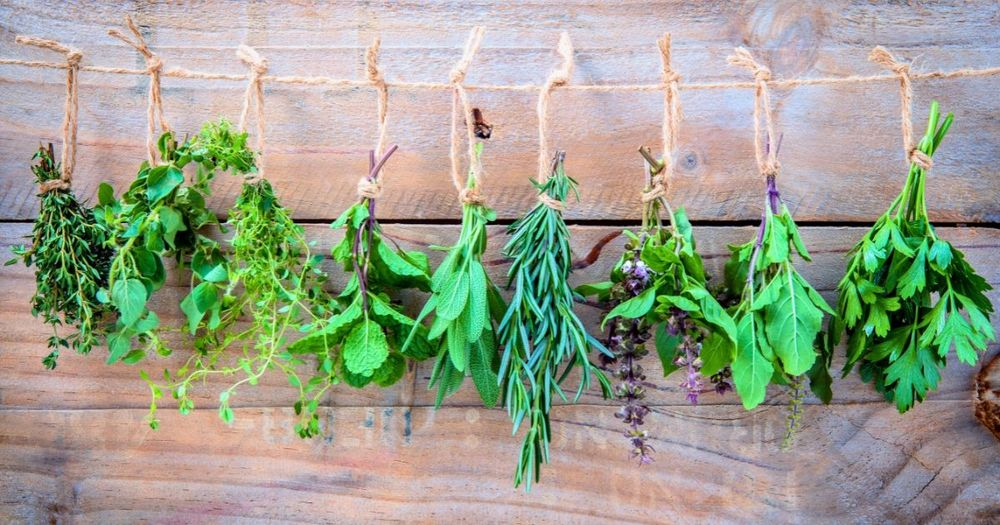
There's a particular pleasure in snipping something green from a pot on the windowsill and dropping it straight into the pan. The kitchen smells better for an hour. It costs almost nothing. And if you've ever bought one of those supermarket pots of basil and watched it collapse within the week, you already know the other half of this story.
So here are fifteen edible and medicinal plants worth trying indoors, how to keep them going, and what each is good for. Most of them are wonderful in the kitchen, a few have earned a modest place in the medicine cupboard, and one comes with a warning that the usual lists leave out.
What a plant can and can't do
Let's be clear about one thing first, because it changes how you use all fifteen.
Plants are useful for a while, for a particular complaint. A cup of ginger tea may settle a queasy stomach, and a thyme remedy may quieten a cough. But they help with the symptom. They don't change whatever is causing it. If your stomach is upset every day, or your cough won't leave, or you need lemon balm to get through every evening, the plant is only keeping you company while the real reason carries on underneath.
So use them for what they're good at, for as long as you need them, and then go and look for the cause. And keep them in proportion. These are what goes on the meat and fish, not the meal itself: the side, never the foundation.
Kitchen amounts are one thing. Teas every day, tinctures and capsules are another, and a plant being natural doesn't stop it from interfering with a medicine. If you're pregnant, or you take anything regularly, talk to a qualified health professional before you go beyond seasoning.
People have been growing medicine close to hand for a long time, and they took it seriously. When Venice founded the botanical garden at Padua in 1545, part of its job was to teach students to tell genuine medicinal plants from false ones, because a mix-up could badly hurt a patient. It needed a wall around it as well, because of the thefts at night, in spite of fines, prison and exile. Knowing exactly what's in your pot is still the first rule.
Before you plant anything
Light comes first. Most of these want at least six hours of direct sun, and that's more than most windowsills can give. A south-facing window is the best place to start. If yours can't manage it, a small grow light will do the rest.
Water less than you want to. Overwatering is the classic way to lose a herb. Let the top inch of soil dry out before you water again. Rosemary and thyme like it drier still, and mint likes it damper, so don't treat them all the same.
Give them good soil and a hole in the pot. Use well-draining potting soil, with something like compost tea or fish emulsion once a month. Roots sitting in water will rot, whatever else you do right.
Cut often, and cut from the top. Pinch a stem just above a pair of leaves and it will branch from there. Take no more than about a third of the plant at once, and it will keep coming back. If you never cut it, a herb goes to flower and gives up on leaves.
Keep the surplus. When you have more than you can use, chop it and freeze it in butter or tallow, in an ice cube tray. Next time, one cube goes straight into the pan with the meat.
Label the pots. Do this especially with children around. Young herbs look alike, and it's as well to know exactly what you're picking.
Check the list if you have pets. This one rarely gets a mention. The ASPCA lists aloe, mint, oregano and parsley as toxic to cats and dogs, usually in the form of stomach upset after a large amount, and parsley can make them sensitive to sun. Basil, rosemary and thyme are on its non-toxic list. Kalanchoe is on the toxic one too, and can upset the heart's rhythm. If you've got a chewer, put those up high, or look each plant up before you buy it.
For the plate
Herbs do their best work on the plate. How to Unlock the Flavour of Your Meals, Starting With Salt, linked below, has why flavour is mostly smell.
1. Parsley. The name comes from the Greek for "rock celery". Curly parsley spent decades as the garnish left on the side of the plate, but it deserves better. Chop a big handful over grilled fish or lamb at the last minute. It's a biennial, so expect to start again after its second year.
2. Cilantro. If it tastes of soap to you, you aren't imagining things, and it isn't the cook's fault. Variations near a smell receptor gene called OR6A2 are linked to that taste, and there's no arguing with your nose. You may have read that it flushes heavy metals from the body. No good human trial turned up to support that. Grow it for the flavour, and sow a little every few weeks, because it runs to seed fast.
3. Dill. Dill was found in the tomb of the Egyptian pharaoh Amenhotep II, from around 1400 BC, so it has been keeping people company for a long time. It's made for salmon, herring and eggs. It grows tall, so give it a deep pot.
4. Basil. Here is your supermarket pot. Those are dozens of seedlings crowded together, so split them into a few pots and they'll stand a much better chance. Think of it as rehousing. Then keep basil warm and in the sun, and pinch out the tops so that it branches. It's lovely over a good steak with butter.
For the cup
5. Mint. Mint spreads without asking, by runners both above and below the ground, and some kinds are considered invasive. Keep it in its own pot, and it can't take over the others. Mint has never once stayed where it was put. It's lovely in hot water. If you get heartburn, go carefully, because mint tea may make it worse.
6. Lemon balm. Its Latin name, Melissa, is the Greek for honey bee, because the flowers bring them in. This is the one with a real record for calming. Herbs for Stress and Anxiety: What Works and What to Skip, linked below, has it: anxiety scores came down clearly when the evidence was pooled, with no serious side effects. A few fresh leaves make a soft, lemony tea for the evening, and loose will carry you through while your plant is small.
7. Peppermint. It's a natural cross between watermint and spearmint, and it's the strongest smelling of the family. A smell is where it does most of its work. Boost Your Energy Naturally: Alternatives to Caffeine has how it works through the nose. Crush a leaf between your fingers next time your afternoon starts to sag.
For the roast
8. Rosemary. The Latin ros marinus means "sea dew", and it does best with plenty of light and rather dry feet. It's also the herb with the best reason to be near your meat. Cooking beef at high heat produces harmful compounds, and in a lab test on beef patties, rosemary extract cut two of them by up to 92% and 85%. That was a concentrated extract, so don't expect a sprig to do the same, but it's still a good reason to rub it in. 7 Natural Remedies to Boost Your Memory—and the Three That Pass the Test has what the scent may do for your memory.
9. Thyme. Ancient Greeks put thyme in their baths and burned it in their temples, believing it gave courage. Women in the Middle Ages gave knights gifts that included thyme leaves, believing they brought courage to whoever carried them.
Its main compound is thymol, and there's a real test behind its reputation for coughs. Among 361 people with bronchitis, those taking a thyme and primrose tablet had 67% fewer coughing fits about a week in, against 51% on a dummy tablet. That's a measured extract, and most coughs get better either way. A hot cup with fresh sprigs is still a kind thing to do for a sore chest.
10. Oregano. Some say the name means "joy of the mountain", though the Oxford English Dictionary disagrees. Americans barely knew it until soldiers came home from the Second World War with a taste for the "pizza herb". It's easy, it loves the sun, and it belongs on lamb. It's the oil you need to be wary of, as it's a far stronger thing than the leaf.
11. Sage. It had such a reputation in the Middle Ages that it was known as salvatrix, "the saviour". Its modern record is much smaller, but it isn't nothing. In a test on 20 people over 65, a sage extract improved memory for hours afterwards compared with a dummy. It's a small test of an extract, so enjoy it with pork and butter, and see what your memory does.
John Gerard's herbal of 1597 said sage was "singularly good for the head and brain" and that it "quickeneth the senses and memory". He would be pleased with that small test, and a little surprised at how long it took.
The slow roots
12. Ginger. This is the patient one. Plant a firm, fresh piece with a few buds on it in a pot at least 12 inches wide, keep it warm, and expect to wait the better part of a year. It won't stand the cold. Five Herbs That Support Liver Function — and the Specific Mechanisms Behind Each One has where it does have evidence, which is nausea. Check for interactions if you take any medicine.
13. Turmeric. Same family, same pot, and much the same patience. You'll get lovely leaves and, some months later, a very small harvest for your efforts. You'll have earned every gram. Enjoy it in food. Five Herbs That Support Liver Function has why the concentrated supplements are a different matter, and why they have been linked to liver injury.
For the skin only
14. Aloe vera. Keep it on the outside. It's easy to grow and hard to kill. It forgives almost everything, including you.
Across 4 studies with 371 people, burns treated with aloe healed about 9 days sooner, though the products varied so much that the authors wouldn't draw a firm conclusion. For a small kitchen burn, cool it under running water first, and then the gel may soothe it. If you don't have a plant yet, a good will do the same job. Anything larger or blistered needs proper care. What to Drink Instead of Plain Water — and What the Popular Alternatives Do to Your Body has why the juice is a laxative in disguise.
15. Kalanchoe. This is the warning. You'll see it sold as the "miracle leaf", and it's a remarkable plant to watch, with small new plants forming along the leaf edges. But it contains bufadienolides, cardiac glycosides that can poison the heart, especially in grazing animals. The old lists call it a reliable first-aid plant. Please don't use it as one.
Grow it because it's pretty, keep it away from children and pets, and leave the medicine to something else.
The garden itself
The most reliable benefit in this whole article may be the gardening. Stress Management 101: Simple Techniques Anyone Can Master in Minutes has the allotment gardeners whose cortisol dropped further after half an hour of gardening than after half an hour of reading. An indoor pot is a much smaller version, but ten minutes of pinching and watering is ten minutes with your hands in something real.
You don't need an allotment. In a test of 24 young men, each spent a short session repotting an indoor plant and another on a computer task. After the repotting they felt more comfortable and soothed, and the body's stress signals, which climbed during the computer work, fell by the end of the repotting. It's a small test, and it's a good excuse to put your laptop down and split that basil.
You don't have to start with fifteen. Pick three you'll use this week, perhaps basil, rosemary and mint, and let them teach you your windowsill before you add a fourth.
When you're ready for more, put them together by purpose. A "tea garden" could be mint, lemon balm and peppermint, each in its own pot. A "pizza garden" could be basil, oregano and thyme.
Chamomile would make a nice guest in the tea garden, too. Herbs for Stress and Anxiety has how it held anxiety at bay better than a dummy when it was taken every day for months.
Fresh from your own windowsill
You won't become self-sufficient on a windowsill, and you won't replace your medicine cabinet. What you'll have is a kitchen that smells wonderful and food that tastes more alive, and when you need a little help for a sore throat or a queasy stomach, it may be growing right beside you. Just remember to look for the reason if the trouble keeps coming back.
This week, buy one pot of basil and split it into three.
Wondering what to do with all those herbs? How to Unlock the Flavour of Your Meals, Starting With Salt — salt, browning, the savoury taste, why flavour is mostly smell, and a squeeze of something sour to finish.
After a calmer evening? Herbs for Stress and Anxiety: What Works and What to Skip — lemon balm, chamomile, the herbs with the biggest promises, and whose small print matters most.
Know someone whose basil never survives the week? Send them this, and tell them to split the pot.
Disclaimer: This article is general information. For advice about your own health, talk to a qualified health professional.
Affiliate Disclosure: This article contains affiliate links. As an Amazon Associate, All For Life earns from qualifying purchases, at no extra cost to you. We only link to products we would recommend without the commission.
Sources
ASPCA. Toxic and Non-Toxic Plants (mint, oregano, aloe, parsley, kalanchoe, basil, rosemary, thyme). aspca.org
Wikipedia. Orto botanico di Padova. en.wikipedia.org
Wikipedia. Parsley. en.wikipedia.org
Wikipedia. Coriander. en.wikipedia.org
Wikipedia. Dill. en.wikipedia.org
Wikipedia. Mentha. en.wikipedia.org
Wikipedia. Melissa officinalis. en.wikipedia.org
Ghazizadeh J, Sadigh-Eteghad S, Marx W, et al. (2021). The effects of lemon balm (Melissa officinalis L.) on depression and anxiety in clinical trials: A systematic review and meta-analysis. Phytotherapy Research 35(12):6690–6705. doi.org/10.1002/ptr.7252
Wikipedia. Peppermint. en.wikipedia.org
Wikipedia. Rosemary. en.wikipedia.org
Puangsombat K, Smith JS (2010). Inhibition of Heterocyclic Amine Formation in Beef Patties by Ethanolic Extracts of Rosemary. Journal of Food Science 75(2):T40–T47. doi.org/10.1111/j.1750-3841.2009.01491.x
Wikipedia. Thyme. en.wikipedia.org
Kemmerich B (2007). Evaluation of efficacy and tolerability of a fixed combination of dry extracts of thyme herb and primrose root in adults suffering from acute bronchitis with productive cough. Arzneimittelforschung 57(9):607–615. doi.org/10.1055/s-0031-1296656
Wikipedia. Oregano. en.wikipedia.org
Wikipedia. Salvia officinalis. en.wikipedia.org
Scholey AB, Tildesley NTJ, Ballard CG, et al. (2008). An extract of Salvia (sage) with anticholinesterase properties improves memory and attention in healthy older volunteers. Psychopharmacology 198(1):127–139. doi.org/10.1007/s00213-008-1101-3
University of Vermont Extension. Growing Ginger and Turmeric Indoors. uvm.edu
Halegoua-DeMarzio D, Navarro V, Ahmad J, et al. (2023). Liver Injury Associated with Turmeric—A Growing Problem: Ten Cases from the Drug-Induced Liver Injury Network [DILIN]. The American Journal of Medicine 136(2):200–206. doi.org/10.1016/j.amjmed.2022.09.026
Maenthaisong R, Chaiyakunapruk N, Niruntraporn S, Kongkaew C (2007). The efficacy of aloe vera used for burn wound healing: A systematic review. Burns 33(6):713–718. doi.org/10.1016/j.burns.2006.10.384
Wikipedia. Kalanchoe pinnata. en.wikipedia.org
Van Den Berg AE, Custers MHG (2011). Gardening Promotes Neuroendocrine and Affective Restoration from Stress. Journal of Health Psychology 16(1):3–11. doi.org/10.1177/1359105310365577
Lee MS, Lee J, Park BJ, Miyazaki Y (2015). Interaction with indoor plants may reduce psychological and physiological stress by suppressing autonomic nervous system activity in young adults: a randomized crossover study. Journal of Physiological Anthropology 34:21. doi.org/10.1186/s40101-015-0060-8
Mao JJ, Xie SX, Keefe JR, et al. (2016). Long-term chamomile (Matricaria chamomilla L.) treatment for generalized anxiety disorder: A randomized clinical trial. Phytomedicine 23(14):1735–1742. doi.org/10.1016/j.phymed.2016.10.012