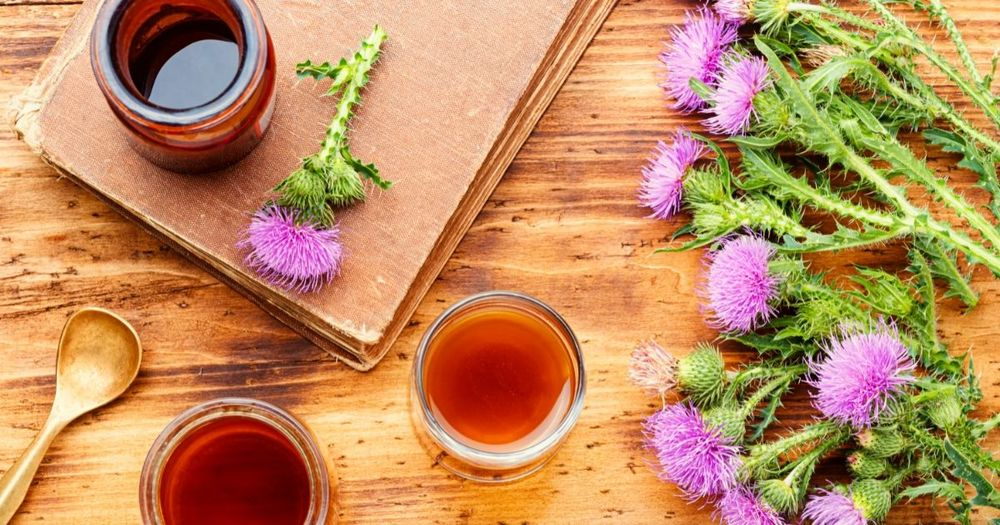
The same five herbs appear on every liver health list. Milk thistle. Dandelion. Turmeric. Ginger. Black radish. The standard coverage gives each one a paragraph describing it as a liver tonic or detox supporter, lists a few studies, and suggests drinking it as a tea.
What that coverage consistently skips is the specific mechanism each herb works through — and why that distinction matters. The liver runs a two-phase enzyme system. Phase I converts fat-soluble compounds into reactive intermediates. Phase II packages those intermediates for export through bile or urine. Bile ships them out. Each of these five herbs targets a different point in that system. Using them without understanding where they act is like taking medication without knowing what it does.
One important framing before the list: these herbs address consequences rather than causes. Milk thistle reduces hepatocyte damage from Phase I reactive intermediates — it leaves untouched why Phase I is generating more intermediates than Phase II can clear. Dandelion root improves bile flow — the reason bile is sluggish remains. The underlying causes are almost always dietary and lifestyle: nutrient depletion, alcohol, processed food, medication burden, and environmental chemical load. Herbs reduce the consequences of those inputs. The section on what herbs cannot replace at the end matters as much as the herb list itself.
What follows covers what each herb specifically does within the Phase I/II framework — and which symptoms or patterns suggest it is the right tool.

Milk Thistle — Hepatocyte Protection During Phase I
Milk thistle active compound is silymarin — a group of flavonolignans extracted from the seeds. Silymarin has been researched more thoroughly than any other hepatoprotective herb, with evidence accumulating since the 1970s.
Its primary mechanism is membrane stabilisation. Phase I processing generates reactive oxygen species as a byproduct of cytochrome P450 enzyme activity. These reactive molecules attack hepatocyte cell membranes, causing oxidative damage that contributes to liver inflammation and fibrosis over time. Silymarin stabilises the phospholipid structure of the hepatocyte membrane, reducing the permeability that allows reactive molecules to cause intracellular damage. Research shows silymarin can increase glutathione levels in hepatocytes by up to 35%.
The second mechanism is Nrf2 activation. Silymarin upregulates Nrf2 signalling, increasing the liver own production of glutathione and other endogenous antioxidants. This signals the liver to increase its own protective output rather than supplying antioxidants externally.
The third mechanism is NF-kB suppression — the master switch for inflammatory gene expression in the liver. This is the mechanism behind its protective effect in alcohol-related and drug-induced liver injury.
Who benefits most: People with regular alcohol consumption, anyone taking medications processed extensively through Phase I — statins, NSAIDs, paracetamol — and people with elevated liver enzymes where Phase I-related oxidative damage is the likely driver.
Practical note: Silymarin has low oral bioavailability in standard milk thistle preparations. Phosphatidylcholine-complexed silymarin has substantially better absorption. The form matters more than the dose for people who have tried standard milk thistle without effect. Taking it with a meal containing healthy fat improves absorption further.
For people who drink regularly, the timing of milk thistle relative to drinking matters more than most guidance acknowledges. Silymarin taken 30-60 minutes before drinking provides hepatocyte membrane protection during the Phase I processing spike as alcohol is metabolised. Taking it only the following morning addresses ongoing inflammation but misses the acute exposure window. The before-drinking dose is the more protective one.
delivers the silybin-phosphatidylcholine complex discussed above — the form with documented absorption advantages over standard milk thistle capsules.
Safety note: Milk thistle belongs to the Asteraceae plant family. People with allergies to ragweed, marigolds, daisies, or chamomile — all Asteraceae — may react to it. Chamomile is worth noting specifically because it is widely consumed as a calming tea without the connection being widely recognised. It can interact with medications processed through the same CYP450 enzymes it modulates — including blood thinners and certain diabetes medications.
Dandelion Root — Bile Production and Phase II Glucuronidation
Dandelion root is classified botanically as a bitter herb — it contains sesquiterpene lactones including taraxasterol that stimulate bile production through the same mechanism as other bitter compounds. This gives it a specific and well-defined role in the bile export pathway that generic liver tonic framing obscures.
Bitter compounds on the tongue and in the upper digestive tract trigger vagal nerve signalling that stimulates bile production in the liver and contraction of the gallbladder. Research has documented bile flow increases of around 40% after dandelion root administration — one of the highest bile-stimulating effects of any commonly available herb.
The practical significance: Phase II packages toxins for export through bile. When bile flow is sluggish, packaged compounds back up regardless of how well Phase II is performing. Dandelion root addresses the export stage — it keeps the shipping lane open.
The secondary mechanism is glucuronidation support. Dandelion root contains taraxacin and taraxacerin, compounds that induce UDP-glucuronosyltransferase activity — the primary enzyme family for Phase II glucuronidation. Glucuronidation is the pathway through which the liver processes oestrogen, bilirubin, and many medications.
Who benefits most: People with digestive sluggishness after fatty meals, bloating that worsens through the day, hormonal symptoms linked to oestrogen dominance, and anyone whose Phase II processing appears backed up at the export stage.
Practical note: Dandelion root works substantially better taken before meals than after. The bitter stimulus needs to arrive before food for bile to be prepared and ready for fat digestion. Fifteen to twenty minutes before eating is the effective window.
One distinction that changes results significantly: the liver-supporting bile-stimulating effects come primarily from the root. The leaf has mild diuretic properties but substantially weaker bile stimulation. Most supermarket dandelion tea bags contain the leaf. Someone who has tried dandelion tea for digestive support and noticed nothing may simply have been using the wrong part of the plant. Dandelion root tea and dandelion root capsules are sold as distinct products — checking the label specifically for root is worth the extra attention.
— confirm the label specifies root, not leaf, before purchasing.
Safety note: Dandelion shares the Asteraceae family allergy risk with milk thistle. Because it stimulates bile flow and gallbladder contraction, people with existing gallstones should approach it with caution — increased gallbladder contraction in the presence of stones can provoke biliary colic. It can also interact with blood thinners and diabetes medications.
Turmeric — Nrf2 Activation and Phase II Induction
Turmeric active compound curcumin is one of the most studied Nrf2 activators in the dietary literature. Curcumin modifies the Keap1 protein that normally keeps Nrf2 inactive, freeing Nrf2 to migrate to the nucleus and activate the antioxidant response element — the stretch of DNA that controls production of glutathione, superoxide dismutase, catalase, and Phase II detoxification enzymes.
This makes curcumin mechanism distinct from silymarin. Milk thistle protects hepatocytes from Phase I oxidative damage. Curcumin increases the liver capacity to produce its own protective compounds, accelerating both cell protection and Phase II conjugation. The two herbs work at different points in the same system and are genuinely complementary.
The second mechanism is NF-kB suppression through a different molecular route than silymarin. Curcumin blocks IkB kinase, preventing the phosphorylation step that activates NF-kB. This reduces hepatic inflammation and protects against the fibrotic changes that sustained liver inflammation drives over time.
Standard turmeric powder in food provides minimal curcumin absorption — most passes through the gut without entering systemic circulation. Black pepper active compound piperine inhibits the enzymes responsible for curcumin metabolism, increasing bioavailability by up to 2000%. Lipid-soluble curcumin preparations similarly improve absorption.
Who benefits most: People with chronic inflammatory conditions, anyone supporting liver recovery after a period of sustained alcohol or medication load, and people whose bloodwork shows elevated inflammatory markers alongside liver enzyme changes.
Practical note: Curcumin taken with a fat-containing meal absorbs better. Fat facilitates micelle formation in the gut, improving curcumin transit into the bloodstream. Turmeric with black pepper in a meal containing fat outperforms the same amount in water on an empty stomach.
The traditional Indian preparation takes this further: sautéing turmeric in ghee or coconut oil for a minute or two before adding other ingredients produces substantially better curcumin bioavailability than taking a capsule alongside a fatty meal. The combination of heat and lipid extracts curcumin from the plant matrix and incorporates it into fat droplets that transit the gut wall efficiently. This is the mechanism behind the turmeric-fat cooking tradition that modern bioavailability research has confirmed. A tablespoon of turmeric sautéed in ghee outperforms the equivalent capsule dose taken with food.
provides the high-bioavailability form the practical note describes — standardised curcuminoid content with black pepper extract included.
Safety note: At standard dietary amounts, turmeric is safe for the overwhelming majority of adults. At high-dose, highly bioavailable supplement concentrations, rare cases of liver injury have been reported. People with existing liver conditions or taking hepatically metabolised medications should confirm with a practitioner before using concentrated curcumin supplements. High doses may also contribute to kidney stone formation in people prone to them.
Ginger — Phase II Glutathione S-Transferase Induction
Ginger liver mechanism is the least discussed of the five herbs on this list — it rarely appears in liver health content beyond vague anti-inflammatory claims — but it has one of the more specific documented actions on Phase II enzyme activity.
Gingerols and shogaols — the active compounds in fresh and dried ginger respectively — induce Phase II glutathione S-transferase (GST) enzymes. GST specifically handles heavy metals, environmental chemicals, and reactive oxygen species. When GST activity is adequate, these compounds are conjugated with glutathione and exported rapidly. When GST is insufficient, heavy metals and chemical toxins accumulate in tissue.
The anti-inflammatory mechanism works through COX-2 inhibition and prostaglandin suppression, reducing hepatic inflammation through a distinct route from both silymarin and curcumin — an additive contribution.
The third mechanism is gastroprotective. Ginger stimulates mucus secretion in the gastric lining and maintains healthy motility, supporting the digestion-liver relationship. Adequate gastric function reduces the fermentation byproducts and bacterial translocation that increase the liver inflammatory burden through the gut-liver axis.
Who benefits most: People with known or suspected heavy metal exposure, chemical sensitivity, persistent skin inflammation, and anyone whose Phase II processing appears specifically deficient in glutathione conjugation capacity. Also effective alongside cruciferous vegetables — both drive GST activity through different mechanisms.
Practical note: Fresh ginger contains gingerols. Dried ginger contains higher concentrations of shogaols, which have stronger GST-inducing activity. For liver enzyme induction specifically, dried ginger preparations deliver more of the relevant compounds.
in capsule form delivers consistent shogaol concentration — the compound fresh ginger tea cannot reliably provide.
Safety note: At culinary amounts, ginger is well tolerated. At high supplemental doses, it has mild antiplatelet activity and can increase bleeding risk — relevant for anyone taking blood thinners or preparing for surgery.

Black Radish — Nrf2 and Bile Simultaneously
Black radish is the only herb on this list that works on two distinct parts of the system simultaneously — Nrf2 activation through glucosinolate conversion and bile stimulation through choleretic and cholagogue activity.
The glucosinolate mechanism: black radish contains the highest glucosinolate concentration of any commonly available food — approximately four times higher than broccoli. Glucosinolates are converted to isothiocyanates by myrosinase enzyme activity in the gut. Isothiocyanates modify the Keap1-Nrf2 complex, freeing Nrf2 to activate Phase II enzyme production — the same pathway curcumin targets through a different molecular interaction. Clinical research has documented measurable improvements in Phase II enzyme activity and hepatic processing of acetaminophen after four weeks of supplementation.
The bile mechanism: black radish stimulates bile production in the liver and gallbladder contraction to release stored bile. This addresses the same export stage that dandelion root targets, but through a different stimulus pathway. Together they provide bile support through complementary mechanisms.
The anti-inflammatory mechanism: black radish extract suppresses pro-inflammatory cytokines including IL-6 and TNF-alpha, protecting liver cells from the inflammatory cascade that sustained Phase I activity generates.
Who benefits most: People with both Phase II sluggishness and bile flow issues simultaneously — the pattern that produces the widest symptom range across energy, digestion, hormonal balance, and chemical sensitivity. The most relevant herb for people who react to multiple things — foods, medications, environmental chemicals.
Practical note: The isothiocyanate conversion from glucosinolates requires myrosinase enzyme activity, which heat destroys. Fresh black radish juice or raw preparations preserve myrosinase. Adding mustard powder to processed black radish preparations restores the conversion pathway.
provides standardised glucosinolate levels for consistent Phase II and Nrf2 support.
Safety note: Generally well tolerated at typical food and supplement doses. As with dandelion, its bile-stimulating activity means caution is appropriate for people with gallstones. Avoid during pregnancy without practitioner guidance.
What Herbs Cannot Replace — The Nutrient Foundation
Herbs support specific liver pathways. What they cannot substitute for is the nutrient base those pathways run on.
The liver Phase I and Phase II enzyme systems require protein (for glutathione, glycine, and amino acid conjugation), B vitamins (for Phase I cytochrome P450 function and Phase II methylation), magnesium (for glucuronidation and glutathione synthesis), and sulphur compounds from cruciferous and allium vegetables (for Nrf2 activation and sulphation). When these are insufficient, herbs provide diminishing support because the underlying machinery lacks its raw materials.
There is a useful irony in the liver support space. The detox industry built a multibillion-dollar business convincing people their liver needs exotic interventions. Meanwhile, desiccated liver — simply dried, powdered beef liver in capsule form — concentrates many of the nutrients the liver enzyme systems depend on: preformed vitamin A, B12 in its methylated form, heme iron, folate, choline, copper, and zinc. These are the same nutrients depleted by the modern dietary patterns that slow Phase I and Phase II processing. Herbs like milk thistle and dandelion support liver function from the outside. Desiccated liver supplies what the liver uses internally.
The relevant caution: because desiccated liver is dense in preformed vitamin A and iron, it accumulates with regular use. People who take a multivitamin, eat liver regularly, or are pregnant should account for their total vitamin A intake. The upper tolerable limit for preformed vitamin A in adults is 3,000 micrograms per day — easy to exceed if multiple high-dose sources are combined.
A from grass-fed, freeze-dried sources preserves the most heat-sensitive nutrients and provides the nutrient matrix in a form the body recognises from whole food.
Which Herb for Which Pattern
The five herbs map to distinct symptom clusters. Reading from symptom to herb is faster than working backward from mechanism.
Wine headaches, caffeine sensitivity, poor medication tolerance, or feeling worse after paracetamol than others — these point to Phase I generating reactive intermediates faster than Phase II clears them. Milk thistle addresses the Phase I oxidative damage directly. Black radish and turmeric support Phase II enzyme production to close the gap.
Bloating after fatty meals, sluggish digestion that worsens through the day, or hormonal symptoms including PMS, hormonal acne, and heavy periods — these point to sluggish bile flow and backed-up Phase II export. Dandelion root before meals is the most direct intervention. Black radish works complementarily on the same export stage through a different mechanism.
Chemical sensitivity, reactions to perfumes or cleaning products, persistent skin inflammation, or known heavy metal exposure — these point to insufficient glutathione conjugation through the GST pathway. Ginger specifically induces GST and is the most targeted herb for this pattern. Milk thistle supports glutathione levels concurrently.
Fatigue alongside any combination of the above, particularly fatigue that worsens after alcohol or a meal — this suggests Phase I/II mismatch with significant reactive intermediate accumulation. The combination of milk thistle (cell protection) with dandelion root (export support) and black radish (Nrf2 induction) addresses the full chain.
If more than one pattern is present, that points toward the nutrient foundation rather than herb selection — the pathways themselves are under-resourced, and herbs provide diminishing support when the underlying cofactors are depleted.
Using These Herbs Together
The five herbs target different points in the same system. Milk thistle protects cells from Phase I damage. Turmeric and black radish activate Nrf2 through different molecular routes. Dandelion root and black radish support bile flow through complementary mechanisms. Ginger induces GST specifically.
A 2023 randomised controlled trial found that a combined formulation of milk thistle, turmeric, dandelion, and ginger produced significant improvements in ALT, AST, ALP, and GGT — four standard markers of liver enzyme activity — in healthy adults. This provides direct clinical evidence for what the mechanistic argument above predicts: herbs targeting different stages produce additive effects at the level of measurable liver function.
The most common clinical combination is milk thistle with dandelion root — cell protection alongside bile support. Black radish extends this to cover Nrf2 induction and export simultaneously. Turmeric adds the curcumin-specific Nrf2 pathway and stronger anti-inflammatory coverage. Ginger extends to GST induction and gut protection.
The clearest starting point is to identify which part of the system is most likely underperforming — the symptom-to-herb section above maps the most common patterns — and select the herb whose mechanism addresses that stage. Adding herbs systematically produces clearer cause-and-effect than taking all five simultaneously from the start.
On duration and cycling: milk thistle has a strong long-term safety record and can be taken continuously at standard doses. Dandelion root and black radish are best cycled — six to eight weeks on followed by a two-week break. Both stimulate bile production and gallbladder contraction; sustained continuous stimulation can reduce the gallbladder's own contractile response over time, creating a dependency on the stimulus that the cycling protocol prevents. Ginger and turmeric at dietary and moderate supplement doses carry no particular cycling requirement.
The herbs on this list are genuinely useful tools. They reduce the consequences of a liver system under load — the inflammation, the processing slowdowns, the export bottlenecks. What they leave unchanged is the load itself. The person who adds milk thistle to a diet built on alcohol, processed food, and nutrient depletion has done something useful and something insufficient simultaneously. The nutrient foundation, the dietary quality, and the lifestyle inputs that determine the liver's workload are where the larger leverage lives. Herbs fill gaps in a system that is otherwise supported. When they become the whole strategy, the underlying causes continue undisturbed.
The Phase I and Phase II mechanisms these herbs support are explained in full in the companion article. You Don't Detox Your Liver — Your Liver Detoxes You. The Question Is What Slows It Down. — the full framework behind what each herb above is doing and why.
The mineral and nutrient deficiencies that slow the same system these herbs support. 12 Signs Your Body Is Trying to Tell You Something Important — and the Root Causes Behind Each One — when fatigue, skin problems, and hormonal symptoms persist alongside herbal support, these are the root causes worth investigating.
Know someone who takes milk thistle or dandelion tea without knowing what it does? The mechanism behind each herb changes how and when to use it. Worth sharing with anyone whose approach to liver support is based on reputation rather than specific action.
Disclaimer: This article is for educational and informational purposes only and does not constitute medical advice. Herbs can interact with medications and may be contraindicated in certain health conditions. Anyone taking prescription medications or with existing liver conditions should consult a qualified healthcare provider before using herbal liver support.
Affiliate Disclosure: This article contains affiliate links. If you purchase through these links, we may earn a small commission at no additional cost to you. We only recommend products we consider genuinely relevant to the topics discussed.