
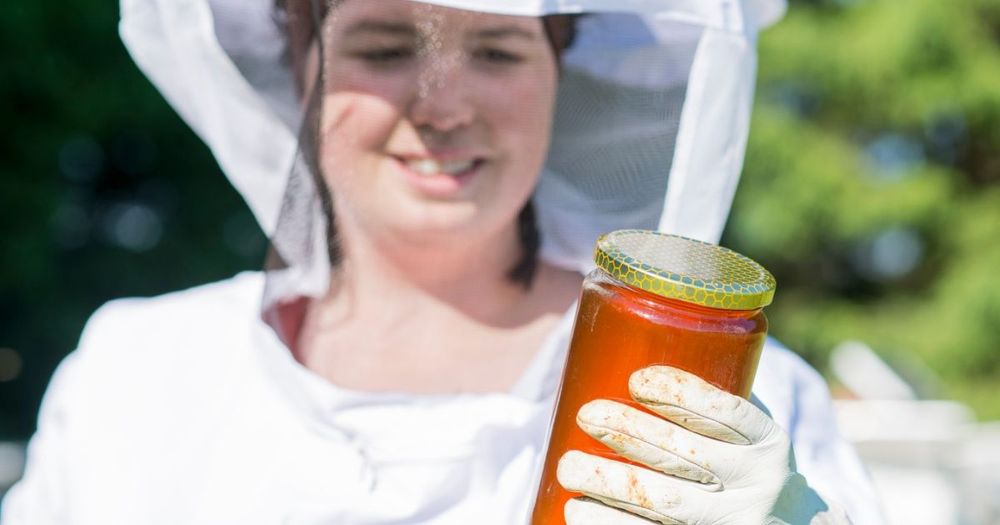
Thirty-six people with hay fever were given a spoonful a day of one of three things: local honey, raw and unfiltered; ordinary filtered honey from the shops; or corn syrup flavoured to taste like honey. At the end of the test, neither honey had given any more relief than the syrup. The syrup, to be fair, was trying its best.
That is hard news in the middle of a pollen season, when the sneezing, the streaming eyes and the itch at the back of the throat come back every day, and a spoonful of something sweet and local sounds like the kindest remedy there is. Local honey is one of the most popular allergy remedies around, and the idea behind it is a reasonable one.
So here are the seven things local honey is said to do, one claim at a time, and what the evidence found for each.
1. It trains the body against local pollen
The idea comes from allergy treatment itself. In immunotherapy, the body is given tiny, rising amounts of the thing it reacts to until it learns to tolerate it. Local honey, the thinking goes, carries traces of local pollen, so a spoonful a day should do the same job, more sweetly.
Unconventional Remedies for Chronic Allergies, linked below, has the test with the corn syrup, and the likely reason it failed. Hay fever comes mostly from the light pollen of grasses and trees, made to float on the wind. Bees collect the heavy, sticky pollen of flowers, made to be carried by insects. The pollen in the jar is mostly not the pollen in our noses. The bees and the grass are not working together.
There is one interesting exception, and it makes the same point from the other side. Forty-four people with a birch pollen allergy ate honey every day through the winter, in rising amounts. Some had honey with birch pollen added to it, the rest plain honey, and 17 more stayed on their usual medicine. In the birch season, the birch-pollen honey group reported symptom scores 60% lower than those on medicine alone, and did a little better than those on plain honey. It was a small pilot, and its authors called the results preliminary. And the pollen had to be put in on purpose.
The idea behind it is sound when the pollen is the right one and the amount is measured. Unconventional Remedies for Chronic Allergies has where it began: in 1911, Leonard Noon and John Freeman gave people with hay fever small, rising amounts of pollen extract to teach their immune systems to tolerate it. Allergen immunotherapy, as it is now called, is still the only treatment that addresses the cause of airborne allergies rather than only the symptoms, given as injections or as drops or tablets under the tongue. That is the honey idea, done properly.
Bee pollen, the granules sold in tubs as a health food, is a different risk. For people with pollen allergies it can bring on shortness of breath, hives, swelling and even anaphylaxis, and it can carry mould toxins, pesticides or toxic metals.
2. It works like an antihistamine
Histamine is what the immune system releases when it meets an allergen, and the sneezing, itching and running nose follow it. Antihistamines block it. Honey is said to do the same.
The test most often quoted for this followed 40 people with allergic rhinitis, the medical name for hay fever and its year-round cousins. All of them took an antihistamine every day for four weeks. Half also took honey, 1 gram for every kilo of body weight each day, about 70 grams for a 70-kilo adult, and the other half the same amount of honey-flavoured corn syrup. At four weeks, both groups had improved. By week eight, only the honey group was still improving, and the improvement lasted a month after they stopped.
It was a small test, and 70 grams of honey a day is a lot of sugar. Honey may have helped alongside a real antihistamine. It has not been shown to replace one.
If we do reach for an antihistamine, the kind matters. When 1,834 teenagers in the UK sat their summer exams, the ones who dropped a grade below their winter results were more likely to have had hay fever symptoms on exam days, and more likely again to have taken a drowsy antihistamine. Brain Fog: What Causes It, and What the Timing Tells You has the practical step: check which kind is in the cupboard before the season starts.
3. It is packed with antioxidants
Honey does carry antioxidants, plant compounds that come in with the nectar. When adults ate buckwheat honey, 1.5 grams for every kilo of body weight, about 100 grams for a 70-kilo adult, the antioxidant capacity of their blood rose compared with the same amount of corn syrup.
The effect is real. It took about a hundred grams of honey to show it, and a spoonful in a cup of tea is a long way from a hundred grams. Our teeth would have something to say long before our blood did.
4. It soothes a sore throat
This one holds. The Sleep-Immune Connection: What One Sleepless Night Does to Your Defences has the 105 coughing children given honey, a cough medicine or nothing before bed. Honey did better than nothing, on how often they coughed and on how the night went, and the medicine did no better than nothing. Pooled across 14 sets of findings, honey eased coughs better than the usual care.
Hay fever brings its own sore throat, from mucus dripping down the back of the nose and from all the coughing that follows. A spoonful of honey in warm water, or in a cup of herbal tea, is a kind thing to give it. A spoonful on a rough day, that is, and not a daily course. If there is no beekeeper nearby, choose a raw, unfiltered jar, such as .
5. It gives steadier energy than sugar
Honey is sugar, made by bees. About 51% of its sugar is fructose and 44% is glucose, much the same pair that makes up table sugar. 10 Eye-Opening Benefits of Cutting Out Sugar and Choosing Healthier Sweeteners has the 55 adults who ate the same amount of honey, table sugar or high-fructose corn syrup for two weeks each. Blood sugar, blood fats and inflammation responded the same way to all three.
The body cannot tell the hive from the sugar bowl. It is a lovelier sugar bowl, but it is still one.
6. It is good for the gut
Honey is said to feed the good bacteria in the gut. In large amounts it does something else. Even in healthy people, only about 25 to 50 grams of fructose can be properly absorbed at one sitting, and what the small intestine cannot take up is fermented by gut bacteria into hydrogen, carbon dioxide and methane. Foods That Upset Your Gut: What's Real and What's Personal has what that feels like: gas and bloating, from a big glass of juice, a bag of sweets, or a lot of honey.
7. It is a healthier sweetener
The same article on sugar has the World Health Organization's count of free sugars, the ones worth cutting: table sugar, honey, syrups, fruit juice and juice concentrate. Honey is on the list. Counted as the sugar it is, a spoonful now and then for the flavour is fine. A daily habit sold as medicine is a different thing.
One rule has no exceptions. No honey of any kind before a first birthday, because it can carry bacteria that cause infant botulism.
Where honey earns its place
Honey's real medical history is on the skin. Bees mix an enzyme, glucose oxidase, into the nectar, and it makes gluconic acid and hydrogen peroxide, which is part of why honey keeps and why bacteria struggle in it. When 26 tests with 3,011 people were pulled together, high-quality evidence from two of them, with 992 people, showed honey dressings healing partial-thickness burns about 4.7 days faster than conventional dressings.
Those are sterile medical dressings, made for the job. The jar in the kitchen is not one. It can carry bacterial spores, which is the same reason it is kept away from babies.
People have wanted honey for a long time. A painting on a cave wall near Bicorp, in Valencia, at least 8,000 years old, shows two figures climbing a ladder or ropes to a wild bees' nest, with baskets or gourds to carry the honeycomb home. One popular story does not hold up, though: no edible honey has been found in Egyptian tombs. Every claimed case has turned out to be another substance, or only chemical traces.
Some people still find wild honey the old way, with a partner. In Mozambique, honey-hunters follow a bird, the greater honeyguide, which leads them to wild bees' nests, and they have a special call for it. Compared with other sounds of the same loudness, that call raised the chance of being led by a honeyguide from about 33% to 66%, and the chance of finding a nest from 17% to 54%.
What is in the jar
Before any of the seven claims, there is the question of whether the jar holds honey at all. In 2021 and 2022, the European Commission had 320 samples of honey imported into the EU tested, and 46% were suspected of being bulked out with sugar syrups, up from 14% a few years earlier. Of the samples from Turkey, 93% were suspect, and of the honey that came in through the UK, every one.
The investigators found sugar syrups, added colourings, and one thing that matters here: pollen removed from the honey, to hide where it came from.
Two things on the shelf are worth knowing. Many honeys set within a few weeks or months into a pale, creamy solid. That is normal, and a set jar is no sign of a fake. Clear honey stays clear for longer partly because it has been heated and filtered, which takes out the pollen grains and air bubbles, and supermarkets prefer it that way. The pollen we buy local honey for is the first thing the filter takes out.
And natural is not the same as safe. Honey made from certain rhododendrons around the Black Sea, called mad honey, is poisonous. In 401 BC, Greek soldiers marching home near Trabzon ate some, and Xenophon, one of their leaders, described men vomiting, with diarrhoea, unable to stand. They recovered the next day. In 65 BC, King Mithridates had combs of it left on the path of Pompey's Roman soldiers, and the men who ate it were killed while they were helpless. That one never made it onto a jar label.
One honey does come with a test behind its label. Mānuka honey exported from New Zealand has to pass a government test with five attributes, one of them the DNA of the mānuka tree, and it is graded by how much methylglyoxal, or MGO, it contains. That is a number someone has had to prove.
So if we want local honey, we buy it locally, from a beekeeper we can find, at a market or a farm gate. "Local" on a supermarket label is a word. A beekeeper is a person. Usually one who is happy to talk about their bees for as long as we will listen.
What helps hay fever instead
If the honey is not the answer, the season still needs one, and the season is getting longer. Across 60 pollen stations in North America, from 1990 to 2018, the pollen season started earlier and grew about 20 days longer, with about 21% more pollen in the air, closely tied to the warming.
Unconventional Remedies for Chronic Allergies, linked below, has the plan: a diary to find the trigger, a bedroom kept clear of the day's pollen, with a HEPA air purifier such as the when the windows have to stay shut, and a salt-water rinse for the nose, such as the . Natural Sinus Relief, also linked below, has the rinse in detail, including the adults with long-running nasal symptoms for whom a squeeze-bottle rinse beat a saline spray, and the rule that matters most about the water.
Fascinating Ways the Summer Solstice Can Boost Your Health and Happiness has the simplest defence of all: a wide-brimmed hat and wraparound sunglasses keep pollen off the eyes and nose, and a shower and a change of clothes when we come in wash off what we brought home.
A spoonful, kept for the cough
The 36 people who ate local honey through a hay fever season did no better than the ones eating flavoured syrup. That does not make honey useless. It makes it what it is: an old, lovely, sticky sugar that eases a cough and, in the right dressing, heals a burn.
This season, before we buy another jar for the hay fever, we start a two-week symptom diary.
Hay fever, dust or the cat? Unconventional Remedies for Chronic Allergies — how to find your trigger, the bedroom, the rinse, and what the evidence does and does not support.
Blocked nose that will not clear? Natural Sinus Relief: What Works, and What Makes It Worse — the rinse done right, the water that matters, and the habits that make it worse.
Know someone who stirs local honey into everything once the pollen arrives? Send them this, and a box of tissues.
Disclaimer: This article is general information. For advice about your own health, talk to a qualified health professional, especially for severe allergies, asthma, or a burn or wound that needs treatment.
Affiliate Disclosure: This article contains affiliate links. As an Amazon Associate, All For Life earns from qualifying purchases, at no extra cost to you. We only link to products we would recommend without the commission.
Sources
Rajan TV, Tennen H, Lindquist RL, Cohen L, Clive J (2002). Effect of ingestion of honey on symptoms of rhinoconjunctivitis. Annals of Allergy, Asthma & Immunology 88(2):198–203. doi.org/10.1016/S1081-1206(10)61996-5
Wikipedia. Pollen. en.wikipedia.org
Saarinen K, Jantunen J, Haahtela T (2011). Birch pollen honey for birch pollen allergy--a randomized controlled pilot study. International Archives of Allergy and Immunology 155(2):160–166. doi.org/10.1159/000319821
Noon L (1911). Prophylactic inoculation against hay fever. The Lancet 177(4580):1572–1573. doi.org/10.1016/S0140-6736(00)78276-6
Wikipedia. Allergen immunotherapy. en.wikipedia.org
Wikipedia. Bee pollen. en.wikipedia.org
Asha'ari ZA, Ahmad MZ, Jihan WS, Che CM, Leman I (2013). Ingestion of honey improves the symptoms of allergic rhinitis: evidence from a randomized placebo-controlled trial in the East coast of Peninsular Malaysia. Annals of Saudi Medicine 33(5):469–475. doi.org/10.5144/0256-4947.2013.469
Walker S, Khan-Wasti S, Fletcher M, Cullinan P, Harris J, Sheikh A (2007). Seasonal allergic rhinitis is associated with a detrimental effect on examination performance in United Kingdom teenagers: case-control study. Journal of Allergy and Clinical Immunology 120(2):381–387. doi.org/10.1016/j.jaci.2007.03.034
Schramm DD, Karim M, Schrader HR, Holt RR, Cardetti M, Keen CL (2003). Honey with high levels of antioxidants can provide protection to healthy human subjects. Journal of Agricultural and Food Chemistry 51(6):1732–1735. doi.org/10.1021/jf025928k
Paul IM, Beiler J, McMonagle A, et al. (2007). Effect of Honey, Dextromethorphan, and No Treatment on Nocturnal Cough and Sleep Quality for Coughing Children and Their Parents. Archives of Pediatrics & Adolescent Medicine 161(12):1140–1146. doi.org/10.1001/archpedi.161.12.1140
Abuelgasim H, Albury C, Lee J (2021). Effectiveness of honey for symptomatic relief in upper respiratory tract infections: a systematic review and meta-analysis. BMJ Evidence-Based Medicine 26(2):57–64. doi.org/10.1136/bmjebm-2020-111336
Wikipedia. Honey. en.wikipedia.org
Raatz SK, Johnson LK, Picklo MJ (2015). Consumption of honey, sucrose, and high-fructose corn syrup produces similar metabolic effects in glucose-tolerant and -intolerant individuals. The Journal of Nutrition 145(10):2265–2272. doi.org/10.3945/jn.115.218016
Wikipedia. Fructose malabsorption. en.wikipedia.org
World Health Organization (2015). Guideline: sugars intake for adults and children. who.int
NHS. Foods to avoid giving babies and young children. nhs.uk
Jull AB, Cullum N, Dumville JC, Westby MJ, Deshpande S, Walker N (2015). Honey as a topical treatment for wounds. Cochrane Database of Systematic Reviews (3):CD005083. doi.org/10.1002/14651858.CD005083.pub4
Spottiswoode CN, Begg KS, Begg CM (2016). Reciprocal signaling in honeyguide-human mutualism. Science 353(6297):387–389. doi.org/10.1126/science.aaf4885
European Commission (2023). Honey (2021-2022): EU coordinated action "From the Hives". food.ec.europa.eu
Wikipedia. Mad honey. en.wikipedia.org
Wikipedia. Mānuka honey. en.wikipedia.org
Anderegg WRL, Abatzoglou JT, Anderegg LDL, Bielory L, Kinney PL, Ziska L (2021). Anthropogenic climate change is worsening North American pollen seasons. Proceedings of the National Academy of Sciences 118(7):e2013284118. doi.org/10.1073/pnas.2013284118
Pynnonen MA, Mukerji SS, Kim HM, Adams ME, Terrell JE (2007). Nasal saline for chronic sinonasal symptoms: a randomized controlled trial. Archives of Otolaryngology–Head & Neck Surgery 133(11):1115–1120. doi.org/10.1001/archotol.133.11.1115
NHS. Hay fever. nhs.uk