
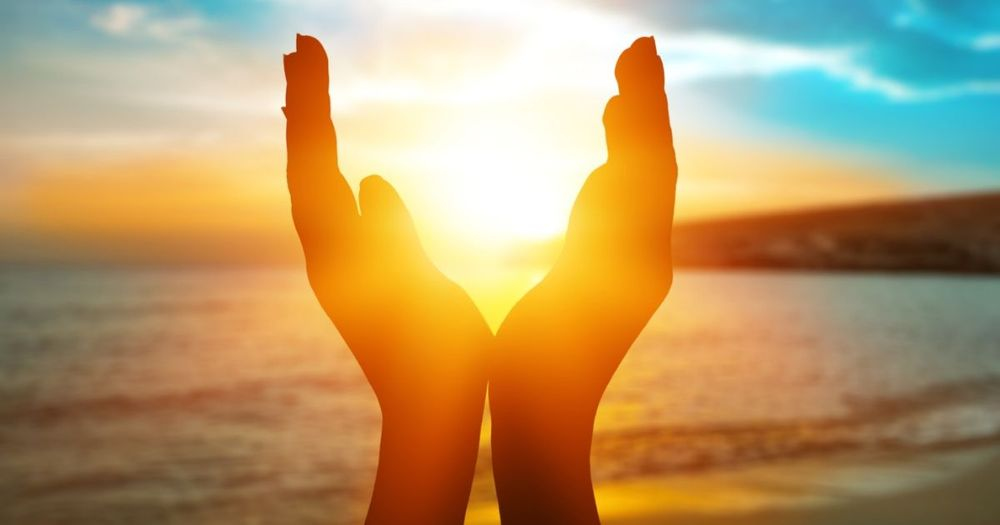
Millions of public messages from around the world were read for the mood in them, hour by hour and month by month. Across the year, mood followed the daylight, with a twist: what it tracked was the change in day length, the lengthening and the shortening.
That makes the summer solstice a strange holiday. Around 21 June the Northern Hemisphere gets its longest day, and from the next morning the days start to shrink. It's the peak and the turning point at once, and it comes with more usable daylight than you'll see again for a year.
What the solstice is
The Earth leans. On the solstice its northern half is tipped as far towards the sun as it gets, 23.44 degrees, and the sun stands higher at noon than on any other day of the year. South of the equator the same day is the shortest, and their turn comes in December.
Distance works slightly against it. The Earth is at its farthest from the sun about two weeks after the June solstice, some 5 million kilometres further out than in January. The tilt makes the season.
Its name says what it looks like. "Solstice" is Latin: sol, sun, and sistere, to stand still. For a few days the sun's noon height barely changes, and it seems to have stopped.
The date does two jobs. The solstice was once reckoned the middle of summer, which is why it's called midsummer, and many calendars now call it the first day. The day is lopsided, too: the earliest sunrise of the year comes a few days before the solstice and the latest sunset a few days after, because the Earth's orbit is an ellipse and its speed changes.
Go far enough north and the day never ends. Above about 66 degrees the sun stays up all night at midsummer. In Fairbanks, Alaska, a baseball game has been played in the midnight twilight of 21 June since 1906.
People have marked the day for thousands of years. Stonehenge is lined up on the midsummer sunrise, and its builders started work around 3100 BC. The Druids, who usually get the credit, first turn up in writing some 2,700 years later; the link is an idea that took hold in the eighteenth century. The Incas' sun festival, Inti Raymi, was a June feast too. In Peru that made it a midwinter party, held on the shortest day to call the light back.
Seven things the longest day does for you
1. It lifts your mood
Blood was drawn from the vein that drains the brain in 101 healthy men, at different times of year. The brain's turnover of serotonin, one of its mood chemicals, was lowest in winter. On any given day it rose with the hours of bright sunlight. Midsummer is when there is most of it to be had.
A cloudy solstice still counts. An overcast day gives about 1,000 lux, the unit of brightness, which is two to three times a lit office.
Some people go the other way. Low mood that arrives in summer and lifts in winter exists as well, as the less common form of seasonal depression.
Start the day with a walk in the early light. It costs nothing and it sets the tone.
2. It tops up your vitamin D
Your skin makes vitamin D from the sun's UVB rays, the part of sunlight that also burns, and at midsummer they are at their strongest. That cuts both ways. A short spell goes a long way: in one test, the equivalent of thirteen minutes of summer sun, three times a week, in a T-shirt and shorts, was enough to bring nine in ten white adults to a sufficient level. And the same strength burns you faster than at any other time of year. A wide-brimmed is the simplest answer.
The solstice noon once measured the planet. More than two thousand years ago, Eratosthenes learned that on this day the sun shone straight down a well in Syene, and rods there cast no shadow. In Alexandria, to the north, they did, at about 7 degrees, a fiftieth of a circle. The rest was arithmetic.
Take a few minutes with your arms and legs bare, then get under shade and a hat. On the solstice your noon shadow is the shortest it will be all year, which is a fair warning.
3. It sets your body clock
Bright days are what your body clock runs on. After a spell of summer camping with no electric light, people's internal night began at sunset and ended just before they woke at sunrise. Their clocks had locked onto the sun.
Your body keeps a calendar as well as a clock. Eight volunteers lived on "summer" days of sixteen light hours, then on "winter" days of ten. On the winter schedule they made melatonin, the hormone of darkness, for over two hours longer each night, and slept over three hours longer. At midsummer your night is built short.
The long evenings pull the other way. In one sleep clinic's recordings, people slept up to an hour less in summer than in winter. The gap was too uneven to rule out chance, and it points the way you'd expect.
A bright bedroom has a cheap fix. Ninety-four young adults wore an eye mask in bed for a week and slept without one for another. With the mask they were more alert the next day and learned better. A contoured blocks the light without pressing on your eyes.
Get outside in the daytime, and let the evening dim around you. If the sky is still bright at bedtime, darken the bedroom.
4. It gets you moving
How much we move follows the calendar. Across 37 sets of findings and 291,883 people in eight countries, physical activity rose and fell with the seasons, and bad weather was the usual excuse. The solstice removes the excuse.
It matters most for children. In twelve schools in China, six added one 40-minute outdoor class to every day. Three years on, 30% of their pupils had become short-sighted, against 40% in the other six.
A little goes a long way for the rest of us. Among 19,806 people in England, those who had spent at least two hours in nature in the past week were clearly more likely to report good health and well-being, however they split the time.
Make a list of the outdoor things you like, a daily walk, a weekend hike, an evening swim, and put them in the diary while the evenings are long.
5. It brings people together
Midsummer has been a gathering since the Stone Age: bonfires, dancing and a feast, later tidied up by the church as the eve of St John. "Bonfire" is "bone fire": a medieval monk listed three midsummer fires, one of clean bones and no wood, "called a bonfire", one of wood, for sitting up by, and one of both, called St John's Fire. Shakespeare had a name for what the short nights do to people: "Why, this is very midsummer madness."
The parties are older than the famous stones. Animal teeth dug up two miles from Stonehenge suggest that as many as 4,000 people gathered there for midwinter and midsummer feasts while the great circle was going up.
One midsummer custom is still on the shelves. St John's wort is named for this festival: its flowers were gathered at midsummer, hung on doors against evil spirits and thrown on the bonfires. Its modern reputation is for clashing with medicines.
The habit has something to it. Across 148 groups and 308,849 people, those with stronger relationships were 50% more likely to be alive at the next count.
Plan a get-together for the solstice. A picnic, a barbecue or a bonfire will do, and nobody needs a reason beyond the light.
6. It gives you a marker
Dates do odd things to us. Gym visits, searches for the word "diet" and written commitments to goals all jump after a landmark: the start of a week, a month, a year, a birthday. The solstice is the year's halfway post, and it works the same way if you let it. Any notebook will do for the job below; a will still be in one piece next June.
On the solstice, sit somewhere outdoors with a notebook. Write what the first half of the year gave you and what you want from the second.
7. It puts food in season
Summer food arrives all at once, and it never tastes better. Sweden sets the standard for the day's table: pickled herring, boiled new potatoes with dill, salmon or grilled ribs, and fresh strawberries to finish.
The sun gets into more than the fruit, too. Hens that spent their days outdoors laid eggs with three to four times as much vitamin D in the yolk as hens kept inside.
Visit a farmers' market, and ask whose hens are out on the grass.
The day's small print
The solstice lands in the middle of the pollen season, which runs from late March to September. If summer makes you sneeze, a wide-brimmed hat and wraparound sunglasses keep pollen off your eyes and nose, and a shower and a change of clothes when you come in wash the rest away.
On a hot day, make water your drink, wear light, loose clothing, take the shade while the sun is high, and go easy on the alcohol.
Children's skin is far more sensitive than an adult's. Babies under six months stay out of direct strong sunlight, and older children get the shade, clothing and a hat.
If you get up for the sunrise, never look straight at the sun, solstice or no: it can cause permanent eye damage.
Ticks live in woods and long grass and attach to skin that brushes past. A round or oval rash around a bite, usually within one to four weeks, is the sign to get it checked.
The hottest days are still to come
One last oddity. The longest day is rarely the hottest. The land and sea go on warming for weeks after the sun has started its retreat, which is why high summer sits in July and August. The season you're waiting for arrives after the light has peaked.
Catch it
In The Great Gatsby, Daisy asks: "Do you always watch for the longest day of the year and then miss it? I always watch for the longest day in the year and then miss it."
The days start shrinking tomorrow, and this one holds the most light you'll get all year. Go outside for the first of it or the last of it, with somebody you like.
Want the sun's vitamin without the burn? 7 Surprising Sources of Vitamin D3 You Need to Know for Better Health — where vitamin D comes from, in summer and in the months the sun can't help.
Curious what light does to your mood the rest of the year? The Science of Serotonin: Everyday Habits That Lift Your Mood — what serotonin does, which popular tips are false, and the habits that lift mood.
Know someone who always misses the longest day? Send them this before 21 June, and tell them to bring a hat.
Tried something here, or got a question it didn't answer? Write to us at contact@allforlife.club. Your questions shape the next articles.
Disclaimer: This article is general information. For advice about your own health, talk to a qualified health professional. If your mood has been low for weeks or you're having thoughts of harming yourself, reach out for help today.
Affiliate Disclosure: This article contains affiliate links. As an Amazon Associate, All For Life earns from qualifying purchases, at no extra cost to you. We only link to products we would recommend without the commission.
Sources
Golder SA, Macy MW (2011). Diurnal and seasonal mood vary with work, sleep, and daylength across diverse cultures. Science 333(6051):1878–1881. doi.org/10.1126/science.1202775
Wikipedia. Summer solstice. en.wikipedia.org
Wikipedia. Apsis. en.wikipedia.org
Wikipedia. Solstice. en.wikipedia.org
Wikipedia. Midnight sun. en.wikipedia.org
Wikipedia. Stonehenge. en.wikipedia.org
Wikipedia. Druid. en.wikipedia.org
Wikipedia. Inti Raymi. en.wikipedia.org
Lambert GW, Reid C, Kaye DM, Jennings GL, Esler MD (2002). Effect of sunlight and season on serotonin turnover in the brain. The Lancet 360(9348):1840–1842. doi.org/10.1016/S0140-6736(02)11737-5
Wikipedia. Lux. en.wikipedia.org
NHS. Overview — Seasonal affective disorder (SAD). nhs.uk
Rhodes LE, Webb AR, Fraser HI, et al. (2010). Recommended summer sunlight exposure levels can produce sufficient (≥20 ng ml−1) but not the proposed optimal (≥32 ng ml−1) 25(OH)D levels at UK latitudes. Journal of Investigative Dermatology 130(5):1411–1418. doi.org/10.1038/jid.2009.417
Wikipedia. Eratosthenes. en.wikipedia.org
Wright KP, McHill AW, Birks BR, et al. (2013). Entrainment of the human circadian clock to the natural light-dark cycle. Current Biology 23(16):1554–1558. doi.org/10.1016/j.cub.2013.06.039
Wehr TA (1991). The durations of human melatonin secretion and sleep respond to changes in daylength (photoperiod). The Journal of Clinical Endocrinology & Metabolism 73(6):1276–1280. doi.org/10.1210/jcem-73-6-1276
Seidler A, Weihrich KS, Bes F, de Zeeuw J, Kunz D (2023). Seasonality of human sleep: polysomnographic data of a neuropsychiatric sleep clinic. Frontiers in Neuroscience 17:1105233. doi.org/10.3389/fnins.2023.1105233
Greco V, Bergamo D, Cuoccio P, et al. (2023). Wearing an eye mask during overnight sleep improves episodic learning and alertness. Sleep 46(3):zsac305. doi.org/10.1093/sleep/zsac305
Tucker P, Gilliland J (2007). The effect of season and weather on physical activity: a systematic review. Public Health 121(12):909–922. doi.org/10.1016/j.puhe.2007.04.009
He M, Xiang F, Zeng Y, et al. (2015). Effect of time spent outdoors at school on the development of myopia among children in China: a randomized clinical trial. JAMA 314(11):1142–1148. doi.org/10.1001/jama.2015.10803
White MP, Alcock I, Grellier J, et al. (2019). Spending at least 120 minutes a week in nature is associated with good health and wellbeing. Scientific Reports 9:7730. doi.org/10.1038/s41598-019-44097-3
Wikipedia. Midsummer. en.wikipedia.org
Wiktionary. bonfire. en.wiktionary.org
Wikiquote. Twelfth Night. en.wikiquote.org
Wikipedia. Hypericum perforatum. en.wikipedia.org
National Center for Complementary and Integrative Health. St. John's Wort. nccih.nih.gov
Holt-Lunstad J, Smith TB, Layton JB (2010). Social relationships and mortality risk: a meta-analytic review. PLoS Medicine 7(7):e1000316. doi.org/10.1371/journal.pmed.1000316
Dai H, Milkman KL, Riis J (2014). The fresh start effect: temporal landmarks motivate aspirational behavior. Management Science 60(10):2563–2582. doi.org/10.1287/mnsc.2014.1901
Kühn J, Schutkowski A, Kluge H, Hirche F, Stangl GI (2014). Free-range farming: a natural alternative to produce vitamin D-enriched eggs. Nutrition 30(4):481–484. doi.org/10.1016/j.nut.2013.10.002
NHS. Hay fever. nhs.uk
NHS. Heat exhaustion and heatstroke. nhs.uk
NHS. Sunscreen and sun safety. nhs.uk
NHS. Lyme disease. nhs.uk
Wikipedia. Seasonal lag. en.wikipedia.org
Wikiquote. The Great Gatsby. en.wikiquote.org