
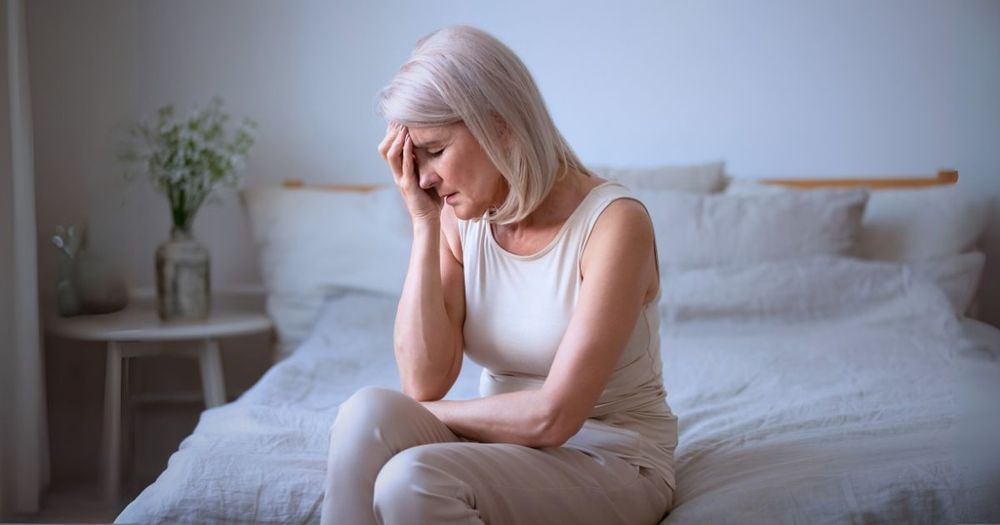
There's a strip of painkillers in your bag, another in the car, and a box in the kitchen drawer that's nearly empty again. Each one works. The headache fades, the afternoon carries on, and three days later it's back at the same hour, in the same spot, as if it kept an appointment.
That regularity is the most useful thing about it, because it explains why your headaches keep coming back. A headache that returns is usually being set off by something that keeps happening, and it's rarely where the pain is. The brain itself can't feel pain. It has no pain receptors. The ache comes from the arteries, veins, membranes, nerves and muscles around it, which is how a headache can start in your neck, your jaw or your eyes. One of the likeliest culprits is sitting in that kitchen drawer.
Why one fix never seems to be enough
If your headaches are regular, you've probably tried the obvious things already, and each helped a little. The magnesium took the edge off. Cutting back on wine helped for a while. Sorting out the desk made a difference some weeks and none in others.
That pattern has a reason. Headache sources stack. A stiff neck, a coffee habit, a short night and a skipped lunch each lower your threshold a little, and together they tip you over it. Take one away and you may still sit just above the line, so the fix looks useless. Remove two or three and the headaches drop far more than any single change would suggest. The job is finding out which sources are running in your life, and there's usually more than one.
A lab test shows how rarely one trigger works alone. Researchers took 27 people with migraine with aura who said bright or flickering light, or hard exercise, set off their attacks, and exposed them to exactly that. Three had an attack with aura and three more a migraine without one. Light alone set off none at all; exercise set off four of the twelve who tried it. Your trigger is real, but on its own it usually isn't enough.
Migraine or tension headache
It helps to know which kind you get, because a few of the causes and fixes below are specific to migraine. A migraine often sits on one side and throbs, gets worse with movement, and comes with nausea or a need to get away from light and noise. It can last hours or days, and in some cases flickering lights or zigzag lines arrive before it, the aura. A tension headache feels like a tight band or steady pressure on both sides, rarely makes you sick, and lets you carry on, just unhappily. You can get both, and most of the sources below can feed either.
A third kind keeps the strictest appointments of all. Cluster headache is rare, affecting around 0.1% at some point, and severe: a pain on one side, around the eye and temple, lasting from 15 minutes to three hours, with a watering eye, a stuffy nostril and sometimes a drooping eyelid on the same side. Attacks tend to come at similar times of day, often out of sleep, and bouts peak in spring and autumn, which points to the body clock. Alcohol can set off an attack during a bout. If that sounds like yours, it needs its own diagnosis, because the treatments that work for it, oxygen among them, are different.
The "sinus headache" that's something else
Pressure behind the cheeks and eyes feels like a sinus problem, and it's easy to treat it as one for years. A true sinus infection comes with a fever, thick coloured mucus and usually a recent cold, and it goes when the infection does. Even a real one can start somewhere else. A 2023 review of CT studies found that about half of cheek sinus infections began in an upper tooth, with infections at the root tip and gum disease both raising the odds, on weak evidence. Can an Infected Root Canal Tooth Make You Ill? follows that route from the tooth.
Pressure headaches that come back month after month without any of that are usually migraine. When 2,991 people with a history of "sinus headache" and no sign of infection were assessed, 88% turned out to have migraine-type headaches. That matters, because decongestants and nasal sprays do little for migraine.
The painkiller that becomes the problem
This is the one to rule out first, because it hides so well. Simple painkillers taken on 15 days a month or more, three months running, or combination painkillers on ten or more, can turn occasional headaches into near-daily ones. It's called medication overuse headache, and the more often you reach for the box, the more often you need it.
It stays invisible because the medicine seems to work: every single headache gets better, and only the month gets worse. The telltale signs are headaches that are there when you wake up, headaches that return at the same time the last tablet fades, and a count that has crept up over months while you've been taking more to keep up.
The simplest check is a calendar. Mark every day you take something for a headache and count them at the end of the month. If the count reaches ten, take it seriously. Combination painkillers, the kind with caffeine or a second drug added, count as overuse at the lower threshold, so read the label on the box you rely on.
Breaking the cycle means stopping the overused tablets, and the headaches can get worse for a while first, sometimes with nausea, restless nights and anxiety. Simple over-the-counter painkillers can be stopped safely on your own; some prescription ones can't be stopped abruptly, so get advice on those. After the reset, the headaches usually drop back to an occasional pattern. Up to 45% slide back into overuse, which is why the calendar is worth keeping afterwards.
The neck, and what sits on your head
Under the base of your skull sit small muscles that hold and tilt your head. Hours of leaning towards a screen keep them clenched, and tight spots in them send pain up over the back of the head and forward to the temples and behind the eyes. It's called a neck-driven, or cervicogenic, headache, and it's easy to mistake for a tension headache because the pain shows up in the head.
The pattern is pain that starts at the back of the head and creeps forward, worse in the afternoon after desk work and when you move your neck, often with a stiff neck. A quick test at home is to press gently and steadily with your fingertips into the soft spot at the base of the skull on the side that hurts. If that brings on your familiar headache, the neck is probably involved.
What helps is releasing those muscles and changing what loads them. Lie back with a massage ball under the base of your skull and let the weight of your head rest on it for a minute or two, gently, until the tension eases. Raise your screen to eye level and bring it close enough that you stop leaning in. And look at how you sleep: lying on your stomach with your head turned to one side holds the neck twisted all night, and that version of this headache is worst in the morning and fades as you move.
Check what's pressing on your head, too. A tight ponytail or bun, a snug hat, a headband, swimming goggles or a helmet can set off a headache all by themselves, usually a pressing or pulling pain. This one gives itself away: it typically lifts within an hour of taking the thing off.
The jaw
Temple headaches that are worst on waking, with a sore jaw, clicking when you chew or teeth that feel worn, point to the jaw. Clenching and grinding often happen without your knowing, and the big chewing muscles that run up the side of the head send their pain into the temples and forehead. Clenching during the day goes firmly with tension headaches: five to seventeen times the odds in the studies so far. The link between grinding at night and migraine is still disputed.
Chewing gum all day works the same muscles as clenching. When 30 teenagers with daily headaches and a heavy gum habit stopped for a month, 26 improved and 19 lost their headaches altogether. Every one of the 20 who went back to gum had the headaches return within days. A few gum-free weeks cost nothing to try, at any age.
A basic over-the-counter takes the load off the jaw while you sleep, and it's a fair way to test whether grinding is behind your mornings. In the day, notice where your teeth are. The resting position is lips together, teeth apart, jaw loose. Once you start noticing how often you clench under stress, you can catch it and let go.
Eyes and screens
Your eyes run on muscles too. Hours of close focus tire the small ones that do the focusing, and you blink less while you concentrate, which dries the eyes out. The result is a headache around and behind the eyes that builds through the afternoon. Every twenty minutes, look at something about twenty feet away for twenty seconds to let those muscles relax. Match screen brightness to the room. And get your eyes tested if your glasses are a few years old, because squinting through slightly outdated lenses all day is an easily fixed cause.
Caffeine and the weekend headache
What goes into you matters as much as how you sit, and coffee is the first suspect. It can both stop a headache and start one, because caffeine creates the dependence it then relieves. Your brain adjusts to your usual amount at your usual time. Have it later than normal, skip a cup or cut down suddenly, and withdrawal starts 12 to 24 hours later, peaks a day or two in, and can last two to nine days. Headache is its leading symptom, turning up in half of the people in controlled withdrawal studies, and it can come from giving up as little as one ordinary mug a day.
That's the trap. The headache that arrives when the coffee is late is the dependence talking, and the next cup that fixes it keeps the cycle going. Avoiding that headache is one of the main things that keeps the habit in place. The weekend lie-in that pushes back the first coffee by two hours is why the headaches can turn up only on Saturdays. Holding the timing steady stops that one, but the lasting fix is to taper off caffeine slowly over a few weeks, because stopping all at once can mean several days of headaches. Water is the drink to come out the other side with.
The weekend headache has a second cause, the let-down. In a diary study of people with migraine, a drop in stress from one evening's entry to the next raised the odds of an attack over the following 6 to 18 hours by one and a half to nearly two times, even after allowing for how stressed they were. That's how a holiday can open with a migraine on its first morning. During the week, stress works through the muscles instead, tightening the neck and jaw described above, so a hard week and a headache often arrive together.
Meals, food and drink
The coffee-only breakfast leads straight to the next source. Skipped meals are a well-documented trigger, and this one shows up in the late morning or afternoon after a missed breakfast or lunch. Across 36 studies, fasting and skipping meals, breakfast in particular, were linked with migraine attacks more often than not, and irregular meal patterns predicted attacks in chronic migraine, though the quality of the studies was mixed. Eating at regular times, with plenty of protein from meat, fish or eggs in the first meal, keeps it away. If you've started fasting and the headaches came with it, this is a likely reason.
Red wine, aged cheese, cured meats and fermented foods share one thing: ageing and fermentation build up tyramine and histamine, and either can set off a migraine if you're sensitive to it. That's a reason to watch your own reaction, not to give up good food on principle.
A headache that comes on while you're still drinking, with flushing or a stuffy nose, suggests you react to something in them rather than to alcohol alone. One likely culprit is histamine. The body clears it with enzymes such as diamine oxidase, and when they run low, even moderate amounts can bring on symptoms, migraine among them. Red wine has a reputation here, though histamine levels vary widely from bottle to bottle. The next-morning hangover headache is a different thing. Its causes are still not fully understood, but acetaldehyde, the toxic product of breaking alcohol down, and lost fluid both play a part, so a proper meal beforehand and plenty of water through the evening help most.
Food triggers are personal. The same glass of wine that floors one person does nothing to another, which is why a list from the internet is less useful than your own notes. Some foods take the blame unfairly, too. Chocolate is the most commonly reported food trigger, yet craving something sweet can be an early sign of a migraine already on its way, so the chocolate eaten that afternoon looks guilty of an attack that had already begun.
Water and salt
Dehydration was behind my own headaches every time, and it's the quickest source to test. It brings on a heavy, dull headache that gets worse when you bend over, move your head or walk. Drink a large glass of water. In a small study of people who got this headache, two-thirds were clear within half an hour of drinking, and most of the rest within one to three hours.
Water alone can fall short if you sweat a lot or eat very little salt. Drinking large amounts of plain water while losing salt through sweat dilutes your blood's sodium, and a headache is among the early signs, along with nausea, poor balance and a foggy head. A pinch of good-quality unrefined salt on your food, nothing added, helps your body hold on to the water you drink, unless you've been told to limit salt for your blood pressure.
Hormones
Headaches that turn up reliably in the two days before a period and the first days of it are easy to shrug off as part of the month. Menstrual migraine affects about 6% of women of reproductive age, and the leading explanation is the sharp fall in oestrogen before a period, since oestrogen tempers pain signalling in the nerves involved in migraine. The evidence for that explanation is still thinner than its popularity suggests, but the timing is hard to miss.
The contraceptive pill can make this worse. The week without pills creates its own oestrogen drop, and a headache or migraine within five days of stopping the hormones is a recognised type, so the pill-free week can bring the worst headaches of the month. Taking the pill without a break, or switching to a different type of contraception, stops the pattern in some cases, so it's worth asking about rather than accepting. If you get migraine with aura, the flashing lights or zigzag lines before the pain, bring it up before starting or staying on a combined pill. The combination is officially advised against because of a higher risk of stroke, though how large that risk is with today's lower-oestrogen pills is debated. Migraine also tends to peak during perimenopause, as oestrogen swings up and down, which is why headaches can get worse in your forties.
Heavy periods can feed a quieter source, too. Iron-deficiency anaemia develops slowly and can go unnoticed for a long time, and once it's more serious it brings tiredness, breathlessness, dizziness, pale skin and headaches. Heavy periods and diets low in iron, vegan and vegetarian ones among them, raise the risk. Animal foods carry the iron your body takes up most easily, which puts red meat and liver first.
Sleep
A headache that's there when you wake up, usually on both sides, and gone within four hours is typical of sleep apnoea, where breathing keeps pausing during the night and oxygen dips each time. Loud snoring, waking unrefreshed and daytime sleepiness alongside the morning headache make it worth getting checked, because successful treatment of the breathing clears the headache too.
Sleep timing matters as well. Too little sleep, or broken sleep, can set off a headache if you're prone to them. Keeping the same wake-up time every day helps calm a headache-prone system.
Weather
You may feel a headache coming before the rain. A review of 14 studies with 2,696 people found some evidence that drops or rapid swings in air pressure go with more frequent migraine attacks, but the findings were inconsistent, the methods varied widely, and nothing linked pressure to how long attacks lasted. Tracking your headaches against weather changes for a month will show whether you're sensitive. If you are, the weather stays out of your hands, but you can keep your other sources low on the days a change is coming, so the weather alone is less likely to tip you over.
Medicines you take for something else
Some medicines cause headaches as a side effect. Nitrates for the heart release nitric oxide and widen blood vessels, and a throbbing headache can follow. The factory version even had a name. Workers handling nitroglycerin built up a tolerance during the week, lost it over the weekend, and came back on Monday to a pounding headache, a racing heart and dizziness. It was called Monday disease, the weekend headache in reverse.
Erection tablets such as sildenafil bring on a headache within hours that clears within three days, and if you get migraine, the headache can turn into an attack. Coming off some antidepressants too quickly can bring headaches with it too, which is why they're tapered. If yours started or got worse soon after starting, stopping or changing a medication, that's a strong clue, and there's often an alternative with less of this effect.
A headache that lives in your house
Some headaches belong to a building. If yours come and go at home, ease once you're out of the house, get worse when the heating goes on in autumn, or turn up in several people under the same roof at the same time, think about carbon monoxide. It's a gas with no colour or smell, given off by boilers, furnaces, gas cookers, fires and heaters that burn badly. A headache is its commonest symptom, usually dull, at the front and constant, and its signs are often mistaken for flu. A near where you sleep settles the question for very little money, and a yearly service keeps gas and oil appliances burning cleanly. If you suspect it, switch the appliance off, get outside, and get checked the same day.
When it started after something
Some headaches have a start date. It can be a concussion, a whiplash, or a bad flu-like illness. With one type that begins this way and never lets up, over 80% in one study could name the exact day it started. These headaches can be stubborn and can last for years, and lifestyle changes alone rarely settle them. Get that kind of headache checked properly first, and use everything else here to keep the load down.
Finding your source
Two weeks of notes will tell you more than years of guessing. Each time a headache comes, write down when it started, where it sits, and what happened in the few hours before: food, coffee, sleep, screen time, posture, stress, your point in the cycle, the weather. Note what finally eased it, and keep the notes even after you find your answer, because if you ever get your headaches looked at, two weeks on paper say far more than a description from memory. If migraine is your kind, How to Track Your Migraine Patterns and Find What Helps (linked below) takes the notes further.
Patterns show up fast. Headaches that are there on waking point to the neck, the jaw, sleep apnoea or too much painkiller. Ones that build through the afternoon point to the neck, the eyes or a missed meal. Headaches on Saturdays point to caffeine timing or the let-down after a hard week. Ones that arrive with a glass of wine point to food and drink, ones that follow your cycle point to hormones or low iron, ones that began with a new prescription point to the medicine, and ones that lift whenever you leave home point to the house itself. Look for the two or three that keep coming up and work on those together.
What helps in the background
While you track down your sources, two things lower your threshold for all of them. Regular exercise is the first. Across 21 trials with 1,195 people with migraine, strength training cut monthly migraine frequency by about three and a half, high-intensity cardio by about three and steady cardio by about two, and all three ranked above topiramate, a standard preventive drug.
Certain nutrients are the second. Low magnesium has been linked with migraine attacks, and across ten trials with 789 people, oral magnesium made migraine less frequent and less intense. is a gentle form of it. Riboflavin, vitamin B2, feeds the brain's energy supply, and across nine trials with 673 people it cut migraine days, attack length and pain. Both take a month or more to show. Natural Remedies for Headaches, linked below, collects the gentle options for the days a headache has already arrived.
Headaches that need help today
Most headaches are uncomfortable and harmless, and ones that have followed the same pattern for years rarely hide anything serious. What deserves attention is change: a headache that's new, different or getting worse. A few need emergency help the same day. Get it straight away for a headache that hits its full force within seconds or a minute, the worst you've ever had. The same goes for a headache with fever and a stiff neck, or one that comes with weakness, numbness, confusion, trouble speaking or loss of vision.
Everyday high blood pressure rarely causes symptoms, and half of those who have it don't know, so a regular headache is rarely a sign that your pressure is up. A very high reading is a different matter: above 180/120, together with a headache, chest pain, numbness or a change in vision, call for emergency help.
Get checked urgently, too, for a new headache after a head injury, even a mild one, or a new headache that wakes you from sleep or keeps getting worse week after week. The same applies to a new kind of headache after the age of fifty, a headache during pregnancy or in the weeks after giving birth, a severe headache that changes sharply when you stand up or lie down, and one that starts suddenly with coughing, straining, exercise or sex.
The box in the drawer
Those painkillers answered the pain while whatever was setting it off carried on, week after week, on the same schedule, and sometimes the tablets became part of the problem.
Start the notes tomorrow. Two weeks in, the pattern that made your headaches so predictable becomes the thing that gives them away, and the list is usually short: a neck, a jaw, a coffee habit, a skipped meal, too little water, a cycle, painkillers on too many days. Deal with two or three together, and the box in the kitchen drawer can go back to lasting months.
Found your source and still need relief on the bad days? Natural Remedies for Headaches: Effective Ways to Relieve Pain Without Medication — gentle ways to ease a headache once it has started, while you work on what's causing it.
Get migraines and want to go further with your notes? How to Track Your Migraine Patterns and Find What Helps — a fuller guide to keeping migraine notes and reading the patterns in them.
Know someone who carries painkillers everywhere they go? Send them this. Two weeks of notes might show them what the painkillers have been covering up.
Tried something here, or got a question it didn't answer? Write to us at contact@allforlife.club. Your questions shape the next articles.
Disclaimer: This article is general information. For advice about your own headaches, medication or health, talk to a qualified health professional. If you're pregnant, take regular medication, or have a health condition, get professional advice before trying any supplement mentioned here. If you have any of the warning signs described above, get help straight away.
Affiliate Disclosure: This article contains affiliate links. As an Amazon Associate, All For Life earns from qualifying purchases, at no extra cost to you. We only link to products we would recommend without the commission.
Sources
Wikipedia. Headache. en.wikipedia.org
Hougaard A, Amin FM, Hauge AW, et al. (2013). Provocation of migraine with aura using natural trigger factors. Neurology 80(5):428–431. doi.org/10.1212/WNL.0b013e31827f0f10
Wikipedia. Migraine. en.wikipedia.org
Wikipedia. Cluster headache. en.wikipedia.org
Vitali FC, Santos PS, Massignan C, et al. (2023). Global Prevalence of Maxillary Sinusitis of Odontogenic Origin and Associated Factors: A Systematic Review and Meta-Analysis. Journal of Endodontics 49(4):369–381.e11. doi.org/10.1016/j.joen.2023.01.010
Schreiber CP, Hutchinson S, Webster CJ, et al. (2004). Prevalence of Migraine in Patients With a History of Self-reported or Physician-Diagnosed "Sinus" Headache. Archives of Internal Medicine 164(16):1769–1772. doi.org/10.1001/archinte.164.16.1769
Wikipedia. Medication overuse headache. en.wikipedia.org
Wikipedia. Cervicogenic headache. en.wikipedia.org
Hensel O, Kraya T (2025). Primary Headache Attributed to External Compression or Traction to the Head: A Narrative Review. Brain and Behavior 15(1):e70202. doi.org/10.1002/brb3.70202
Réus JC, Polmann H, Mendes Souza BD, et al. (2021). Association Between Primary Headache and Bruxism: An Updated Systematic Review. Journal of Oral & Facial Pain and Headache 35(2):129–138. doi.org/10.11607/ofph.2745
Watemberg N, Matar M, Har-Gil M, Mahajnah M (2014). The Influence of Excessive Chewing Gum Use on Headache Frequency and Severity Among Adolescents. Pediatric Neurology 50(1):69–72. doi.org/10.1016/j.pediatrneurol.2013.08.015
Wikipedia. Computer vision syndrome. en.wikipedia.org
Juliano LM, Griffiths RR (2004). A critical review of caffeine withdrawal: empirical validation of symptoms and signs, incidence, severity, and associated features. Psychopharmacology 176(1):1–29. doi.org/10.1007/s00213-004-2000-x
Lipton RB, Buse DC, Hall CB, et al. (2014). Reduction in perceived stress as a migraine trigger: testing the "let-down headache" hypothesis. Neurology 82(16):1395–1401. doi.org/10.1212/WNL.0000000000000332
Legesse SM, Addila AE, Jena BH, et al. (2025). Irregular meal and migraine headache: a scoping review. BMC Nutrition 11(1):60. doi.org/10.1186/s40795-025-01048-8
Wikipedia. Tyramine. en.wikipedia.org
Wikipedia. Histamine intolerance. en.wikipedia.org
Wikipedia. Hangover. en.wikipedia.org
Nowaczewska M, Wiciński M, Kaźmierczak W, Kaźmierczak H (2020). To Eat or Not to Eat: A Review of the Relationship between Chocolate and Migraines. Nutrients 12(3):608. doi.org/10.3390/nu12030608
Blau JN, Kell CA, Sperling JM (2004). Water-Deprivation Headache: A New Headache With Two Variants. Headache 44(1):79–83. doi.org/10.1111/j.1526-4610.2004.04014.x
Wikipedia. Hyponatremia. en.wikipedia.org
Raffaelli B, Do TP, Chaudhry BA, et al. (2023). Menstrual migraine is caused by estrogen withdrawal: revisiting the evidence. The Journal of Headache and Pain 24(1):131. doi.org/10.1186/s10194-023-01664-4
Headache Classification Committee of the International Headache Society (2018). The International Classification of Headache Disorders, 3rd edition. Cephalalgia 38(1):1–211. doi.org/10.1177/0333102417738202
Calhoun AH, Batur P (2017). Combined hormonal contraceptives and migraine: An update on the evidence. Cleveland Clinic Journal of Medicine 84(8):631–638. doi.org/10.3949/ccjm.84a.16033
Wikipedia. Iron-deficiency anemia. en.wikipedia.org
Wikipedia. Human iron metabolism. en.wikipedia.org
Farah A, Adam Y, Ahmed O, et al. (2025). Impact of Barometric Pressure Changes on the Severity, Frequency, and Duration of Migraine Attacks: A Systematic Review of the Literature. Cureus 17(11):e96821. doi.org/10.7759/cureus.96821
Wikipedia. Nitroglycerin. en.wikipedia.org
Wikipedia. Selective serotonin reuptake inhibitor. en.wikipedia.org
Wikipedia. Carbon monoxide poisoning. en.wikipedia.org
Wikipedia. New daily persistent headache. en.wikipedia.org
Woldeamanuel YW, Oliveira ABD (2022). What is the efficacy of aerobic exercise versus strength training in the treatment of migraine? A systematic review and network meta-analysis of clinical trials. The Journal of Headache and Pain 23(1):134. doi.org/10.1186/s10194-022-01503-y
Chiu HY, Yeh TH, Huang YC, Chen PY (2016). Effects of Intravenous and Oral Magnesium on Reducing Migraine: A Meta-analysis of Randomized Controlled Trials. Pain Physician 19(1):E97–E112. pubmed.ncbi.nlm.nih.gov/26752497
Chen YS, Lee HF, Tsai CH, et al. (2022). Effect of Vitamin B2 supplementation on migraine prophylaxis: a systematic review and meta-analysis. Nutritional Neuroscience 25(9):1801–1812. doi.org/10.1080/1028415X.2021.1904542
Wikipedia. Thunderclap headache. en.wikipedia.org
Wikipedia. Hypertension. en.wikipedia.org
Wikipedia. Hypertensive emergency. en.wikipedia.org
Do TP, Remmers A, Schytz HW, et al. (2019). Red and orange flags for secondary headaches in clinical practice: SNNOOP10 list. Neurology 92(3):134–144. doi.org/10.1212/WNL.0000000000006697