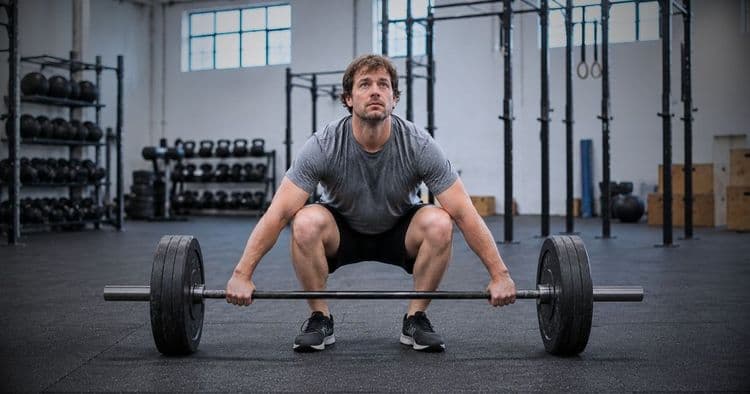

Knock a wine glass off the table and it shatters. Knock a block of steel off the same table and nothing much happens. Now take your legs, give them a hard set of squats, and let them rest for two days. They come back a little stronger than they were.
Those are three different ways of meeting a shock, and the third is the strange one. The writer Nassim Nicholas Taleb gave it a name, antifragility, and the word has since been stretched into a motivational slogan. The idea underneath is more useful than the slogan. Living things, minds included, can get stronger from stress, but only under certain conditions, and too much comfort quietly takes those conditions away, which is how it makes you fragile.
Three ways to meet a shock
In his 2012 book , Taleb sorted things by how they respond to knocks. A fragile thing is harmed by disorder, like the wine glass. A robust thing is barely touched by it, like the steel. An antifragile thing benefits from it. As he put it, the resilient resists shocks and stays the same, while the antifragile gets better.
That makes "resilient", the word usually offered as the goal, the middle option. It's good to bounce back, but bouncing back means arriving where you started. Very few lifeless materials improve with knocks. Living systems do it all the time.
Your body already does it
The clearest example is in your bones. Finnish researchers scanned the upper arms of 12 former national-level tennis players and compared the arm that held the racket with the one that didn't. The playing arm's bone was far stronger, by 23% to 37% on a measure of bone strength, and the difference came from bigger, thicker bone rather than denser bone. Years of impact from one side had built a stronger arm on that side. In 12 men of the same age and build who didn't play, the two arms were much closer. Anatomists have a name for this, Wolff's law, after a 19th-century German surgeon: bone remodels itself to resist the loads put on it, and weakens when they stop.
Muscle works the same way. Load it, let it recover, and it answers with more, which Why You Get Stronger Before Your Muscles Grow follows from the first weeks. Skin thickens where it rubs. Even the immune system can learn from early contact: the peanut trial in Unconventional Remedies for Chronic Allergies found that babies at high risk who ate peanut regularly were far less likely to end up allergic than babies who were kept away from it.
In each case the stress is a signal. The body reads it as "this will happen again" and builds for next time. Biology's name for the pattern is hormesis: a small dose does nothing, the right dose builds, and too much does harm. Your Genes Aren't Your Destiny: How Much of Your Health Is Up to You covers it in the body's cells.
The mind does it too, with a dose
Hard experience can strengthen the mind the same way, but the dose decides. The study behind that comes from 5 Ways to Build Your Inner Strength and Live a Fulfilling Life. People with some hardship behind them reported more satisfaction with life and better mental health than those with a lot, and than those with almost none, and they were less shaken when new trouble came. Perhaps those with almost none had never had the chance to learn they could cope. The researchers looked back at people's lives rather than adding hardship to them, so the study can't tell you how much difficulty would help you, or that adding some would help at all. It shows that a hard past isn't a sentence.
Fear follows the same rule. Avoiding what scares you keeps the fear intact, because you never collect the evidence that you'd have coped. Facing it in steps you can manage is what shrinks it, and How to Rebuild Confidence When Your Nervous System Doesn't Trust Motivational Quotes shows how, including why the little safety habits that make a fear bearable can keep it going.
What shelter does
If stress in the right dose builds strength, too much comfort should do the opposite, and it does. In one study, ten days of bed rest left healthy older adults weaker in the legs and slower on their feet, a result Defy Aging with Movement: How Exercise Keeps You Strong, Sharp, and Independent for Life reports in full. The body doesn't keep what it isn't asked for.
Children show the psychological version. A review of 47 studies looked at how parenting relates to anxiety in children. Averaged across every parenting measure, the link was small, about 4% of the differences between children, a useful reminder that anxious children aren't simply the product of their parents. Control mattered more than coldness, and one measure stood out. In the studies that looked at how much room parents gave a child to act and decide alone, it accounted for 18% of the differences, far more than warmth did.
These studies observed families rather than changing anything, so they can't prove the direction, and an anxious child may also draw more control from a worried parent. But the pattern fits the idea.
Play tells a similar story. One review of 21 papers on risky outdoor play, the climbing, the rough and tumble, the exploring out of sight, found mostly positive effects on children's health and behaviour, most often more physical activity, with better social behaviour too. The authors called for better studies, but they concluded that the evidence supports giving children more of this kind of play, not less.
Even a bad fall may not do what you'd expect. A study in New Zealand followed a large group of children from birth. Falls that caused an injury before the age of nine, a broken bone, a dislocation, a head injury or a cut, didn't make the children more afraid of heights at 11 or at 18. Those who'd had such a fall between five and nine were, if anything, more common among the 18-year-olds who had no fear of heights.
Common sense says a bad fall should plant a lifelong fear, and the opposite showed up. The researchers took it as support for the idea that a fear of heights comes built in and fades with experience, rather than being learned from a fall. It doesn't show that an injury builds courage.
Climbing, then, needn't be fenced off. Picture a child halfway up a tree, pausing on a branch to work out whether they can get back down. The useful parent gives them the time to judge, and steps in only for what the child can't judge, such as a rotten limb.
The three conditions
Stress on its own doesn't make anything stronger. A broken bone doesn't make that bone stronger, and a life of constant crisis doesn't build resilience. What the examples above share is three things.
A dose you can answer. The tennis arm took thousands of impacts it could absorb, not one it couldn't. Strength grows from a load you can absorb and repeat, the same middle ground the hardship study found.
Time to answer it. Muscle grows between sessions, not during them. A stress that never lets up leaves no room for the rebuilding. A mind recovers too, in sleep and in the habit of naming a hard feeling once and moving on rather than going round it again, which Breaking Free from Low Moods: Powerful Strategies to Reset Your Mind and Energy explains.
One of Taleb's examples comes from myth. In later tellings of the Greek story, the many-headed Hydra grew two heads for every one cut off. Heracles only beat it with the help of his nephew Iolaus, who burned each neck before a new head could grow. To defeat something antifragile, you take away its time to recover.
Something to practise. The tennis arm grew because the same demand came again and again. A stress builds you when it gives you a chance to practise something, a movement, a skill, a hard conversation. A stress that only drains you, with nothing to practise, builds nothing.
None of this is a matter of telling yourself the right story. Believing you can grow from difficulty is pleasant, but the evidence that mindset slogans change much on their own is thin, as How to Rewire Your Brain and Change Limiting Beliefs sets out. What changes you is the dose, the recovery and what you get to practise.
That gives you three questions to ask of any stress in your life. Is the dose one you can answer, ideally one you chose? Does it end, leaving time to recover? What does it give you a chance to practise? A stress that fails any of these is more likely to wear you down than build you up.
Run two through the questions. A hard gym session is a dose you picked, it ends after an hour, and it trains a movement, so it passes all three. A boss who sends emails at midnight was not your choice, doesn't end when you go home, and trains nothing but lost sleep, so it fails all three.
How you read a stress matters too. In a study that 5 Ways to Build Your Inner Strength and Live a Fulfilling Life describes, people told that a racing heart helps performance had hearts that pumped more efficiently and blood vessels that relaxed. A dose you chose, with an end in sight, is far easier to read that way than a boss who never stops. For what that second kind does over months, see Stuck in Survival Mode: What Chronic Stress Does to the Body.
Putting it to work
Choose small stresses on purpose. Lift something heavy, take the harder walking route, say the thing in the meeting, learn a skill you're bad at. Voluntary, manageable discomfort is the stress you can control the dose of. Michael Easter's is a whole book about putting that kind of discomfort back into a comfortable life.
Protect the recovery. Sleep, rest days and quiet evenings aren't the opposite of getting stronger. They're where it happens.
Keep your people close. The base that lets you take risks is the same base that catches you when one goes wrong. How to Build Resilience When Everything's Falling Apart covers building it before you need it. If you're already caring for a sick parent, you have more than enough stress. Saying yes when someone offers to sit with them for an afternoon may be the decision that lets you sleep, see a friend, or come back to yourself.
Learn from what breaks. A failure is information about where your edge is. 3 Key Benefits of Stepping Out of Your Comfort Zone makes the case for learning from it rather than hiding it.
Don't bet everything on one thing. One income, one skill or one relationship carrying your whole life is the wine glass on the edge of the table: one bad turn and it's gone.
Use a barbell. That's Taleb's answer. Keep most of what matters somewhere very safe, put a small part on bold bets, and leave little in the risky middle, such as borrowing heavily to stake everything on a single venture. The safe part isn't comfort for its own sake. It's what lets you take the small bold bets without one bad turn breaking you.
His example is a writer with a steady job who writes in spare time. A rejected manuscript costs some evenings, an accepted one could open a career, and the steady job is what makes the next attempt possible. That's how Anthony Trollope turned out novel after novel while working at the Post Office, a story Why Motivation Fails — and What Keeps Habits Going After It Does tells.
Let others carry their share. For a parent, that means letting a child climb, try, fail and sort some things out alone, within limits you can live with. The same goes for a partner or a team. Greg Lukianoff and Jonathan Haidt's makes the case that treating young people as fragile does them harm.
Keep adjusting. When something you rely on stops working, change it before the shock does it for you.
A week of small doses
Pick three stresses you choose rather than ones that happen to you. One physical: a training session harder than your usual, on a day you can rest after it. One social: say the thing you'd normally swallow, to a colleague or a friend, calmly and once. One skill: twenty minutes at something you're bad at, whether that's a language, an instrument or a sauce that keeps splitting. Leave your sleep and your rest days alone, because they're where the answer gets built.
When the seven days are up, write down which dose felt too small to notice, which felt too big to repeat, and which was about right. For each, note what you were practising and what you'll look for next time to tell whether it helped. A conversation can feel just as uncomfortable the second time and still go better, because this time you asked the question you usually swallow. Next week, keep the right dose, nudge the small one up and the big one down. That's the method, on a small scale.
Which one are you?
The question to finish on is your own. Where in your life are you a wine glass, protected from every knock and one fall away from shattering? Where are you steel, getting through but no stronger? And where are you more like a muscle, taking a load and coming back with more?
Too much comfort makes you fragile. The right dose of stress, with time to recover and something to practise, makes you antifragile. So stop living like a wine glass. Start with the question you took home unanswered from your last meeting. Write it down, ask it next time while the subject is still on the table, and notice what happened.
Want the hardship curve in full? 5 Ways to Build Your Inner Strength and Live a Fulfilling Life — who did better after hard times, and why that isn't a prescription.
Fear that won't shift? How to Rebuild Confidence When Your Nervous System Doesn't Trust Motivational Quotes — facing it in steps, and dropping the habits that keep it alive.
Know someone who keeps being told to toughen up? Send them "Three ways to meet a shock".
Tried something here, or got a question it didn't answer? Write to us at contact@allforlife.club. Your questions shape the next articles.
Disclaimer: This article is general information, not medical advice. If anxiety, low mood or a hard period is affecting your daily life, talk to a qualified health professional.
Affiliate Disclosure: This article contains affiliate links. As an Amazon Associate, All For Life earns from qualifying purchases, at no extra cost to you. We only link to products we would recommend without the commission.
Sources
Wikipedia. Antifragile (book). en.wikipedia.org
Wikipedia. Antifragility. en.wikipedia.org
Haapasalo H, Kontulainen S, Sievänen H, Kannus P, Järvinen M, Vuori I (2000). Exercise-induced bone gain is due to enlargement in bone size without a change in volumetric bone density: a peripheral quantitative computed tomography study of the upper arms of male tennis players. Bone 27(3):351–357. doi.org/10.1016/S8756-3282(00)00331-8
Wikipedia. Wolff's law. en.wikipedia.org
McLeod BD, Wood JJ, Weisz JR (2007). Examining the association between parenting and childhood anxiety: A meta-analysis. Clinical Psychology Review 27(2):155–172. doi.org/10.1016/j.cpr.2006.09.002
Brussoni M, Gibbons R, Gray C, Ishikawa T, Sandseter EBH, Bienenstock A, Chabot G, Fuselli P, Herrington S, Janssen I, Pickett W, Power M, Stanger N, Sampson M, Tremblay MS (2015). What is the Relationship between Risky Outdoor Play and Health in Children? A Systematic Review. International Journal of Environmental Research and Public Health 12(6):6423–6454. doi.org/10.3390/ijerph120606423
Poulton R, Davies S, Menzies RG, Langley JD, Silva PA (1998). Evidence for a non-associative model of the acquisition of a fear of heights. Behaviour Research and Therapy 36(5):537–544. doi.org/10.1016/S0005-7967(97)10037-7
Wikipedia. Lernaean Hydra. en.wikipedia.org