
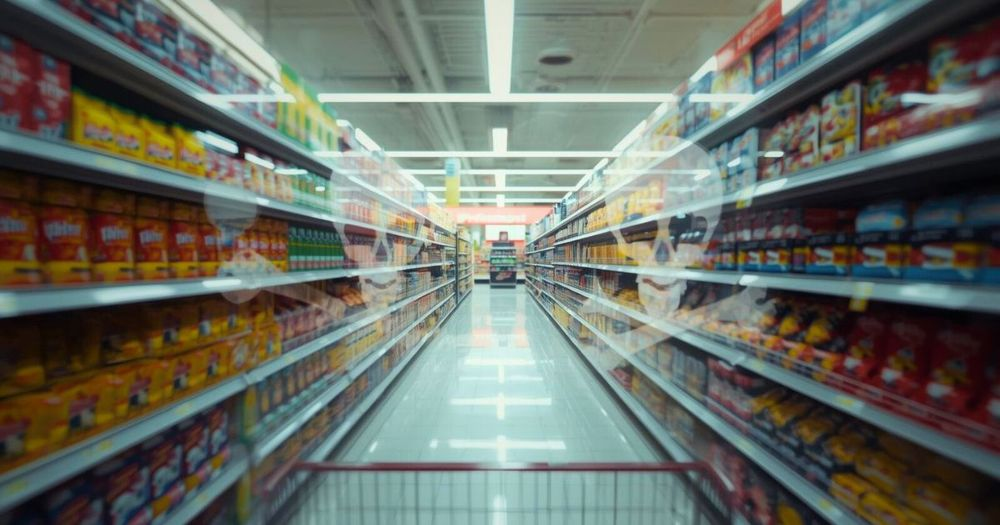
Learn what goes into processed food and one question follows straight away. If it's that bad, why do I feel fine?
Because your body is good at covering for you. It repairs, it compensates, it works a little harder, and it keeps up the look of normal while the load builds underneath. The pancreas makes more insulin. The liver stores the extra fat and carries on. The gut lining patches itself between meals. Each of these is the body doing its job well, and each of them also hides what it's coping with.
That's the trap with processed food damage. The same systems that protect you are the ones that keep the damage out of sight, so when something finally gives, it looks sudden. The heart attack at 52 and the diabetes diagnosis at 47 arrive like news. They're usually the last page of a long story.
Ultra-processed food now makes up about 58% of daily calories in the United States and 57% in the United Kingdom. When researchers pulled together 45 pooled analyses covering almost ten million people, higher intake was linked to 32 of the health outcomes they looked at. The strongest evidence was for dying of cardiovascular disease, type 2 diabetes, anxiety and common mental disorders. These are associations from observational studies, and most of it was graded low quality, so it doesn't prove cause on its own. But it's a long list, and it agrees with the experiments below.
Blood sugar: the quietest decade
The best picture of the hidden years comes from the Whitehall II study, which followed 6,538 British civil servants for about ten years. Of the 505 who developed type 2 diabetes, the researchers looked back at up to 13 years of their blood tests before the diagnosis.
Fasting blood sugar crept up so slowly that it looked like nothing. Then, about three years before diagnosis, it climbed steeply. Insulin sensitivity fell sharply over the last five years. And the pancreas fought back: its output actually rose between four and three years before diagnosis, before it started to fail. The researchers could see the changes three to six years ahead.
That's the cover-up in numbers. As your cells respond less to insulin, the pancreas makes more of it, so fasting glucose stays normal while fasting insulin rises. A test that only checks glucose reads the compensation as health. The trouble shows up on the report only once the pancreas can't keep pace.
Hunger joins in. Fructose doesn't stimulate insulin the way glucose does, and insulin is one of the signals that releases leptin, the hormone that tells your brain you've had enough. When 12 women drank fructose-sweetened drinks with their meals instead of glucose-sweetened ones, their insulin response was about 65% lower, leptin fell by about a fifth over the day, and ghrelin, the hunger hormone, dropped less after eating. The calories arrived, but some of the "you're full" signal didn't.
Insulin and leptin also feed each other. Insulin pushes fat cells to make more leptin, so years of high insulin mean years of high leptin, and the body gradually stops responding to both. Each resistance makes the other harder to shift.
The result is easy to measure. When 20 adults lived in a research ward for a month, two weeks on ultra-processed food and two on unprocessed food, with no limit on portions, their daily intake ran about 500 calories higher on the ultra-processed meals and gained about 0.9 kg. Back on unprocessed food, they lost roughly as much. The meals were matched for sugar, fat, fibre and salt as served. The difference was in how much went down.
The liver: filling up in silence
Foie gras means "fat liver", and it's made on purpose. The ancient Egyptians were force-feeding birds to fatten them as early as 2500 BC, and modern force-feeding swells a goose's liver to about ten times its usual size. The goose needs a feeding tube to get there. We manage it with a fizzy drink.
Fatty liver disease is now the most common liver disorder in the world, affecting about 25–38% of people, and in its early stages it has no symptoms at all. It's usually found by chance on a scan, because there's nothing to feel.
Liquid sugar is one of the fastest ways to fill it. In a six-month trial, 47 overweight adults were given one of four drinks, a litre every day: regular cola, semi-skimmed milk, diet cola or water. The cola group's liver fat rose by 132% to 143% more than with any of the other three drinks, along with more fat in the muscles and around the organs, higher triglycerides and higher cholesterol. Their total body fat barely differed. The cola went somewhere you can't see in the mirror.
The Romans knew the trick. They called foie gras iecur ficatum, fig-stuffed liver, and Pliny credits the gourmet Apicius with fattening geese on dried figs. Ficatum went on to become the everyday word for the organ itself: foie in French, hígado in Spanish, fígado in Portuguese. Much of southern Europe names the liver after one stuffed with fruit sugar.
Being slim is no guarantee, either. Fatty liver affects over 90% of people with obesity and 60% of those with diabetes, but up to 20% of people at a normal weight develop it too. A normal waistline isn't proof of a clear liver; a scan is.
The liver's capacity is part of why it stays quiet. It's the only internal organ that can regrow itself, and it can return to full size from as little as 10% of its original mass. That reserve is a gift. It also means a liver can carry a lot of fat and strain for a long time before anything shows. In some cases fatty liver goes on to inflammation, scarring and cirrhosis, and it raises the risk of heart disease too.
The gut: wearing down behind a working surface
Your gut keeps its trillions of bacteria at a safe distance behind layers of mucus. The lining repairs itself constantly, and that repair is part of why problems take so long to appear.
Emulsifiers are the detergent-like additives that keep processed food smooth and stable, and two of the commonest are carboxymethylcellulose and polysorbate-80. In mice, low amounts of both thinned that protective distance, let bacteria creep closer to the gut wall, and led to low-grade inflammation, weight gain and metabolic syndrome. In mice prone to colitis, they triggered it.
Human evidence is earlier but points the same way. In an 11-day feeding study, healthy adults ate an identical emulsifier-free diet, some with carboxymethylcellulose added. Those given it had more tummy discomfort after meals, a less diverse gut microbiota and fewer short-chain fatty acids, the useful compounds gut bacteria make. In two of them, bacteria had moved into the inner mucus layer, which is normally kept clear. It was a small study, sixteen people, so it's a warning rather than a verdict.
An inflamed gut can also absorb less. When the small intestine is badly damaged, as in coeliac disease, several nutrients can fall short at once, which is one reason a struggling gut can leave you tired in more ways than one.
Arteries that stiffen and get blamed on age
Arteries lose their stretch over the years, and because all arteries do that eventually, a faster stiffening is easy to put down to birthdays. The heart compensates by pushing harder, and blood pressure rises a little at a time. A reading in the "high normal" range three years running feels like nothing to act on. It's the compensation showing. A at home shows the trend between check-ups, and the trend is where the creep shows.
Pulse wave velocity measures how fast the pressure wave from each heartbeat travels along the arteries. The stiffer they are, the faster it goes. It can be measured without a needle, it predicts future heart and circulation problems and deaths beyond the usual risk factors, and it's rarely part of a routine check-up.
The signs in those years are quiet. Stairs that were easy two years ago leave you slightly out of breath. A run takes longer to recover from. None of it feels dramatic enough to look into, and all of it feels like getting older.
The brain: reward turned down
Food built from fat and sugar together, with salt and flavourings on top, hits the brain's reward system hard. In rats given long daily access to that kind of food, the reward system grew steadily less responsive, the dopamine D2 receptors in the striatum fell, and the rats kept eating it even when warned that a mild shock might follow. The researchers compared it to the changes seen with drug addiction.
Human evidence is thinner, but it fits. In a brain-scanning study, ten obese adults had fewer available D2 receptors than lean adults, and the higher the body weight, the fewer there were. That study can't say which came first. What it does suggest is a reward system that needs more to register the same satisfaction, which helps explain eating that carries on past hunger.
Children show the most visible effect. In a trial of 153 three-year-olds and 144 eight- and nine-year-olds, drinks containing artificial colours and the preservative sodium benzoate made them more hyperactive than a placebo drink. The children's teachers and parents didn't know which drink was which.
Sweeteners aren't off the hook either. In a two-week trial with 120 volunteers on sweetener sachets, saccharin and sucralose disturbed how the volunteers handled blood sugar, and all four sweeteners tested altered the gut bacteria. How much it mattered varied from person to person, which is honest science for "we don't know yet who's affected most".
Strong reserves buy time, and time builds damage
Put it together and the same pattern repeats in every system. The body meets a load, compensates for it, and keeps working. Routine tests read the compensated state as normal. The load keeps building behind it.
Here's the uncomfortable part. The better your reserves, the longer the cover-up lasts. A robust pancreas, a big liver reserve and a young, flexible set of arteries keep the numbers normal for longer, and that extra time is time in which more damage can build before anything shows. Strength buys you years. It doesn't make the years free.
What the hidden years feel like
The signs are there before any threshold is crossed. Hunger that comes back soon after a full meal. An afternoon crash after a sugary lunch. A foggy head that lifts when you skip the snacks.
Mornings that start slowly. Slow recovery after exercise. Stamina fading earlier than your age suggests. Each has a dozen possible causes, and that's exactly the point. Every one of them can pass for ordinary modern tiredness, which is how the pattern stays hidden in plain sight.
Tests that see behind the curtain
First, a word on "normal". A reference range is simply where 95% of results from a reference group fall, so 2.5% of healthy people sit below it and 2.5% above. Normal means typical. It isn't a verdict, and a result can climb for years while staying inside it, which is exactly what blood sugar did in the Whitehall II study. Keep your own results and compare them year on year. The trend tells you more than the tick box.
None of these are exotic. They're simply not always ordered.
Fasting insulin, not only fasting glucose. Insulin rises years before glucose does. Combined with glucose, it gives HOMA-IR, a simple score of insulin resistance.
HbA1c. A measure of your average of your blood sugar over the past three months or so, so one good morning can't hide a bad quarter.
A sensitive CRP test. High-sensitivity C-reactive protein picks up the low-grade inflammation that sits below the level of any symptom.
GGT and ALT. Liver enzymes that can hint at a liver under strain. Early fatty liver has no symptoms, so they're worth checking even when you feel fine. Just don't read a clear result as the all-clear: liver blood tests often stay within the normal range even when the disease is advanced.
If you'd like a first look at home, the checks HbA1c, high-sensitivity CRP and GGT from one finger-prick sample, which makes a reasonable baseline.
A liver scan. Ultrasound is the usual first look for fatty liver, and it's quick and painless. A FibroScan goes a step further and measures two things the blood can't: how much fat the liver holds, and how stiff it has become, which is how scarring shows.
Pulse wave velocity, where it's offered, alongside your blood pressure rather than instead of it.
What turns it around
Compensation works in both directions. Take the load away and the body starts repairing with the same efficiency it used to hide the damage.
The same research ward that showed the 500 extra calories showed the reverse: on unprocessed food, the volunteers ate less without trying and lost weight in two weeks. In the cola trial, the water drinkers' livers stayed clear of the extra fat. So did the diet cola group's, but after the sweetener study above, swapping one can for another looks like a poor trade. And in a short trial of adults with fatty liver who kept the same calories but cut their carbohydrates sharply and ate more protein, liver fat dropped rapidly and dramatically, while their bodies switched to burning fat and making ketones.
Even the pancreas, the organ whose failure is supposed to be the point of no return, can come back. Type 2 diabetes is often described as steadily progressive. In a study of 11 people with it on a very low-calorie diet for eight weeks, fasting blood sugar was normal within the first week, liver fat fell from 12.8% to 2.9%, fat in the pancreas dropped, and the pancreas's quick first burst of insulin after a meal returned towards normal. The cover-up can unwind once the fat it was hiding comes out.
Build meals on meat, fish and eggs. Not one of them arrives with emulsifiers, colours or added sugar, and all three are filling. Liver beats them all, rich in iron, copper, B vitamins and vitamin A, and if the taste puts you off, capsules get it into you without the plate. Vegetables are welcome at the side.
Drop the liquid sugar first. Soft drinks and juices are the quickest route to a fatty liver, and water is the drink.
Cook from ingredients. If the label reads like a chemistry set, it's doing a job the kitchen used to do.
Get the tests above, so you have a baseline before the symptoms decide for you, then repeat them to see the trend.
Linked below, What Processed Food Is Really Made Of goes through the ingredients one by one, and Why Processed Food Is Designed to Work Against You explains why they're in there.
Your body signals all the way through. The hunger, the crashes and the creeping numbers are the compensation beginning to show, the surface of something that has been running for years underneath. Listen to them now, while the cover-up is still holding, and you get to fix it on your terms.
Want to know what's actually in the packet? What Processed Food Is Really Made Of — seed oils, emulsifiers, preservatives and colours, and what each one does.
Wondering why it's so hard to stop at one? Why Processed Food Is Designed to Work Against You — how flavour, texture and price are engineered to keep you eating.
Know someone who feels tired, foggy and hungry all the time, but whose blood tests always come back normal? Send them this. Normal results can mean the body is still covering.
Tried something here, or got a question it didn't answer? Write to us at contact@allforlife.club. Your questions shape the next articles.
Disclaimer: This article is general information, not medical advice. If you have symptoms or a condition, talk to a qualified health professional before changing your diet or your medicines. Liver and liver capsules are very high in vitamin A; check with a qualified health professional before taking them in pregnancy.
Affiliate Disclosure: This article contains affiliate links. As an Amazon Associate, All For Life earns from qualifying purchases, at no extra cost to you. We only link to products we would recommend without the commission.
Sources
Wikipedia. Ultra-processed food. en.wikipedia.org
Lane MM, Gamage E, Du S, et al. (2024). Ultra-processed food exposure and adverse health outcomes: umbrella review of epidemiological meta-analyses. BMJ 384:e077310. doi.org/10.1136/bmj-2023-077310
Tabák AG, Jokela M, Akbaraly TN, et al. (2009). Trajectories of glycaemia, insulin sensitivity, and insulin secretion before diagnosis of type 2 diabetes: an analysis from the Whitehall II study. The Lancet 373(9682):2215–2221. doi.org/10.1016/S0140-6736(09)60619-X
Teff KL, Elliott SS, Tschöp M, et al. (2004). Dietary fructose reduces circulating insulin and leptin, attenuates postprandial suppression of ghrelin, and increases triglycerides in women. The Journal of Clinical Endocrinology & Metabolism 89(6):2963–2972. doi.org/10.1210/jc.2003-031855
Wikipedia. Leptin. en.wikipedia.org
Hall KD, Ayuketah A, Brychta R, et al. (2019). Ultra-Processed Diets Cause Excess Calorie Intake and Weight Gain: An Inpatient Randomized Controlled Trial of Ad Libitum Food Intake. Cell Metabolism 30(1):67–77.e3. doi.org/10.1016/j.cmet.2019.05.008
Wikipedia. Foie gras. en.wikipedia.org
Wikipedia. Metabolic dysfunction–associated steatotic liver disease. en.wikipedia.org
Maersk M, Belza A, Stødkilde-Jørgensen H, et al. (2012). Sucrose-sweetened beverages increase fat storage in the liver, muscle, and visceral fat depot: a 6-mo randomized intervention study. The American Journal of Clinical Nutrition 95(2):283–289. doi.org/10.3945/ajcn.111.022533
Wikipedia. Liver regeneration. en.wikipedia.org
Chassaing B, Koren O, Goodrich JK, et al. (2015). Dietary emulsifiers impact the mouse gut microbiota promoting colitis and metabolic syndrome. Nature 519(7541):92–96. doi.org/10.1038/nature14232
Chassaing B, Compher C, Bonhomme B, et al. (2022). Randomized Controlled-Feeding Study of Dietary Emulsifier Carboxymethylcellulose Reveals Detrimental Impacts on the Gut Microbiota and Metabolome. Gastroenterology 162(3):743–756. doi.org/10.1053/j.gastro.2021.11.006
Wikipedia. Malabsorption. en.wikipedia.org
Wikipedia. Pulse wave velocity. en.wikipedia.org
Johnson PM, Kenny PJ (2010). Dopamine D2 receptors in addiction-like reward dysfunction and compulsive eating in obese rats. Nature Neuroscience 13(5):635–641. doi.org/10.1038/nn.2519
Wang GJ, Volkow ND, Logan J, et al. (2001). Brain dopamine and obesity. The Lancet 357(9253):354–357. doi.org/10.1016/s0140-6736(00)03643-6
McCann D, Barrett A, Cooper A, et al. (2007). Food additives and hyperactive behaviour in 3-year-old and 8/9-year-old children in the community: a randomised, double-blinded, placebo-controlled trial. The Lancet 370(9598):1560–1567. doi.org/10.1016/S0140-6736(07)61306-3
Suez J, Cohen Y, Valdés-Mas R, et al. (2022). Personalized microbiome-driven effects of non-nutritive sweeteners on human glucose tolerance. Cell 185(18):3307–3328.e19. doi.org/10.1016/j.cell.2022.07.016
Wikipedia. Reference range. en.wikipedia.org
Wikipedia. Homeostatic model assessment. en.wikipedia.org
Wikipedia. Glycated hemoglobin. en.wikipedia.org
Wikipedia. C-reactive protein. en.wikipedia.org
Mardinoglu A, Wu H, Bjornson E, et al. (2018). An Integrated Understanding of the Rapid Metabolic Benefits of a Carbohydrate-Restricted Diet on Hepatic Steatosis in Humans. Cell Metabolism 27(3):559–571.e5. doi.org/10.1016/j.cmet.2018.01.005
Lim EL, Hollingsworth KG, Aribisala BS, et al. (2011). Reversal of type 2 diabetes: normalisation of beta cell function in association with decreased pancreas and liver triacylglycerol. Diabetologia 54(10):2506–2514. doi.org/10.1007/s00125-011-2204-7
Wikipedia. Liver (food). en.wikipedia.org