
The gap between feeling off and having a test result that confirms it is where many people spend months or years. The blood panel comes back normal. The doctor sees nothing obvious. The feeling persists.
Conventional medical testing is calibrated to detect disease — by the time a panel flags a problem, something has crossed a clinical threshold. The gap before that threshold is where most of the body's observable signals live.
A parallel tradition of observational medicine — drawing from Traditional Chinese Medicine, Ayurvedic practice, naturopathy, and functional medicine — claims to read those earlier signals through visible changes in the tongue, eyes, nails, skin, hair, posture, and other accessible surfaces. What is less often acknowledged is that many of these methods were once mainstream. Before blood panels were routine, physical examination was the primary diagnostic tool — tongue, nails, skin colour, posture, and breath were all read by conventional clinicians as a matter of course. The shift toward laboratory testing over the last fifty years has progressively sidelined these skills. Many of these observations belong to medicine's original toolkit — they arrived at the fringe by being left behind. Some of these claims have documented conventional parallels. Some have been formally tested and found unsupported. Most sit somewhere between those two positions.
Sherlock Holmes never ordered a blood test. He read tan lines, posture, calluses, and ink stains — and arrived at conclusions that formal investigation later confirmed. The methods here fall short of Holmes-level deduction, but the underlying logic is the same: the body's surface carries information about its interior, and a trained observer can read some of it before the laboratory catches up.
Each method below is examined on its own terms — what it claims to detect, what evidence exists, and what a reader can honestly take from it. The conclusion draws these into signal clusters: combinations of observations that together point toward specific conditions worth investigating.

Tongue Analysis
Among the methods that sit outside conventional medicine, tongue analysis has the strongest observational foundation. Its use in Traditional Chinese Medicine spans centuries, and several of its specific observations have documented parallels in conventional medicine.
The tongue's surface, coating, colour, moisture, and shape are each read as indicators of systemic state. A pale tongue suggests reduced blood flow or anaemia — a correlation conventional medicine recognises. A yellow or brown coating is associated with digestive disruption and bacterial overgrowth, particularly in the posterior section near the root, which maps to the lower digestive tract in TCM frameworks. A bright red tip is associated with heat and inflammation. A scalloped edge — where the teeth leave indentations along the sides — is associated with fluid retention and spleen deficiency in TCM, and has some correlation with low thyroid function in functional medicine practice.
A purple or bluish tinge to the tongue or to the veins running under the tongue can indicate poor oxygenation, circulatory impairment, cardiovascular disease, or venous congestion. TCM has long associated a purple tongue with blood stagnation. The conventional parallel is that reduced tissue oxygenation changes mucosal colour — the same mechanism that makes lips and nail beds go blue in cold or hypoxic states. The evidence is weaker than for the anaemia-pallor correlation, but it is a documented clinical observation worth noting.
A 2020 review in the journal Evidence-Based Complementary and Alternative Medicine found that tongue coating changes showed measurable correlations with gut microbiome composition — thicker coating associated with higher levels of inflammatory bacteria and lower levels of protective ones. This is one of the few tongue analysis findings that has been examined with modern methodology and produced a replicable signal. Several studies have also found associations between yellow tongue coatings and markers of metabolic dysfunction including diabetes severity — patients with poorer glycaemic control showing more pronounced yellow coating changes. The relationship appears to run through the bacterial communities shared between the mouth and gut rather than through any direct organ mapping.
More striking findings have emerged from detailed bacterial profiling of the tongue coating. Researchers found specific microbiome shifts in patients with stomach, bowel, and pancreatic cancers — certain protective bacteria depleted, inflammatory species proliferating in their place. Tongue coating microbiome profiling has been proposed as a non-invasive early screening signal for certain cancers. This remains an emerging field rather than clinical practice, but it is among the most significant recent findings in this area.
removes the coating layer daily, giving a clean baseline for consistent observation — changes over time are more informative than any single reading.
Moisture and dryness also carry information. A dry tongue surface can indicate dehydration, but persistent dryness in well-hydrated individuals is associated in functional medicine with autonomic nervous system dysregulation. A consistently wet or swollen tongue with a thick white coating is associated with candida overgrowth.
Tongue analysis has a more substantial observational basis than most methods covered here. Some specific observations — pallor, coating thickness and colour, scalloping — have documented correlations with systemic conditions. Changes over time are more informative than a single reading.
Fingernail Analysis
Fingernail analysis has the strongest crossover with conventional medicine of any method covered here. Several nail changes are recognised diagnostic signals in mainstream clinical practice.
Koilonychia — spoon-shaped nails that curve upward at the edges — is a recognised sign of iron deficiency anaemia and has been documented in medical literature since the early twentieth century. Clubbing, where the nail curves over a bulbous fingertip, is associated with chronic respiratory conditions, cardiovascular disease, and liver disease. Beau's lines — horizontal grooves running across the nail — indicate a period of systemic stress during which nail growth slowed or paused. They can be dated approximately, since nails grow roughly three millimetres per month.
Terry's nails, where the nail appears mostly white with a narrow pink band at the tip, are associated with liver cirrhosis, congestive heart failure, and diabetes — conditions that alter the blood supply to the nail bed. Half-and-half nails, with a white proximal half and a red or brown distal half, are associated with kidney disease. Yellow nails are associated with respiratory conditions and lymphatic congestion.
Muehrcke's lines — paired thin white transverse bands that differ from Beau's lines in that they run parallel beneath the nail plate and disappear temporarily under pressure — are associated with severely low albumin levels, kidney disease, and liver failure. Unlike Beau's lines, which reflect disrupted nail growth, Muehrcke's lines reflect changes in the blood supply to the nail bed.
Pitting — small depressions across the nail surface — is associated with psoriasis and alopecia areata. Pale nail beds suggest anaemia or poor circulation. Bluish nail beds indicate oxygen deficiency. White spots, contrary to widespread belief, are generally caused by minor trauma rather than calcium or zinc deficiency.
Vertical ridging is common with ageing and generally benign. Pronounced ridging that develops suddenly can indicate thyroid dysfunction or nutritional deficiency.
Koilonychia, clubbing, Beau's lines, and Terry's nails belong to conventional medicine — recognised clinical signs that give a reader who notices them specific and legitimate reason to pursue further investigation.
Skin Signals
Skin changes are where conventional and functional medicine overlap most visibly — some signals are mainstream diagnostic signs, others are observational heuristics, and the same pattern can mean different things depending on context.
Jaundice — yellowing of the skin — is a mainstream medical signal indicating elevated bilirubin, associated with liver and gallbladder dysfunction. Pallor, particularly in the inner lower eyelid, is a recognised sign of anaemia. Both are standard clinical observations.
Acne pattern mapping is more contested. The claim that acne in specific facial zones reflects dysfunction in corresponding organ systems — forehead mapping to the digestive system, cheeks to the lungs, jaw to hormonal imbalance — has limited formal evidence but substantial practitioner observation behind it. Hormonal acne along the jaw and chin has the strongest conventional support — the jawline is a recognised distribution pattern for androgen-driven acne, and the association with hormonal fluctuation is documented.
Skin that stays persistently dry despite adequate hydration points toward thyroid dysfunction, essential fatty acid deficiency, or vitamin A deficiency — all documented in both conventional and functional medicine. The distinction is persistence — dry skin from cold weather reads differently from skin that stays dry regardless of season, humidity, or moisturiser.
Small, soft growths of skin in body folds — skin tags — correlate with elevated insulin levels and increased type 2 diabetes risk in several observational studies. Functional medicine treats their appearance as a prompt to check metabolic markers.
Redness and flushing patterns carry information. Persistent redness across the cheeks and nose — rosacea — has documented associations with gut dysbiosis, particularly SIBO. The gut-skin axis connection in rosacea is one of the more established functional medicine correlations.
Darkened, velvety thickening of the skin in body folds — the back of the neck, armpits, and groin — is a recognised sign of insulin resistance. Conventional medicine uses it as a prompt to test for prediabetes. Among the skin signals covered here, this one is among the more specific — when it appears in someone without a recent insulin resistance assessment, it warrants follow-up.
measures average blood sugar over roughly three months — the standard first-line investigation for insulin resistance and prediabetes that this skin signal points toward.
Dark circles under the eyes are associated with adrenal fatigue and kidney stress in TCM and functional medicine practice. The conventional explanation centres on thinning skin making the underlying blood vessels more visible, but the functional medicine view adds cortisol dysregulation and chronic inflammation as contributing factors.
Skin signals range from well-established conventional signs — jaundice, pallor — to observational functional medicine correlations — acne mapping, skin tags, the rosacea-gut connection — to less-supported TCM associations such as dark circles and kidney stress. The strongest signals are worth taking seriously. The weakest require more caution.
Hair Signals
Hair changes are among the more reliable early signals of systemic disruption — the conditions that cause them are common, testable, and often missed until the shedding becomes obvious.
Diffuse hair thinning across the scalp is a recognised sign of hypothyroidism, iron deficiency, and protein deficiency in conventional medicine. Iron deficiency causes hair shedding through a specific storage form of iron — ferritin — which depletes before the iron in red blood cells falls low enough to show anaemia on a standard blood test. A person can have completely normal blood count results while their iron stores are low enough to be driving active hair loss. Ferritin is the specific test worth requesting — a general iron check will miss this. Hair that becomes coarse, dry, and brittle alongside thinning is a classic hypothyroid presentation — the combination is considered a reliable indicator warranting thyroid testing. Eyebrow thinning, particularly in the outer third, is specifically associated with hypothyroidism and is used as a clinical observation in conventional endocrinology.
A specific type of diffuse hair loss — sometimes called telogen effluvium — occurs roughly three months after a significant stressor. Illness, surgery, rapid weight loss, nutritional deficiency, and major psychological stress are all documented triggers. The three-month lag reflects the hair cycle: the stress pushes follicles into the resting phase, and they shed synchronously when that phase ends.
Premature greying before forty has documented associations with vitamin B12 deficiency, thyroid autoimmunity, and oxidative stress in several observational studies. The association with autoimmune conditions is the most consistently replicated finding.
Alopecia areata — patchy hair loss — is an autoimmune condition with documented associations with thyroid disease, vitiligo, and other autoimmune conditions. Its appearance warrants investigation of the broader autoimmune picture.
Hair loss specifically at the temples and crown in men follows the androgenic pattern driven by DHT, with genetics as the primary driver. The same pattern in women carries different implications — PCOS and androgenic excess are the leading candidates, and hormonal investigation is warranted where the loss is recent rather than longstanding.
What makes hair signals particularly useful is timing. The body shows the disruption months before a standard blood panel would catch it — ferritin has been low for a while before haemoglobin drops, and the hair registers the deficit first. A reader experiencing diffuse thinning, outer eyebrow loss, or sudden shedding has reason to request the specific tests the standard panel omits.

Sclera Analysis
The white of the eye is one of the most reliable early indicators of liver stress — and one of the most overclaimed surfaces in alternative health.
Yellowing of the sclera is jaundice and is a mainstream medical diagnostic sign indicating elevated bilirubin from liver or gallbladder dysfunction. Redness or visible blood vessels indicate inflammation or irritation, with causes ranging from dry eyes and allergies to more serious conditions.
A blue-grey tinge to the sclera is associated with iron deficiency anaemia in some observational studies — the thinning of the scleral tissue allows the underlying vasculature to show through, a subtler signal with some conventional backing.
Beyond these, scleral analysis extends into territory with weaker evidence. The reason broader scleral claims fail is structural — the sclera is dense connective tissue that responds to local factors like intraocular pressure, UV exposure, and localised inflammation rather than to signals from distant organs. There are no anatomical pathways connecting visceral organ states to specific scleral regions. The yellowing and redness signals are reliable because they reflect systemic chemistry — bilirubin and inflammation — diffusing through the tissue. The broader mapping claims ask the sclera to do something its anatomy prevents.
Iridology
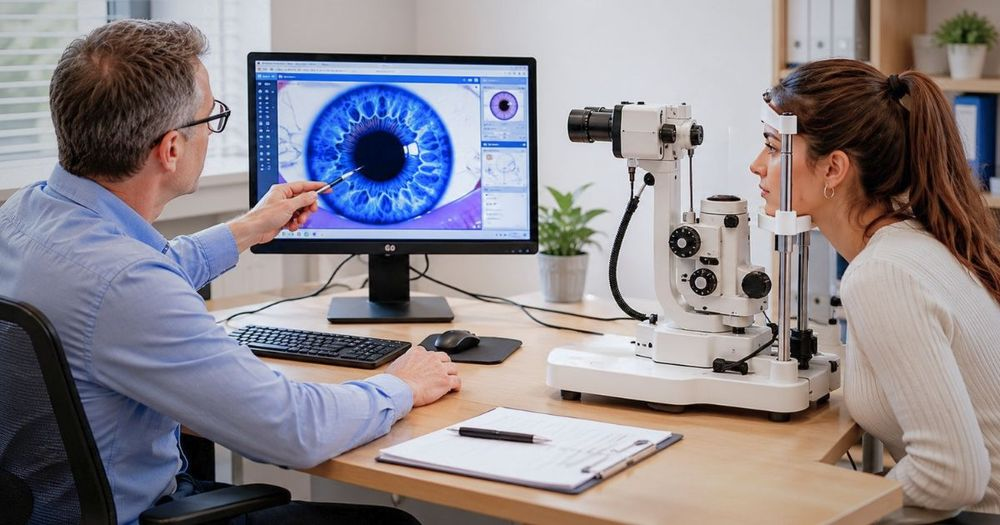
Iridology is the most studied method in this category — and the one with the weakest evidence.
The core claim of iridology is that the iris of the eye is divided into zones corresponding to specific organs and body systems, and that changes in iris pigmentation, texture, and markings reflect the health status of those organs. Practitioners read the iris as a map of the body's systemic state.
This claim has been tested in several controlled trials. A 1979 study in the Journal of the American Medical Association tested iridologists' ability to identify kidney disease from iris photographs and found their performance at chance level. A 2000 systematic review in the Archives of Ophthalmology examined multiple studies and concluded that the scientific evidence supported no correlation between iridology findings and organ disease. A 2024 formal evidence evaluation by the Australian Government Department of Health and Aged Care reached the same conclusion — classifying iridology as ineffective and not recommended for any diagnostic purpose. This is the most recent government-level assessment of the evidence and applies the same grading system used to evaluate clinical interventions in mainstream medicine.
In controlled trials where iridologists examined patients with documented conditions — kidney disease, gallbladder disease, adrenal dysfunction — their diagnoses from iris photographs showed no significant agreement with each other or with the documented medical diagnoses.
There is a specific reason the evidence comes back negative every time. The iris is one of the most stable structures in the human body — stable enough that it serves as a biometric identifier in passport scanning, phone security systems, and high-security access. It stays structurally stable across a lifetime. Iridology requires the iris to change in response to disease states. Both of these things leave no room for each other. The same biological property that makes the iris a reliable personal identifier is the property that makes iridology's core claim implausible from first principles.
Iridology's core claims have been formally tested and the evidence consistently fails to support them. Every other method reviewed here sits somewhere on a spectrum from well-supported to plausible-but-unproven. Iridology sits off that spectrum entirely. A reader who has received an iridology reading should treat the findings accordingly.
Posture and Gait
Posture and gait analysis occupy an unusual position in this category — they are used extensively in physiotherapy, sports medicine, and functional movement, which gives them a conventional basis that most methods here lack.
Anterior pelvic tilt — where the pelvis rotates forward, increasing lumbar curve — is associated with weak glutes and abdominals, tight hip flexors, and prolonged sitting. It is a recognised postural pattern in physiotherapy with documented links to lower back pain, hip dysfunction, and knee problems. Posterior pelvic tilt carries the opposite associations.
Forward head posture, where the head sits in front of the shoulders rather than above them, initiates a cascading compensation pattern through the entire body — what physiotherapists call the kinetic chain. Forward head position pulls the thoracic spine into increased rounding, which forces the lumbar spine into an excessive inward curve, which tips the pelvis forward, which alters knee alignment, which changes how weight distributes through the feet. A single postural deviation at the top propagates downward through every load-bearing joint. This is why forward head posture is associated with upper cervical dysfunction, tension headaches, reduced respiratory capacity, and eventually with lower back and knee problems that may seem unrelated to the neck.
pulls the shoulders back and cues the upper spine into alignment — the starting point for interrupting the cascade described above. For every centimetre the head moves forward, the effective load on the cervical spine increases by several kilograms.
Gait asymmetry — where one side of the body moves differently from the other — is used in both physiotherapy and neurology as a diagnostic signal. Subtle asymmetries that develop gradually can indicate early joint degeneration, neurological changes, or muscle imbalance patterns.
In functional medicine, posture is also read as a stress indicator. Chronic protective postures — rounded shoulders, contracted chest, forward head — are associated with sustained sympathetic nervous system activation and adrenal stress patterns. A person who holds their breath when concentrating, tenses their jaw under pressure, or chronically rounds their shoulders in sedentary work shows this pattern visibly. The functional medicine interpretation extends beyond what conventional physiotherapy would claim, but the postural observation itself is straightforward.
Posture and gait analysis have a solid conventional foundation for their structural observations. The functional medicine extensions into systemic stress patterns have less formal evidence but rest on a plausible physiological basis. A reader who notices postural changes — particularly forward head position, rounded shoulders, or an asymmetric gait developing gradually — has legitimate reason to consult a physiotherapist for a structural assessment.

Hand Temperature and Moisture
The hands are a direct readout of the autonomic nervous system — what the body does with blood flow and sweat gland activity under different conditions produces visible, consistent patterns.
Cold hands and feet in a warm environment are associated with hypothyroidism, Raynaud's phenomenon, anaemia, and poor peripheral circulation. The thyroid connection is well documented — thyroid hormones regulate basal metabolic rate and peripheral blood flow, and reduced thyroid function consistently produces cold extremity symptoms. Cold hands often appear before TSH moves outside the reference range, making them an earlier observable signal than the standard test. Persistent cold hands alongside fatigue, hair thinning, and dry skin form a cluster that warrants thyroid investigation.
Consistently warm hands with sweating at rest are associated with hyperthyroidism, anxiety, and autonomic nervous system dysregulation. The association between chronic stress, elevated cortisol, and sweaty palms has functional medicine support, though the specific mechanism remains unclear.
Trembling hands at rest are associated with essential tremor, thyroid dysfunction, and medication effects in conventional medicine. Fine tremor specifically is a hyperthyroid sign.
The hands respond to what the autonomic nervous system is doing in real time — blood is redirected toward the core under stress, thyroid hormone governs heat production at rest, and both show up in the extremities before a test would confirm them. Cold hands are often the first thyroid symptom a person notices, sometimes years before TSH moves outside the reference range.
Urine Colour and Odour
Urine colour and odour are among the most defensible signals covered here because conventional medicine already uses them routinely — this is mainstream diagnostic territory — no alternative framing needed.
Pale or colourless urine indicates high fluid intake or, in some cases, diabetes insipidus. Dark yellow to amber urine indicates dehydration. Orange urine can indicate liver or bile duct issues, or certain medications. Pink or red urine indicates blood, which warrants immediate investigation. Brown urine is associated with severe muscle breakdown (rhabdomyolysis), liver disease, or certain medications.
Cloudy urine indicates potential infection, kidney stones, or excess protein or phosphate. Foamy urine that persists is associated with proteinuria — protein in the urine — which can indicate kidney dysfunction.
checks the key kidney function markers at home — a practical next step for anyone noticing persistent foaminess, cloudiness, or unusual colour changes over multiple days.
Ammonia odour is common with dehydration and high protein intake, but persistent ammonia odour in well-hydrated individuals can indicate kidney stress or a urea cycle disorder. Sweet or fruity odour is associated with ketosis or uncontrolled diabetes — acetone produced during fat metabolism or elevated blood glucose produces a characteristic sweet smell. Sulphur or rotten egg odour is associated with certain gut bacteria and intestinal infections.
Pink or red urine warrants medical investigation without delay — blood in the urine has causes that range from benign to serious, and none of them are worth waiting on. The subtler signals — persistent foaminess, ammonia odour, cloudiness over multiple days — sit in a different category: worth tracking, worth mentioning to a clinician, but not emergencies.
Breath Signals
Breath provides several observable signals that functional and conventional medicine both use as systemic indicators.
Acetone or fruity breath is produced when the body metabolises fat rather than glucose — it indicates either ketosis or, at higher intensity, diabetic ketoacidosis. For someone with known diabetes, fruity breath alongside other symptoms warrants urgent medical attention. Following a low-carbohydrate diet, the same smell signals successful fat adaptation.
Ammonia breath — a smell sometimes described as urine-like — indicates that the kidneys are under strain and nitrogen waste is being expelled through the lungs. It can also indicate excess protein intake overwhelming the liver's urea cycle. Persistent ammonia breath in the absence of dietary explanation warrants kidney function testing.
Sulphur or rotten egg breath is associated with gut dysbiosis, SIBO (small intestinal bacterial overgrowth), and H. pylori infection. This bacteria is worth specific mention here because the urea breath test — where the patient swallows a urea compound and the breath is then analysed for the carbon dioxide produced by the bacteria's ability to break down urea — is a mainstream diagnostic tool already in routine clinical use. This makes breath analysis for H. pylori one of the clearest existing examples of conventional medicine using exhaled breath as a diagnostic signal. The bacteria responsible for these conditions produce hydrogen sulphide as a waste product of their metabolism. A consistent sulphur smell is worth investigating with gut testing.
Sweet, musty breath is associated with liver failure in conventional medicine — a specific smell called fetor hepaticus that results from the liver's reduced ability to process certain compounds.
Fruity and ammonia breath are specific enough to act on directly. Sulphur breath warrants gut investigation. These are underused signals — they require no equipment, no appointment, and no threshold to cross before paying attention.
Pulse Diagnosis
Pulse diagnosis stands apart from every other method reviewed here — self-assessment here produces nothing useful. It belongs to a practitioner.
In Traditional Chinese Medicine, pulse diagnosis involves reading the pulse at three positions on each wrist, at three depths, assessing qualities including rate, rhythm, strength, and character. Each position and depth is mapped to specific organ systems. This is a sophisticated diagnostic system developed over centuries — too complex to summarise briefly or evaluate from a single reading without training.
In Ayurvedic medicine, nadi shodhana uses pulse assessment to evaluate the body's constitutional balance and current energetic state. Practitioners assess pulse qualities at the wrist to read systemic and energetic state.
Neither TCM pulse diagnosis nor Ayurvedic nadi has been validated in controlled trials to the standard that would satisfy conventional medicine. Both have strong practitioner traditions and internal logic that practitioners in these traditions consider sufficient on its own terms. The lack of conventional validation leaves the question open.
Pulse diagnosis belongs in the hands of a trained practitioner from the relevant tradition. A reader interested in exploring it should seek a qualified TCM or Ayurvedic practitioner rather than attempting self-assessment. Modern biomedical engineering has developed computerised pulse diagnostic devices that convert the radial pulse wave into measurable data — arterial compliance, ventricular ejection force, peripheral resistance. Research using machine learning on these signals has shown some diagnostic promise for cardiovascular monitoring. This does not validate the traditional organ-mapping frameworks of TCM or Ayurveda, but it suggests the radial pulse carries more information about blood vessel function and cardiac output than conventional medicine currently reads from a simple rate count.
What to Do With This
These ten methods range from well-established conventional diagnostic signals to formally tested and unsupported claims. The most practical way to use them is through signal clusters — combinations of two or three observations pointing toward the same system. Fingernail changes, skin pallor and jaundice, hair thinning patterns, urine colour, and breath signals sit within mainstream medicine for several of their most important signals. Tongue analysis has a more substantial evidential basis than its reputation as an alternative medicine practice suggests. Posture and gait have solid conventional foundations. Iridology has been formally tested and the evidence consistently fails to support its core claims.
Each method earns its place or loses it on one question: does this observation have a documented association with a specific condition, and is that association strong enough to justify follow-up testing.
Outer eyebrow thinning alongside cold hands and persistent fatigue points toward thyroid testing. Persistent foamy urine and morning puffiness points toward kidney function. Jaw and chin acne in an adult woman alongside irregular cycles points toward hormonal investigation. These signals work as starting points, directing attention toward where testing is worth running. They work alongside medical testing rather than as substitutes for it.
Signal clusters worth investigating further:
Cold hands, outer eyebrow thinning, persistent fatigue, dry skin, and hair losing its texture together point toward thyroid function — this cluster warrants a TSH test alongside free T3, T4, and ferritin.
Persistent foamy urine, puffiness around the eyes on waking, and pale nail beds together point toward kidney function and protein levels.
Jaw and chin acne in adult women, irregular cycles, and diffuse scalp thinning together point toward hormonal investigation — specifically androgens and PCOS.
Yellow skin or eye whites, dark urine, and persistent fatigue together point toward liver function and warrant prompt medical attention rather than monitoring.
Sudden diffuse hair shedding, Beau's lines across the nails, and prolonged fatigue together often point to a significant stressor three months prior — illness, surgery, or nutritional crash — and tend to resolve as the underlying cause resolves.
A single signal in isolation is less informative than two or three pointing in the same direction.
covers ferritin, TSH, free T3 and T4, hs-CRP, HbA1c, and GGT in a single home panel — the markers that four of the five clusters above point toward.
The body produces observable information continuously. The question is whether the observer has a framework for reading it.
Your bloodwork comes back normal but something still feels off. Here is what the body does when standard tests miss the early signals. Why Processed Food Damage Takes Years to Show Up — and Why That Is the Problem — five body systems, five compensation patterns, and why the damage stays invisible for years.
The compounds most likely driving the signals described above — what they are and what each one does. What Processed Food Is Really Made Of — seed oils, emulsifiers, preservatives, artificial colours, bromated flour, and the mechanisms behind each.
Do you know someone who keeps being told their results are normal but feels anything but? This might be the framework they have been looking for.
Disclaimer: This article is for educational and informational purposes only and does not constitute medical advice. None of the observational methods described here should be used as a substitute for medical diagnosis or treatment. Anyone experiencing symptoms that concern them should consult a qualified healthcare provider.
Affiliate Disclosure: This article contains affiliate links. If you purchase through these links, we may earn a small commission at no additional cost to you. We only recommend products we consider genuinely relevant to the topics discussed.