
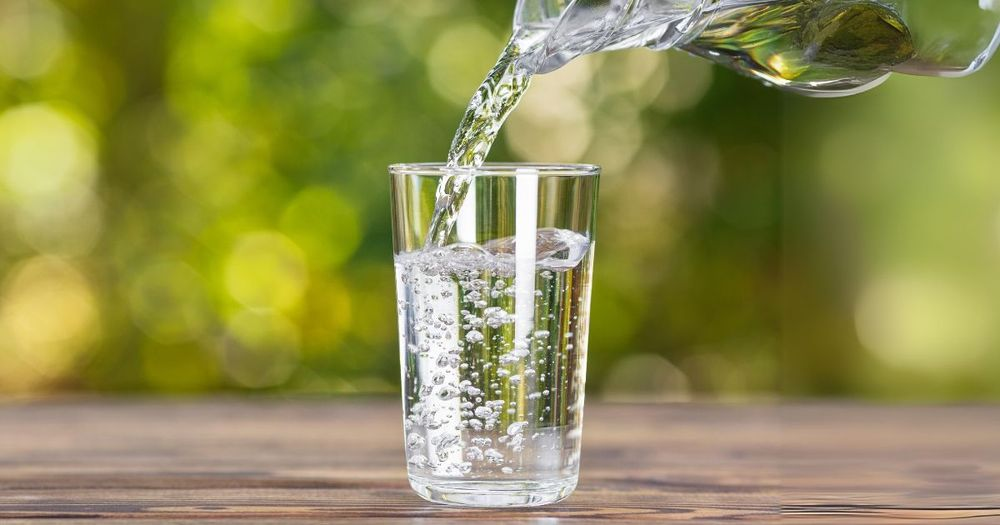
Silica gets called the beauty mineral. Drink water rich in it, the story goes, and your skin firms up, your hair thickens, your nails stop splitting, your bones harden, your joints loosen, your heart thanks you and your body detoxes itself on the side.
That is a lot to ask of a glass of water. I usually just ask mine to be cold.
It is also a strange thing to be short of. After oxygen, silicon is the most common element in the ground under your feet. You walk on it, build with it and look through it, because sand and glass are mostly silica. Almost none of that can get into your body. The version dissolved in some spring waters can.
So here are the seven claims made for silica-rich mineral water, each put to the test. Some hold up a little. One is far more interesting than the label lets on. A few have nothing behind them yet.
Sand, glass and the silica you can drink
First, the names, because the bottles muddle them. Silicon is the element. Silica, or silicon dioxide, is silicon locked up with oxygen into a solid: quartz, sand, glass. Silicone, the rubbery stuff in bakeware and sealant, is something else again: a man-made chain of silicon and oxygen with carbon attached. As for silica, your gut cannot do much with a solid made of rock.
Even the little sachet in a new pair of shoes, the one that says "do not eat", is silica, in a porous form called silica gel. The gel itself is harmless. The colour-changing kind used to carry cobalt chloride, now banned for that use in Europe because of a link with cancer.
What water carries is different. As water runs through rock, it dissolves a little silicon as single, loose molecules, called orthosilicic acid. Those small molecules can cross the gut wall. Large particles of silica cannot, or barely.
You can see it in how much of each source the body takes up. Volunteers swallowed different sources of silicon, and the amount coming out in their urine was measured. Alcohol-free beer came top at 64%, green beans gave up 44%, and the dissolved form found in water 43%. A stabilised supplement managed 17%. Bananas, the fruit most often listed as a silica source, gave up only 4%. The banana's reputation has been doing most of the work. Colloidal silica, sold as a supplement, gave up 1%.
So the form matters more than the amount on the label. A drink with dissolved silicon delivers. A powder of fine silica mostly passes straight through.
Drinking silica is harmless. Breathing it is another matter. Fine dust from crystalline silica scars the lungs, a disease called silicosis, and it has no cure.
In the early 1930s, workers drilled a tunnel through quartz-rich sandstone at Hawks Nest in West Virginia, in ten- to fifteen-hour shifts. The company counted 109 deaths. A Congressional hearing in 1936 put the toll at 476, and a later history at 764, out of about 3,000 workers. Same mineral, different door: through the mouth it is something your body can use, through the lungs a killer.
Do you need it at all?
In 1972, chicks raised on a diet stripped of silicon grew badly within two or three weeks. Chicks given the same diet with silicon added grew 50% more and developed normally. The same year, rats showed the same thing. Two years earlier, silicon had turned up concentrated in young bone, in the places where new bone was hardening.
In humans, no illness from too little silicon has ever been shown. The fairest current view is that silicon is a beneficial trace element, not a proven essential one. You will not find a deficiency disease for it. There is no silicon scurvy.
You take in quite a lot anyway. Across thousands of American adults, men took in about 30 milligrams a day and women about 25, and the amount fell with age. The biggest sources were beer and bananas for the men, and bananas and string beans for the women. Across 207 British foods and drinks, cereals carried the most, especially oats and less refined grains, while tomatoes, oranges and onions had too little to measure. Beer was the richest drink, and drinking water varied, with some mineral waters high.
Food silicon comes mainly from plants. If your plate is built on meat, fish and eggs, as mine is, the water you drink may well be your main source. That is our reading of the figures, not something anyone has measured in meat eaters.
1. Glowing skin
Collagen is the protein that keeps your skin firm. Elastin is the one that lets it spring back. Losing both brings the wrinkles that come with age. Silicon seems to be involved in how connective tissue like collagen is built, which is where the skin claim starts. It is not part of collagen itself.
When 50 women with sun-damaged skin took a stabilised silicon supplement or a dummy pill for 20 weeks, the skin on their forearms became less rough in the silicon group and rougher in the dummy group.
That is a real result, and a narrow one. It was a supplement, not water, in women whose skin had a lot to gain, measured over five months. Glowing skin from a glass of mineral water has not been tested at all. The verdict is partly.
2. Stronger hair and nails
If you have been struggling with brittle nails or thinning hair, this is the claim aimed at you.
Silicon sits in hair at a few parts per million. When 48 women with fine hair took the same kind of supplement or a dummy pill for nine months, their hair strands grew a little thicker and lost less of their strength than in the dummy group. In the skin test, the women taking silicon also rated their hair and nails as less brittle than when they started.
Again, that was a supplement, in a small group, with the strands measured under a microscope rather than in the mirror. The verdict is a little.
3. Stronger bones
Calcium often gets all the credit for bone health. Silicon has a better claim than most minerals to share it.
Among 2,847 adults in Massachusetts, people who took in more silicon had denser hips, by up to 10% between the highest and lowest intakes. But that held only in men and in women before menopause. After menopause, there was no link, and there was none at the spine in anyone. In 3,198 Scottish women aged 50 to 62, the link appeared only in women who still had oestrogen working for them, through their own hormones or hormone replacement.
When it was tried as a treatment, 136 women with thin bones took calcium and vitamin D for a year, with silicon or a dummy pill. One marker of new bone collagen rose in two of the silicon groups. The density of the spine did not change. The bones, it seems, had not read the label.
So silicon goes with stronger bones, and may help build them, but it has not been shown to prevent osteoporosis. Why Your Mineral Supplements Keep Canceling Each Other Out has a warning from calcium itself: calcium with vitamin D raised hip density in women past menopause without cutting hip fractures. Bones want load more than pills, and The Harsh Truth About Aging: Decline or Longevity? has how heavy lifting raised the density of the spine. The verdict is linked, not proven.
4. Detox, which really means aluminium
"Detox" usually means nothing. Here it means one specific metal, and this is the claim worth knowing about.
Aluminium is the most common metal in the Earth's crust. Food is the main way it reaches you, with more from drinking water, some indigestion remedies, and tea, because the tea plant gathers it in its leaves. Tea Bags vs Loose Leaf: What's Really Steeping in Your Cup has which teas carry the most. Silicon seems to change how the body handles aluminium, which is where the idea came from that silicon-rich water could carry aluminium out.
It starts in the gut. Five healthy volunteers swallowed aluminium tagged so it could be traced through the body, once with dissolved silicon, at a level some tap waters carry, and once without. With the silicon, the aluminium in their blood peaked at 15% of the level it reached without it. Less got in to begin with.
When 15 people with Alzheimer's disease, and their carers, drank up to a litre a day of a silicon-rich mineral water for 12 weeks, more aluminium left in their urine, while iron and copper did not. At least three of the 15 did better on memory tests by the end. There was no comparison group, so that could have been chance, attention or the extra water.
Among 1,925 French adults over 65, followed for 15 years, those who took in more aluminium from their drinking water declined faster, while each extra 10 milligrams of silica a day went with an 11% lower risk of dementia. Where people lived, and their tap water alone, showed no link, so this rests on what each person drank.
Aluminium can harm the brain. When the kidneys fail, they clear it poorly, and dialysis does not clear it well either. People on dialysis whose treatment fluid was made with water high in aluminium built it up, and developed bone disease, anaemia and damage to the brain, with dementia among the signs. The water used to make that fluid is now tested for it.
Alzheimer's is a different question. Aluminium has been suspected as a cause of it for more than 40 years, and that time has produced no good evidence that it causes it. So silicon-rich water may help your body clear aluminium. Whether clearing aluminium protects the brain is not known.
Either way, it costs nothing to take in less to begin with. Acidic food or drink in contact with aluminium raises how much of it is absorbed, and aluminium is still the usual metal for pans, dishes and utensils. So cook tomatoes, lemon and vinegar in steel, cast iron or enamel, not in bare aluminium. The verdict is real, interesting, and unproven where it matters.
5. Easier joints
Joints are made of the same kinds of connective tissue as skin and bone, so the claim borrows from those. No human test of silicon for joint pain or arthritis turned up, so this one is untested.
That has not stopped the plant sold for it. Horsetail is marketed for hair, bones, skin and joints because its stems are thick with silica. They are so thick with it that they were once used to scour pots, which earned the plant the name scouring rush. It is also a living fossil, the last survivor of a group that ruled the floors of ancient forests for over 100 million years. Some of its relatives were trees 30 metres tall, and one of them is common in coal. Horsetail also contains thiaminase, an enzyme that breaks down vitamin B1, and taking it for long periods risks a shortage of the vitamin and damage to the liver. A pot scourer is not a supplement. The verdict is no evidence yet.
6. A healthier heart
The claim is that silicon keeps blood vessels elastic, borrowing again from its link with connective tissue. No human test of silicon and heart disease turned up either. The verdict is no evidence yet, which is not the same as false. It means the question has not been tested properly.
7. Better hydration
This one is true, and it is true of water in general. Silica-rich mineral water hydrates you exactly as well as any other water does. The good thing about it is that it is water, the drink your body runs on, with nothing added and nothing to undo. Of all seven claims, the dullest is the only one that is certainly true.
Think You're Hydrated? Why Your Body Might Be Thirsty for More, linked below, has how to tell whether you are drinking enough. The verdict is yes, because it is water.
How to choose a bottle
Natural mineral water prints its own analysis on the label, and What to Drink Instead of Plain Water, linked below, has why it is worth reading. If the analysis lists silica, the figure in milligrams per litre tells you what you are paying for. Waters vary from almost none to a great deal, and two bottles at the same price can be far apart. If the label does not mention silica, the bottle is not selling it. , for one, lists about 93 milligrams of silica per litre on its label. Filters work the other way. A reverse osmosis filter strips most dissolved minerals out of water, silica included. PFAS Forever Chemicals: Where They Hide has what such a filter is good for, and what it takes away.
Skip the powders. Colloidal silica gave up 1% of its silicon, and horsetail brings its thiaminase. "Food-grade" diatomaceous earth, also sold for silica, is made of the fossilised shells of tiny algae called diatoms. Living diatoms wrap themselves in shells of silica, which is why they are called living opals. They take more than 6.7 billion tonnes of silicon out of the water each year, and make between a fifth and a half of the oxygen produced on Earth each year. The powder is a mild abrasive in toothpaste and metal polish, and, milled fine, an insecticide. As particles of silica, it belongs with the forms the body barely absorbs, though that has not been measured for this powder.
If you want silicon, drink it in the form your body can use: dissolved, in water, as part of your regular hydration routine. To carry it, a keeps it in glass, which is silica that stays where it is.
The verdict, in one glass
Silica-rich mineral water will not transform your health. It is still a good water. The silicon in it is the kind your body can absorb. It may help your skin, hair and bones a little, and it seems to carry some aluminium out on the way through. Whether that last part matters for your brain is the open question. The beauty mineral's best feature turns out to be the plainest one: it comes in water.
Next time you buy mineral water, turn the bottle round and read the silica line before you read the price.
Wondering what else is in your bottle? What to Drink Instead of Plain Water — and What the Popular Alternatives Do to Your Body — mineral water, broth, the electrolyte drinks, and why the label on natural mineral water is worth reading.
Not sure you drink enough? Think You're Hydrated? Why Your Body Might Be Thirsty for More — where the water in you comes from, what keeps it in, and how to tell whether you are short.
Know someone with a cupboard full of hair, skin and nail pills? Send them this before they buy the next bottle.
Disclaimer: This article is general information. For advice about your own health, bones or memory, talk to a qualified health professional.
Affiliate Disclosure: This article contains affiliate links. As an Amazon Associate, All For Life earns from qualifying purchases, at no extra cost to you. We only link to products we would recommend without the commission.
Sources
Wikipedia. Aluminium. en.wikipedia.org
Wikipedia. Silicon dioxide. en.wikipedia.org
Wikipedia. Silicone. en.wikipedia.org
Wikipedia. Silica gel. en.wikipedia.org
Sripanyakorn S, Jugdaohsingh R, Dissayabutr W, et al. (2009). The comparative absorption of silicon from different foods and food supplements. British Journal of Nutrition 102(6):825–834. doi.org/10.1017/S0007114509311757
Wikipedia. Silicosis. en.wikipedia.org
Wikipedia. Hawks Nest Tunnel disaster. en.wikipedia.org
Carlisle EM (1972). Silicon: An Essential Element for the Chick. Science 178(4061):619–621. doi.org/10.1126/science.178.4061.619
Schwarz K, Milne DB (1972). Growth-promoting Effects of Silicon in Rats. Nature 239(5371):333–334. doi.org/10.1038/239333a0
Carlisle EM (1970). Silicon: A Possible Factor in Bone Calcification. Science 167(3916):279–280. doi.org/10.1126/science.167.3916.279
Nielsen FH (2014). Update on the possible nutritional importance of silicon. Journal of Trace Elements in Medicine and Biology 28(4):379–382. doi.org/10.1016/j.jtemb.2014.06.024
Jugdaohsingh R, Anderson SH, Tucker KL, et al. (2002). Dietary silicon intake and absorption. The American Journal of Clinical Nutrition 75(5):887–893. doi.org/10.1093/ajcn/75.5.887
Powell JJ, McNaughton SA, Jugdaohsingh R, et al. (2005). A provisional database for the silicon content of foods in the United Kingdom. British Journal of Nutrition 94(5):804–812. doi.org/10.1079/bjn20051542
Macdonald HM, Hardcastle AC, Jugdaohsingh R, et al. (2012). Dietary silicon interacts with oestrogen to influence bone health: Evidence from the Aberdeen Prospective Osteoporosis Screening Study. Bone 50(3):681–687. doi.org/10.1016/j.bone.2011.11.020
Wikipedia. Collagen. en.wikipedia.org
Barel A, Calomme M, Timchenko A, et al. (2005). Effect of oral intake of choline-stabilized orthosilicic acid on skin, nails and hair in women with photodamaged skin. Archives of Dermatological Research 297(4):147–153. doi.org/10.1007/s00403-005-0584-6
Wickett RR, Kossmann E, Barel A, et al. (2007). Effect of oral intake of choline-stabilized orthosilicic acid on hair tensile strength and morphology in women with fine hair. Archives of Dermatological Research 299(10):499–505. doi.org/10.1007/s00403-007-0796-z
Jugdaohsingh R, Tucker KL, Qiao N, et al. (2004). Dietary Silicon Intake Is Positively Associated With Bone Mineral Density in Men and Premenopausal Women of the Framingham Offspring Cohort. Journal of Bone and Mineral Research 19(2):297–307. doi.org/10.1359/JBMR.0301225
Spector TD, Calomme MR, Anderson SH, et al. (2008). Choline-stabilized orthosilicic acid supplementation as an adjunct to Calcium/Vitamin D3 stimulates markers of bone formation in osteopenic females: a randomized, placebo-controlled trial. BMC Musculoskeletal Disorders 9:85. doi.org/10.1186/1471-2474-9-85
Jackson RD, LaCroix AZ, Gass M, et al. (2006). Calcium plus Vitamin D Supplementation and the Risk of Fractures. New England Journal of Medicine 354(7):669–683. doi.org/10.1056/NEJMoa055218
Watson SL, Weeks BK, Weis LJ, et al. (2018). High-intensity resistance and impact training improves bone mineral density and physical function in postmenopausal women with osteopenia and osteoporosis: the LIFTMOR randomized controlled trial. Journal of Bone and Mineral Research 33(2):211–220. doi.org/10.1002/jbmr.3284
Li X, Wang W, Chen C, et al. (2026). The transcription factor CsART1 activates the aluminum transporter CsALS3s to promote the absorption and tolerance of aluminum in tea plants. Journal of Experimental Botany, erag435. doi.org/10.1093/jxb/erag435
Edwardson JA, Moore PB, Ferrier IN, et al. (1993). Effect of silicon on gastrointestinal absorption of aluminium. The Lancet 342(8865):211–212. doi.org/10.1016/0140-6736(93)92301-9
Davenward S, Bentham P, Wright J, et al. (2013). Silicon-Rich Mineral Water as a Non-Invasive Test of the ‘Aluminum Hypothesis’ in Alzheimer's Disease. Journal of Alzheimer's Disease 33(2):423–430. doi.org/10.3233/JAD-2012-121231
Rondeau V, Jacqmin-Gadda H, Commenges D, et al. (2009). Aluminum and Silica in Drinking Water and the Risk of Alzheimer's Disease or Cognitive Decline: Findings From 15-Year Follow-up of the PAQUID Cohort. American Journal of Epidemiology 169(4):489–496. doi.org/10.1093/aje/kwn348
Wikipedia. Aluminium toxicity in people on dialysis. en.wikipedia.org
Wikipedia. Equisetum. en.wikipedia.org
Wikipedia. Reverse osmosis. en.wikipedia.org
Wikipedia. Diatom. en.wikipedia.org
Wikipedia. Diatomaceous earth. en.wikipedia.org