
In the 1944 film Gaslight, Paula marries Gregory after a two-week whirlwind romance. Then things start going missing. A brooch he gave her vanishes from her handbag. Paintings move around the house. Each time, Gregory gently points out how forgetful she's becoming.
The gas lamps dim at night, and when she mentions it, he insists she's imagining it. By the middle of the film, she's no longer sure what's real. Gregory is driving her mad on purpose, to cover what he's after.
That film gave us the word gaslighting, and the plot reads like a checklist that people swap online today: the whirlwind start, the slow erosion, the partner who makes you doubt your own memory. "Narcissist" has become the internet's favourite word for every bad ex, and that's a problem, because it's both overused and, when it fits, badly underestimated. The useful question is narrower: is this person's behaviour wearing you down?
Three findings are worth knowing before you decide. Narcissistic people come across as more likable at first sight. Their charm tends to curdle within weeks. And narcissism does fade with age, though not in the way you'd hope.
The trait and the label
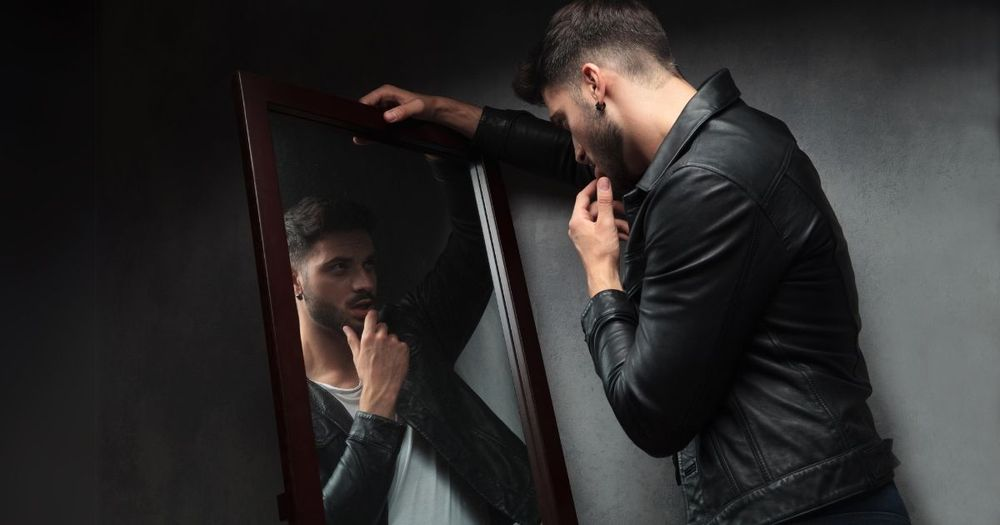
The word comes from the Greek myth of Narcissus, and in Ovid's famous telling his story has a second character worth remembering. The nymph Echo fell for Narcissus, but she had been cursed to repeat only the last words spoken to her. She watched him fall for his reflection in a pool, and stay there till he died. Living with a narcissistic partner can feel a lot like being Echo: your own voice shrinking to a repeat of theirs.
Narcissism is a trait, a mix of self-importance, entitlement and a hunger for admiration, and people sit at different points along it. At the far end sits narcissistic personality disorder, a diagnosis estimates put at anywhere from close to zero to about 6 percent of the population. So the word on the internet stretches far beyond the diagnosis. There's no epidemic behind it, either. Across about 60,000 US college students, narcissism fell slightly from the 1990s to the 2010s, entitlement included. So you can stop blaming the kids.
It also comes in two flavours. Grandiose narcissism is the familiar one: arrogant, dominant, exploitative, sure they're the best person in the room. Vulnerable narcissism is quieter and thin-skinned: touchy, prone to shame and resentment, quick to feel slighted. Both share the core of entitlement and low empathy, and both can be hard to live with.
The quiet kind is easier to miss and, for partners, the riskier one. Across 22 groups and more than 11,000 people, narcissism had a weak link with abusing a partner, mostly through psychological and online control rather than violence, and the link was stronger for the thin-skinned kind than the arrogant kind. Jealousy is often the route in: checking the phone, questioning every friendship, needing constant reassurance that never quite lands. Men and women showed the pattern alike. Men do score a little higher on narcissism overall, across 355 studies and 470,846 people, mostly on entitlement and leadership, but it's far from a male problem.
Oddly, one of the better tests is to ask. When people were asked a single question, how far they agreed with "I am a narcissist", meaning egotistical, self-focused and vain, their answers lined up with their scores on the long questionnaires, across 11 groups and 2,250 people. A partner who proudly calls themselves a narcissist may simply be telling you the truth.
Where it comes from may surprise you too. When 565 children aged 7 to 12 were followed over 18 months, narcissism grew with parents overvaluing them, and not with a lack of warmth. It's one study, but it's worth knowing if you're raising children.
Acting needs no diagnosis. What matters is the pattern of behaviour and what it's doing to you.
Why they're so charming at first
The pattern is hard to spot early because it starts with charm. When strangers judged each other from short self-introductions, the most narcissistic people came out as the most popular. The traits that do the most damage in the long run, exploiting others and feeling entitled, were the ones people found most attractive at first sight, through confident body language, how they dressed and a polished presentation. The first date is their best work.
The shine fades. When small groups met once a week for seven weeks, the self-enhancers made a great first impression: agreeable, well adjusted, capable. By the seventh meeting the same people were rated negatively. The charm is real, it's just front-loaded.
The same person can be doing two different things. Across 7 studies with 3,560 people, the early romantic appeal came mainly from seeking admiration, and the long-term trouble came mainly from rivalry, protecting their self-image by putting others down. So the person who dazzled you at the start and the one who belittles you a year on are the same person, using different tools.
The charm has a partner, the game. Across several groups of people, narcissism went with a game-playing style of love, driven by a need for power and independence, with more options kept in reserve and less commitment to the person in front of them. Their partners, past and present, described the same thing. The dazzling start and the one foot out of the door are two halves of the same style.
The warning signs that matter
Empathy that switches on and off. They can be warm and attentive when it serves them, and strangely cold when you're the one who needs support.
One set of rules for you, another for them. They expect loyalty, time and patience they rarely give back, and they bristle at being held to the same standard.
Criticism lands as an attack. A small complaint sets off rage, sulking or a long cold silence, so you learn to stop raising things.
Your memory keeps getting corrected. Conversations you remember clearly "never happened". You find yourself apologising for things you're no longer sure you did.
Every ex was crazy. A trail of former partners who were all unstable, jealous or impossible says more about the common denominator than about them. Give it a year, and you'll be on the list.
Money becomes their lever. They control the accounts, hand out an allowance, question every purchase, or make it hard to keep a job with calls and surprise visits at work. Money is one of the quietest ways to keep someone from leaving.
Your world gets smaller. Your friends are "a bad influence", your family "just doesn't get you", and bit by bit less of your old life is left around you.
The apology that ends up being your fault. You raise something they did, and by the time you've finished talking, you're the one saying sorry.
Gaslighting and DARVO
Two of those signs have names, and naming them makes them easier to spot.
Gaslighting is the slow manipulation of someone into doubting their own perception, Gregory's method in the film. The word has come a long way from the cinema: it was Merriam-Webster's Word of the Year in 2022, after lookups rose 1,740 percent. It rarely starts with a big lie. It starts with small corrections, delivered with a confident face, until your own account feels less reliable than theirs.
It also borrows from the world around you. One study of domestic violence argues that gaslighting works by turning stereotypes and institutions against the victim, which is why "you're crazy" can land so hard. Robin Stern's shows how it builds and how to get clear of it.
DARVO stands for Deny, Attack, Reverse Victim and Offender. You raise a problem; they deny it happened, attack you for bringing it up, and recast themselves as the one being wronged. Jennifer Freyd coined the term in 1997, and once you've seen it, you'll recognise it mid-argument.
It works on you. Among 138 students who recalled confronting someone over a wrongdoing, more DARVO went with more self-blame, which is how the apology ends up being yours.
It works on onlookers as well. When 316 students read a DARVO response, they found the victim less believable and more to blame, and the abuser less abusive. When 360 others first learned what DARVO is, that effect shrank. So tell the friend you confide in what it's called. George Simon's covers this and the other tactics manipulative people rely on.
Can they change?
Narcissism does soften with age on average. Following people from 18 to 41, overall narcissism dropped substantially, with entitlement falling the most. But people kept their rank: the most narcissistic 18-year-olds were still among the most narcissistic 41-year-olds. Scores drop, and the ranking holds.
The empathy, at least, isn't missing. In three studies, people high in narcissism showed low empathy until they were told to take the other person's perspective, and then both what they reported and their heart rate responded. The authors concluded it isn't an inability. That's encouraging in a lab and less so at home, because someone has to want to do it, and you can't do it for them.
So change is possible but slow, and it's theirs to do. Building your plans on someone else's future change is a gamble with your own years. If some of this sounds like you, Relationship Red Flags You Should Never Ignore has a section on what to do next.
Protecting yourself
Trust the pattern over the apology. One bad day proves nothing. A repeating cycle of charm, criticism, blame and making up is a pattern, and the next apology will be part of it. Yours won't settle it either. Across 6 studies, narcissistic entitlement predicted less forgiveness and more insistence on repayment for a past offence, even allowing for how bad it was and whether an apology was made, which is why old rows keep coming back.
Keep your people close. Isolation is how control grows. Keep seeing friends and family, even when it causes friction at home.
Write things down. Dates, what was said, what happened, kept somewhere out of their reach, such as with a friend or in an account only you can open. When your memory is being questioned, a written record is something solid to stand on.
Set limits with consequences. A boundary is what you will do, whatever they choose: "If you shout at me, I'll leave the room."
Plan the exit with help. If you're frightened, or they control your money, movements or friends, that's abuse, and since 2015 England and Wales have treated controlling or coercive behaviour between partners as a crime. Don't wait for a mark before you count it. Across 13,912 US adults, when physical and psychological abuse were weighed together, the psychological kind was the more strongly linked to poor health, depressive symptoms and chronic illness.
Leaving is the most dangerous time. Among women killed by a partner, having separated from a controlling partner was one of the clearest warning signs, along with access to a gun, past threats with a weapon and stalking. If any of those apply, plan the exit with a helpline before you go. In the US, the National Domestic Violence Hotline answers around the clock on 1-800-799-7233, or text START to 88788. In the UK, the National Domestic Abuse Helpline is on 0808 2000 247 at any hour, and the Men's Advice Line is on 0808 801 0327. Lundy Bancroft's explains how controlling partners think.
Seeing clearly again
Paula never won an argument with Gregory. She got out because someone from outside believed her and helped her see what was happening. That's the real protection against a narcissistic partner: people around you, a record you can trust, and the knowledge that charm in week one and blame in month six are part of the same pattern.
If your partner keeps rewriting your memory, believe the version you wrote down, and tell someone you trust tonight. Echo never got her voice back. You can.
Swept off your feet in the first week? Love Bombing in Relationships: How to Recognize and Stop Emotional Manipulation — what the whirlwind start is for, and how to slow it down.
Saw the warning signs and stayed anyway? Red Flags: Why You Saw Them and Stayed Anyway — why leaving feels harder than it should, and what keeps people hoping.
Know someone who keeps apologising for things they're not sure they did? Send them this. The plot of Gaslight might look familiar.
Disclaimer: This article is general information about relationships. If you feel unsafe with a partner, contact one of the helplines listed above.
Affiliate Disclosure: This article contains affiliate links. As an Amazon Associate, All For Life earns from qualifying purchases, at no extra cost to you. We only link to products we would recommend without the commission.
Sources
Wikipedia. Gaslight (1944 film). en.wikipedia.org
Back MD, Schmukle SC, Egloff B (2010). Why are narcissists so charming at first sight? Decoding the narcissism–popularity link at zero acquaintance. Journal of Personality and Social Psychology 98(1):132–145. doi.org/10.1037/a0016338
Paulhus DL (1998). Interpersonal and intrapsychic adaptiveness of trait self-enhancement: A mixed blessing? Journal of Personality and Social Psychology 74(5):1197–1208. doi.org/10.1037/0022-3514.74.5.1197
Wetzel E, Grijalva E, Robins RW, Roberts BW (2020). You’re still so vain: Changes in narcissism from young adulthood to middle age. Journal of Personality and Social Psychology 119(2):479–496. doi.org/10.1037/pspp0000266
Wikipedia. Narcissus (mythology). en.wikipedia.org
Wikipedia. Narcissistic personality disorder. en.wikipedia.org
Wetzel E, Brown A, Hill PL, et al. (2017). The Narcissism Epidemic Is Dead; Long Live the Narcissism Epidemic. Psychological Science 28(12):1833–1847. doi.org/10.1177/0956797617724208
Oliver E, Coates A, Bennett JM, Willis ML (2024). Narcissism and Intimate Partner Violence: A Systematic Review and Meta-Analysis. Trauma, Violence, & Abuse 25(3):1871–1884. doi.org/10.1177/15248380231196115
Ponti L, Ghinassi S, Tani F (2020). The Role of Vulnerable and Grandiose Narcissism in Psychological Perpetrated Abuse Within Couple Relationships: The Mediating Role of Romantic Jealousy. The Journal of Psychology 154(2):144–158. doi.org/10.1080/00223980.2019.1679069
Grijalva E, Newman DA, Tay L, et al. (2015). Gender differences in narcissism: A meta-analytic review. Psychological Bulletin 141(2):261–310. doi.org/10.1037/a0038231
Konrath S, Meier BP, Bushman BJ (2014). Development and Validation of the Single Item Narcissism Scale (SINS). PLoS ONE 9(8):e103469. doi.org/10.1371/journal.pone.0103469
Brummelman E, Thomaes S, Nelemans SA, et al. (2015). Origins of narcissism in children. Proceedings of the National Academy of Sciences 112(12):3659–3662. doi.org/10.1073/pnas.1420870112
Wurst SN, Gerlach TM, Dufner M, et al. (2017). Narcissism and romantic relationships: The differential impact of narcissistic admiration and rivalry. Journal of Personality and Social Psychology 112(2):280–306. doi.org/10.1037/pspp0000113
Campbell WK, Foster CA, Finkel EJ (2002). Does self-love lead to love for others? A story of narcissistic game playing. Journal of Personality and Social Psychology 83(2):340–354. doi.org/10.1037/0022-3514.83.2.340
Wikipedia. Economic abuse. en.wikipedia.org
Merriam-Webster. Word of the Year 2022: Gaslighting. merriam-webster.com
Sweet PL (2019). The Sociology of Gaslighting. American Sociological Review 84(5):851–875. doi.org/10.1177/0003122419874843
Wikipedia. DARVO. en.wikipedia.org
Harsey SJ, Zurbriggen EL, Freyd JJ (2017). Perpetrator Responses to Victim Confrontation: DARVO and Victim Self-Blame. Journal of Aggression, Maltreatment & Trauma 26(6):644–663. doi.org/10.1080/10926771.2017.1320777
Harsey S, Freyd JJ (2020). Deny, Attack, and Reverse Victim and Offender (DARVO): What Is the Influence on Perceived Perpetrator and Victim Credibility? Journal of Aggression, Maltreatment & Trauma 29(8):897–916. doi.org/10.1080/10926771.2020.1774695
Hepper EG, Hart CM, Sedikides C (2014). Moving Narcissus: Can Narcissists Be Empathic? Personality and Social Psychology Bulletin 40(9):1079–1091. doi.org/10.1177/0146167214535812
Exline JJ, Baumeister RF, Bushman BJ, et al. (2004). Too Proud to Let Go: Narcissistic Entitlement as a Barrier to Forgiveness. Journal of Personality and Social Psychology 87(6):894–912. doi.org/10.1037/0022-3514.87.6.894
Wikipedia. Controlling behavior in relationships. en.wikipedia.org
Coker AL, Davis KE, Arias I, et al. (2002). Physical and mental health effects of intimate partner violence for men and women. American Journal of Preventive Medicine 23(4):260–268. doi.org/10.1016/S0749-3797(02)00514-7
Campbell JC, Webster D, Koziol-McLain J, et al. (2003). Risk Factors for Femicide in Abusive Relationships: Results From a Multisite Case Control Study. American Journal of Public Health 93(7):1089–1097. doi.org/10.2105/AJPH.93.7.1089