
You can smell it before you see it, the tea towel that's hung by the cooker all week, slightly sour and never quite dry. And still, we'd call our hygiene fine. We shower, we brush, we wash our hands, and the bathroom shelf is full of products that smell of lavender and promise to keep us fresh.
Watch a public sink for a minute, though, and it gets more interesting. The hygiene habits that matter most are simpler than the shelf suggests, a few of the ones we're proudest of work against us, and the dirtiest thing in the house sits somewhere you'd least expect.
Hands: longer than you think
Handwashing earned its place the hard way. In 1847, at a Vienna maternity clinic, Ignaz Semmelweis had the staff scrub their hands in chlorinated lime before they touched the mothers, and deaths from childbed fever fell from 18 per cent to under 2. He was mocked for it, and died in an asylum before the world caught up.
Hands pass colds, stomach bugs and food poisoning around a household and beyond, and regular handwashing cuts down both the coughs and the stomach upsets that travel that way. The catch is doing it properly. When 3,749 people were watched at public sinks in an American college town, proper handwashing turned out to be rare, and the observers suspected that earlier, better-looking counts had been flattering.
Twenty seconds of scrubbing with soap is the target, about as long as humming "Happy Birthday" twice. The parts that get skipped are the thumbs, the fingertips, the backs of the hands, the skin between the fingers and the space under the nails, which happen to be the parts that touch the most. Water temperature hardly matters: anywhere from cool to comfortably hot, water removed germs about equally, because the soap and the scrubbing do the work, so there's no need to wait for the tap to heat up. Rinse, then dry your hands well on a clean towel. Away from home, paper towels are the cleaner choice. When hands coated in a harmless test virus were dried, a jet air dryer scattered over 1,300 times more of it into the air around it than paper towels did.
Wash after using the toilet, before eating or cooking, once you've handled raw meat, and as soon as you're home. Plain soap does the job. And the shared bar by the sink is fine: bars loaded with 70 times the bacteria found on used soap left none of it on the hands of the 16 people who washed with them. Antibacterial soaps did so little extra that in 2016 the United States ruled that triclosan and 18 other antibacterial ingredients could no longer be sold in ordinary consumer hand soaps. When there's no sink, an alcohol hand gel works well, and against cold viruses it did better than soap and water. It does less against norovirus, the winter vomiting bug, so when that's going round, go back to the sink. Why You Keep Getting Sick, linked below, covers what else decides how often the colds land.
Frequent washing can leave hands dry and cracked, and damaged skin passes on infection more easily. A plain hand cream after washing, especially in winter, keeps the skin doing its job as a barrier.
Coughs and sneezes belong in a tissue that goes straight in the bin, or in the crook of your elbow, never in your hand, since your hands are the route everything above is trying to close.
Teeth: what the two minutes are for
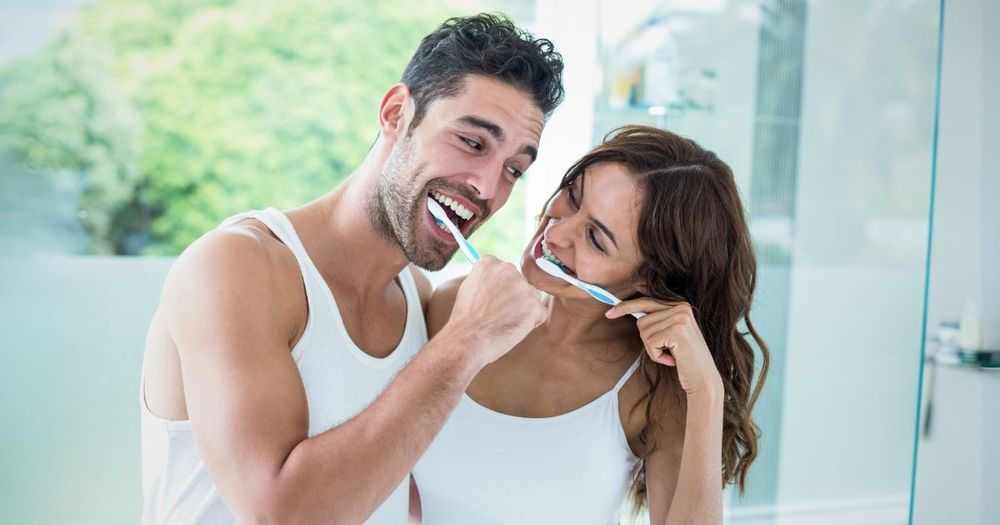
Brush twice a day for about two minutes, and take your time along the gumline, where plaque collects and gums start to bleed. An electric toothbrush removes more plaque and calms gums more than a manual one, and its timer takes care of the two minutes for you. Then spit, and hold off rinsing with water. Rinsing washes away the protective ingredient in the toothpaste you've just applied, and leaving a thin film on the teeth lets it keep working for longer.
The paste's job is to protect the enamel. A made with hydroxyapatite, a mineral that mirrors the one tooth enamel is built from, kept pace with fluoride in a test with 189 adults: after 18 months, the hydroxyapatite group did no worse at keeping new cavities away. Fluoride toothpaste has the longer record against tooth decay, and for young children its strength has to be weighed against fluorosis, the white patches that too much fluoride leaves on growing enamel. Fluoride paste clearly beats one without it, so a paste with neither fluoride nor hydroxyapatite is the one to skip.
Brushing misses the tight gaps between the teeth, where food and bacteria sit. A or small interdental brushes reach them, and a daily pass there helps keep gums from bleeding. Pick floss without a slippery coating, since some of the smoothest brands are made with PTFE, one of the PFAS "forever chemicals", and women who used one of them had more PFAS in their blood. PFAS Forever Chemicals: Where They Hide goes through where else they hide. Bad breath that starts in the mouth comes mostly from bacteria on the tongue, at the back, where little disturbs them, so a gentle brush or a there does more for breath than any mouthwash. Replace your toothbrush once the bristles start to splay.
Strong antiseptic mouthwash can even work against you. Used for a week, it killed off the mouth bacteria the body relies on to keep blood pressure down, and readings climbed within a day of starting it. For everyday fresh breath, the tongue does more than the bottle.
The shower: less than you think
A daily shower is a pleasure, and after hard work or training it's welcome. Scrubbing all over every day, though, is more than skin needs. Soap matters most where sweat and bacteria collect: underarms, groin, feet and the skin under folds. The rest of you does fine with water most days.
Washing too often, especially with harsh soaps, is the habit that works against us. It strips the natural oils that keep skin soft and sealed, and the result is the tight, itchy, flaky skin that's easy to blame on winter. A warm, shorter shower keeps the barrier intact. Pat yourself dry, and put moisturiser on while the skin is still a little damp, when it holds it best.
Hair is personal. Oily scalps need washing more often than dry or curly hair, which does better with a few days between washes. The scalp tells you: itching, flaking or greasiness by evening means the rhythm needs adjusting.
Ears look after themselves
Cotton buds are one of the clean habits that backfire most often. Ears clean themselves: wax slowly works its way out and normally just falls out on its own, carrying dust and dead skin with it. A bud pushes wax back towards the eardrum, packs it tighter and can scratch the delicate skin of the canal. Wipe the outer ear with a cloth after a shower and leave the inside alone, and if an ear feels blocked, have it looked at.
Contact lenses and water
If you wear contact lenses, keep water away from them. Never rinse lenses or their case in tap water, and take them out before swimming, a bath or a hot tub, because a rare but serious eye infection, caused by an amoeba, reaches the eye through lenses that have met ordinary water. Wash and dry your hands before you touch them, use fresh solution every time, and replace the case every few months.
Makeup brushes and sponges
Makeup tools pick up skin oil, dead skin and bacteria every time they touch your face, then go back into the product and onto your face again. In one check of used beauty sponges, 93 per cent had never been cleaned, and 64 per cent had been dropped on the floor and used again. Wash brushes and sponges once a week with a mild soap or shampoo, let them dry in the open air, and replace sponges every few months. Mascara is the one to watch: its wand goes straight to the eye, so replace it every few months and keep it to yourself.
Intimate hygiene
The vagina cleans itself, and it does the job well. Its friendly bacteria keep it slightly acidic, which holds off infection, and douching upsets that balance, making thrush and bacterial infections more likely. Plain water on the outside is all it needs. Periods need a little care too. Toxic shock syndrome is rare but dangerous, and it's linked to tampons, especially high-absorbency ones left in longer than four to eight hours, so change them through the day, choose the lowest absorbency that copes, and switch to a pad at night. For men, washing under the foreskin every day, with plain water, and drying gently afterwards prevents the soreness and odour that build up there.
Feet and nails
Feet do best clean and dry. Dry carefully between the toes after a shower, since that damp strip is where athlete's foot most often starts. Let shoes dry for a day between wears, change your socks every day, and choose ones that let feet breathe.
Keep nails short, and use a nail brush now and then, because dirt and germs collect in the space under long nails, and a quick wash misses them. Biting them hands those germs straight to your mouth.
Shared showers and changing rooms are where athlete's foot and verrucas spread, so wear flip-flops there. At the gym, put your own towel between you and the benches and mats, and shower soon after training, before sweat and bacteria settle in.
Close the lid
A flush throws a fine plume of droplets up to head height within eight seconds, and they settle on whatever is nearby, toothbrushes included. Closing the lid first is thought to cut that down, though some still escapes through the gaps, so the toothbrush belongs as far from the toilet as the bathroom allows. Store it upright in the open air so it dries between uses, and keep brushes from touching each other.
Towels and bedding
A towel that stays damp is an ideal home for bacteria and mould, and you can smell when it's crossed the line. Hang towels spread out so they dry fully between uses, and wash them every few uses. Keep your own towel, and give whoever is ill in the house their own too.
Pillowcases collect skin oils, sweat, saliva and hair products every night, and a face pressed into the same pillowcase for a fortnight meets all of it again. Changing pillowcases twice a week is a cheap experiment for breakouts along the cheek and jaw. Sheets can go weekly. When someone in the house is ill, wash bedding and towels on a hot cycle, as hot as the fabric allows.
The kitchen
The dirtiest object in the house sits by the kitchen sink. A used sponge is warm, damp and full of food scraps, and when used kitchen sponges were examined under the microscope, bacteria were packed in at up to 54 billion cells in a cubic centimetre. Cleaning it doesn't solve the problem either: in sponges their owners cleaned regularly, two kinds of bacteria that can cause infection made up a bigger share.
Replace sponges every week or so, or switch to a brush that dries out between uses. Wash dishcloths and tea towels hot and often, and keep a separate chopping board for raw meat, so the juices from yesterday's chicken never meet today's salad. The five-second rule may go back to a legend about Genghis Khan, whose banquet food was said to be safe on the floor for as long as Khan allowed. It's a myth all the same: bacteria jump onto dropped food in under a second, and wet foods such as watermelon pick up the most, while gummy sweets pick up the least.
The fridge matters as much as the sink. Keep it between 0 and 5°C, and get leftovers in within two hours of cooking, since bacteria multiply in food left sitting out in a warm room. One habit worth dropping is rinsing raw chicken. Cooking deals with its bacteria regardless, while rinsing only sends them flying, as the splashes carry them across the sink, the taps and whatever sits on the draining board. Around two-thirds of raw chicken in UK shops was found to carry Campylobacter, one of the main causes of food poisoning, which is why the Food Standards Agency began asking people in 2014 to stop washing it.
Pets bring their own germs into the kitchen. Wash your hands after feeding them, stroking them or cleaning up after them, and again before you eat, and wash their bowls separately from the family's dishes.
The things you carry
Your phone goes everywhere your hands go, including places you'd rather not think about, and then it goes against your face. Wipe it down every few days with an alcohol wipe, and leave it outside the bathroom. The same goes for keys, the TV remote and anything the whole household handles.
The reusable water bottle deserves the same attention. Wash it every day with hot soapy water, lid and straw included, since that's where a slimy film builds up, and leave it open to dry.
Deodorant and the bathroom shelf
Antiperspirants use aluminium to block sweat, and they've been blamed for all sorts over the years. The scare that gets the most attention, a link with breast cancer, seems to have started with a spam email in 1999, and no evidence has turned up to support it. Habit plays a bigger part than need, too. In a group of about 17,000 people in Bristol, more than three-quarters of those whose genes leave their underarms nearly odourless still used deodorant, and Practical Tips for Good Personal Hygiene Using Natural Products explains the gene behind it. Choose whatever keeps you fresh and comfortable, and if your skin reacts, a fragrance-free version is usually the fix. Hidden Toxins in Your Personal Care Products, linked below, takes the rest of the shelf, the soaps, creams and cosmetics, one ingredient at a time.
When clean becomes too clean
It's possible to overdo it. Scrubbing hands with harsh products many times a day leads to raw, cracked skin, and the same happens to faces washed twice a day with stripping cleansers. Skin is a barrier with its own population of friendly bacteria, and it works best when it's cleaned, left alone and moisturised.
There's a wider point too. The idea that a life can be too clean began with a simple observation: children from bigger families, with more brothers and sisters bringing germs home, had less hay fever and eczema than only children. Good hygiene means clean hands before food and a clean kitchen. A sterile life is no part of it.
Small habits, big returns
Good hygiene turns out to be a handful of small habits done well: twenty seconds at the sink, two minutes with the toothbrush and a pause before you rinse, a warm, shorter shower, a fresh pillowcase, a tea towel in the wash before you can smell it, a sponge that goes in the bin on time. None of them costs much, and the bathroom shelf can probably shrink a little too. Together they keep colds, stomach bugs, breakouts and sore gums away more than any product on it.
This week, time your next handwash. If you're done before "Happy Birthday" ends a second time, you've found your first habit to change, and it's one of the easiest wins there is.
Curious about what's in the products on your shelf? Hidden Toxins in Your Personal Care Products — what's in the bottles you use every day, ingredient by ingredient, and the plainer swaps.
Clean hands and still catching every cold? Why You Keep Getting Sick: The Causes of Frequent Colds — what decides how often you catch a cold, and the habits that stack the odds in your favour.
Know someone who swears by a long, hot shower and a cotton bud? Send them this. A couple of small changes might be kinder to their skin and ears.
Tried something here, or got a question it didn't answer? Write to us at contact@allforlife.club. Your questions shape the next articles.
Disclaimer: This article is general information. For advice about your own health, talk to a qualified health professional. If you have a skin, ear, eye or intimate symptom that lasts or worries you, get it checked.
Affiliate Disclosure: This article contains affiliate links. As an Amazon Associate, All For Life earns from qualifying purchases, at no extra cost to you. We only link to products we would recommend without the commission.
Sources
Wikipedia. Ignaz Semmelweis. en.wikipedia.org
Wikipedia. Hand washing. en.wikipedia.org
Borchgrevink CP, Cha J, Kim S (2013). Hand washing practices in a college town environment. Journal of Environmental Health 75(8):18–24. pubmed.ncbi.nlm.nih.gov/23621052
Centers for Disease Control and Prevention. About Handwashing. cdc.gov
Jensen DA, Macinga DR, Shumaker DJ, et al. (2017). Quantifying the Effects of Water Temperature, Soap Volume, Lather Time, and Antimicrobial Soap as Variables in the Removal of Escherichia coli ATCC 11229 from Hands. Journal of Food Protection 80(6):1022–1031. doi.org/10.4315/0362-028X.JFP-16-370
Kimmitt PT, Redway KF (2016). Evaluation of the potential for virus dispersal during hand drying: a comparison of three methods. Journal of Applied Microbiology 120(2):478–486. doi.org/10.1111/jam.13014
Heinze JE, Yackovich F (1988). Washing with contaminated bar soap is unlikely to transfer bacteria. Epidemiology and Infection 101(1):135–142. doi.org/10.1017/s0950268800029290
Wikipedia. Triclosan. en.wikipedia.org
Turner RB, Fuls JL, Rodgers ND (2010). Effectiveness of Hand Sanitizers with and without Organic Acids for Removal of Rhinovirus from Hands. Antimicrobial Agents and Chemotherapy 54(3):1363–1364. doi.org/10.1128/AAC.01498-09
Wikipedia. Hand sanitizer. en.wikipedia.org
Wikipedia. Cough etiquette. en.wikipedia.org
NHS. How to keep your teeth clean. nhs.uk
Yaacob M, Worthington HV, Deacon SA, et al. (2014). Powered versus manual toothbrushing for oral health. Cochrane Database of Systematic Reviews 2014(6). doi.org/10.1002/14651858.CD002281.pub3
Paszynska E, Pawinska M, Enax J, et al. (2023). Caries-preventing effect of a hydroxyapatite-toothpaste in adults: a 18-month double-blinded randomized clinical trial. Frontiers in Public Health 11:1199728. doi.org/10.3389/fpubh.2023.1199728
Walsh T, Worthington HV, Glenny AM, et al. (2019). Fluoride toothpastes of different concentrations for preventing dental caries. Cochrane Database of Systematic Reviews 2019(3). doi.org/10.1002/14651858.CD007868.pub3
Wikipedia. Dental fluorosis. en.wikipedia.org
Boronow KE, Brody JG, Schaider LA, Peaslee GF, Havas L, Cohn BA (2019). Serum concentrations of PFASs and exposure-related behaviors in African American and non-Hispanic white women. Journal of Exposure Science & Environmental Epidemiology 29(2):206–217. doi.org/10.1038/s41370-018-0109-y
Wikipedia. Halitosis. en.wikipedia.org
Kapil V, Haydar SMA, Pearl V, et al. (2013). Physiological role for nitrate-reducing oral bacteria in blood pressure control. Free Radical Biology and Medicine 55:93–100. doi.org/10.1016/j.freeradbiomed.2012.11.013
Wikipedia. Xeroderma. en.wikipedia.org
NHS. Earwax build-up. nhs.uk
Wikipedia. Acanthamoeba keratitis. en.wikipedia.org
Bashir A, Lambert P (2020). Microbiological study of used cosmetic products: highlighting possible impact on consumer health. Journal of Applied Microbiology 128(2):598–605. doi.org/10.1111/jam.14479
Wikipedia. Vaginal douching. en.wikipedia.org
Wikipedia. Toxic shock syndrome. en.wikipedia.org
NHS. Balanitis. nhs.uk
Wikipedia. Athlete's foot. en.wikipedia.org
Wikipedia. Plantar wart. en.wikipedia.org
Crimaldi JP, True AC, Linden KG, et al. (2022). Commercial toilets emit energetic and rapidly spreading aerosol plumes. Scientific Reports 12(1):20493. doi.org/10.1038/s41598-022-24686-5
Wikipedia. Toilet plume. en.wikipedia.org
Cardinale M, Kaiser D, Lueders T, et al. (2017). Microbiome analysis and confocal microscopy of used kitchen sponges reveal massive colonization by Acinetobacter, Moraxella and Chryseobacterium species. Scientific Reports 7(1):5791. doi.org/10.1038/s41598-017-06055-9
Wikipedia. Five-second rule. en.wikipedia.org
Miranda RC, Schaffner DW (2016). Longer Contact Times Increase Cross-Contamination of Enterobacter aerogenes from Surfaces to Food. Applied and Environmental Microbiology 82(21):6490–6496. doi.org/10.1128/AEM.01838-16
Food Standards Agency. How to chill, freeze and defrost food safely. gov.uk
Wikipedia. Campylobacter. en.wikipedia.org
Wikipedia. Deodorant. en.wikipedia.org
Rodriguez S, Steer CD, Farrow A, et al. (2013). Dependence of Deodorant Usage on ABCC11 Genotype: Scope for Personalized Genetics in Personal Hygiene. Journal of Investigative Dermatology 133(7):1760–1767. doi.org/10.1038/jid.2012.480
Wikipedia. Hygiene hypothesis. en.wikipedia.org