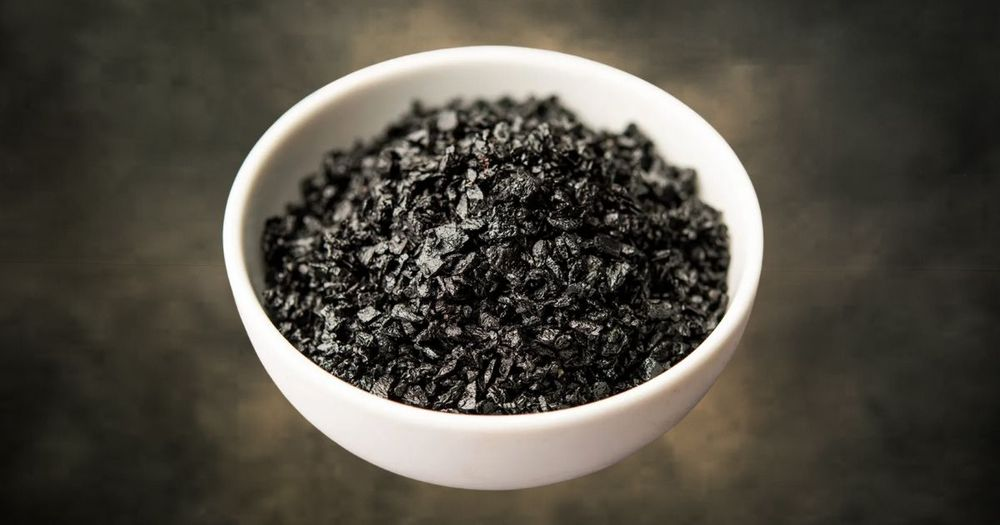
High in the Himalayas, when the summer sun warms the rock, a dark tar begins to seep from cracks in the stone. People have gathered it for as long as anyone can remember, scraping the black, sticky resin off cliffs at fifteen thousand feet and carrying it back down to the villages. Ayurveda called it shilajit, and gave it a blunt name: the destroyer of weakness.
The old story says the villagers learned it from the monkeys. They watched the animals climb to the high ledges, eat the resin, and come back stronger and more vigorous than any mountain diet should allow, so they tried it themselves. True or not, the practice stuck. Ayurveda gave it a place of honor, a rasayana among the rejuvenating tonics and a vajikarana among the herbs for male potency, prized for restoring strength and vigor more than for curing any one disease. For thousands of years it has been taken for strength, stamina, and a clear head deep into old age.
Strip away the mysticism and there is something real underneath, narrower than the miracle the internet sells and sturdier than the skeptics assume. Before any resin, though, there is a harder truth to swallow.
The Part No Supplement Skips
Shilajit is a finishing touch, and the basics are the real work. Nothing scraped off a cliff will out-work them. A man who lifts a few times a week, sleeps his seven or eight hours, carries less fat around the middle, and eats real food instead of processed junk has already done more for his testosterone and his energy than any jar of resin can promise. Drop the excess weight and the whole system lifts, since body fat quietly bleeds testosterone toward estrogen. Protect the sleep, and you protect the hours when most of that testosterone gets made.
Shilajit comes after the basics, never ahead of them. Bolt it onto a wrecked lifestyle and you are paying mountain prices to nudge a system you are sabotaging everywhere else. Sort the foundation, and then a tonic has something to build on. That is the honest order, and it runs the opposite way from how these things usually get sold.
What the Black Resin Is
Shilajit is the mountain's slow smear, the residue of plant matter that got trapped in rock and broke down over centuries under cold and pressure. Even how it forms is still argued over, and its makeup shifts from cliff to cliff, so no two jars are quite alike.
Two things in it draw the attention. One is fulvic acid, a dark, mineral-loving compound thought to help the body take up the trace minerals riding along with it. The other is a family of antioxidants with an unwieldy name, dibenzo-alpha-pyrones, sitting alongside dozens of minerals the resin pulled straight out of the stone. A few of those earn their keep for a man: zinc feeds testosterone and sperm production directly, selenium supports sperm and thyroid, and magnesium is a cofactor the whole system leans on. It reads less like a herb than a concentrated bite of the mountain.
The old physicians sorted it by the metal in its parent rock, four grades running from gold and silver to copper and iron, with the dark iron-bearing kind the common one and the workhorse of most formulas. They also handed it a title that modern chemistry only half explains: yogavahi, a carrier, a substance that takes on and amplifies the powers of whatever herb it is blended with. That is why classical recipes rarely used it alone, and why it earned its name as much for what it did to other medicines as for anything it did by itself.
What It Might Do
Cut through the marketing and the claims thin out fast, but a couple hold interest.
Energy is the big one in tradition, and the going theory is that the fulvic acid helps the cell's little engines, the mitochondria, run a touch more efficiently. That would explain the old reputation for stamina. It is a good story with real chemistry behind it and not much hard proof yet, so hold it loosely.
Testosterone is the one thing anyone has put to the test in men, and the needle moved up. The people who sell the extract ran that test, though, and they tracked the number in the blood rather than whether anyone felt friskier or stronger, so the hormone bump looks real while the swagger stays unproven.
There is also a scrap of evidence in men with low sperm counts, whose numbers improved, though that was a small clinical evaluation without a proper control group, so it winks rather than shouts. Add it up and shilajit sits in a rare spot for a mountain remedy: it has been poked at in actual humans and lived to tell it, which already puts it ahead of the shelf full of pills running on rat studies and wishful thinking. It stops well short of anything you would call a cure. Two quiet catches ride under it. The evidence base is thin and clubby, a handful of small studies often out of the same labs using the same branded extracts, so read it as a real signal and a modest one. And those tested benefits came from standardized, processed extracts rather than random jars of retail resin, so the results map poorly onto whatever you scrape into a cup.
None of that makes it a treatment. If your energy or your drive has cratered, that is a job for a doctor and a blood test rather than a jar of resin, and no serious medical body puts shilajit forward as a fix for low testosterone or fatigue. Treat it as something to experiment with, and get a real problem looked at properly.
The Catch Nobody Selling It Mentions
Raw shilajit is unprocessed rock secretion, and it can carry whatever was in the rock: lead, arsenic, mold, the works. This is no hypothetical worry. Imported resin and Ayurvedic products have a long, ugly track record with heavy metals, so shilajit runs more real risk than the vitamins next to it on the shelf.
It runs that risk in a nastier way, too. The fulvic acid that makes shilajit worth taking, the molecule that shuttles good minerals into your cells, makes no distinction about its cargo, so in a dirty batch it ferries the lead and arsenic in just as eagerly, even past the blood-brain barrier. The very thing that makes it work is the thing that makes a contaminated jar extra dangerous.
Ayurveda never used the raw resin either. It demanded shodhana, a purification step, soaking and simmering the crude scrapings in cow's milk or a triphala brew before anyone took a dose, on the plain principle that raw resin was unfit. That ritual cleared out grit and microbes, though it does little for heavy metals, which modern testing still turns up in traditionally processed batches. So "traditionally purified" falls short of "metal-tested," and the cheap jar of unknown origin skips even the grit-and-microbe step, a hazard wearing a bargain's clothes.
The fakes are the other half, and the market runs thick with them. The trap is that clean and contaminated resin can look, feel, and taste identical, since a slick counterfeit and a poisoned real batch give nothing away in the jar. There is no kitchen test for heavy metals, so do not trust your senses to keep you safe, and never go tasting something you already distrust.
The only real proof is paper. Ignore the giant fulvic-acid percentage on the front, since it says nothing about safety. What you want is a recent, batch-matched report from an independent, accredited lab, showing actual numbers for lead, arsenic, cadmium, and mercury, rather than the bare word "purified." Nobody in a government office checked this before it hit the shelf, so that certificate is the whole of your protection. If you buy through a link here, it is an affiliate link, and the same rule stands: is one option, so make it show you a current, batch-matched certificate before you trust it.
How It Has Always Been Taken
Traditionally it went down simply, a little of the resin melted into warm water or warm milk, usually in the morning. The warmth loosens it, and the milk was said to carry it better.
A caution rides along. The long-term and interaction data are thin, purified-extract safety says little about some raw lump off the internet, and pregnancy, breastfeeding, and children stay off the table until someone studies them properly. Two conditions earn a hard skip: gout or high uric acid, since shilajit can nudge uric acid up and set off a flare, and iron-overload conditions like hemochromatosis, since it carries iron the body will happily stockpile. Anyone else on medication or managing a health condition should run it past a doctor, and if something feels off after starting, stop and get it checked.
The Mountain's Bargain
Shilajit earns neither the miracle billing nor a flat dismissal. It is a strange, mineral-dense resin with a plausible story behind its energy and a single early nudge on testosterone to its name, wrapped in thousands of years of use by people who had no marketing department. Sort your sleep, your food, and your training first, and then, if you are curious, buy it purified and tested and treat it as the steady tonic Ayurveda always meant rather than a shortcut. The mountain has been handing this down for a very long time, and it rewards the man who takes it seriously and the seller who proves what is in the jar.
The basics beat the resin every time. The Cheapest Way to Raise Testosterone Is the One Nobody Sells covers the sleep, training, and body-fat levers that matter more than anything scraped off a cliff.
The plate does the food half of the work. The Foods That Support Testosterone and What Pulls It Down covers the diet and body-composition levers these tonics sit on top of.
Shilajit is one lever among several. Natural Ways to Boost Male Testosterone and Libido: Herbs and Nutrients That Work puts shilajit alongside the other herbs and minerals worth knowing for male vitality.
Know someone chasing a mountain miracle in a jar? Share this. The real story of shilajit is better than the hype, and it saves them from buying the contaminated stuff.
Sources
Pandit S, et al. "Clinical evaluation of purified Shilajit on testosterone levels in healthy volunteers." Andrologia, 2016.
Biswas TK, et al. "Clinical evaluation of spermatogenic activity of processed Shilajit in oligospermia." Andrologia, 2010.
Carrasco-Gallardo C, et al. "Shilajit: a natural phytocomplex with potential procognitive activity." International Journal of Alzheimer's Disease, 2012.
Saper RB, et al. "Lead, mercury, and arsenic in US- and Indian-manufactured Ayurvedic medicines sold via the Internet." JAMA, 2008.
Disclaimer: This article is for informational purposes only and does not constitute medical advice. Individual responses to supplements vary. Consult a qualified healthcare practitioner before starting any supplement, particularly if you are pregnant or breastfeeding, take medications, or manage a health condition. Never delay medical evaluation of concerning symptoms based on information here.
Affiliate Disclosure: Some links and banners on this page are affiliate links. If you purchase through them, we may earn a small commission at no additional cost to you.