
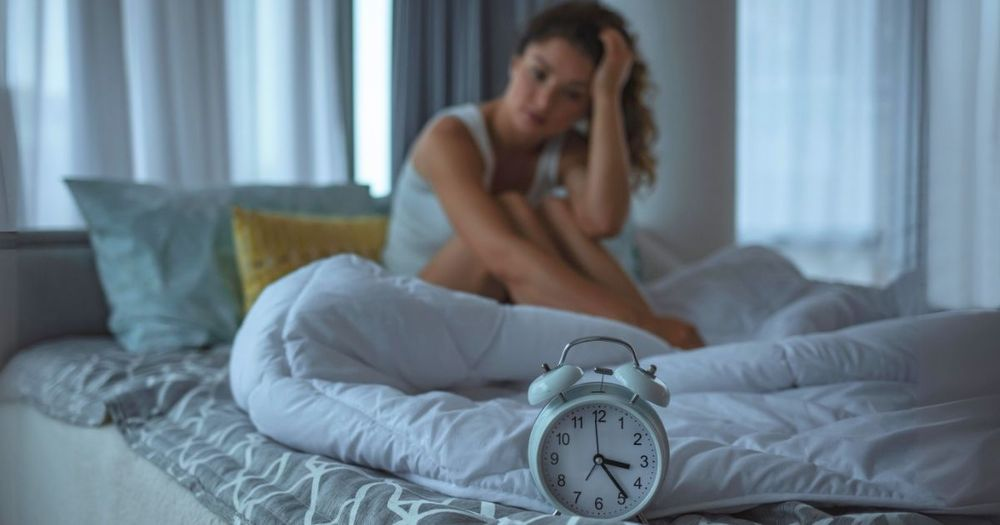
A bad sleeper's bathroom cabinet tends to turn into a small museum: half a bottle of melatonin, a tub of magnesium, a tin of chamomile with a few spoonfuls left, and something with valerian in it that smelled like old socks. Every one of them worked for somebody. Each got a week or two of hope, then joined the others.
If that's your cabinet, it's easy to decide natural remedies are a waste of money, or that the right one is still out there somewhere. Both miss what that cabinet is telling you.
Four reasons you're awake
Each natural sleep aid nudges one specific part of sleep, and there are several different reasons a person lies awake. Pick one that works on the wrong reason and it does little, however good it is, which is why the same bottle can change your friend's nights and leave yours just as they were.
So before choosing anything, work out which of these sounds like you. Sometimes the body is tired and the mind keeps running, replaying the day and rehearsing tomorrow. Sometimes the mind is quiet enough and the body feels switched on, heart a little quick, shoulders up, as if something might happen. Sometimes sleep comes easily in the small hours and refuses to come at a sensible bedtime, because the body clock runs late. And sometimes the body itself keeps you up: legs that fidget, muscles that twitch, a restlessness that worry plays no part in.
You'll probably recognise one of these straight away, maybe two. Either way, that's your starting point, and each one has its own shelf of remedies.
One thing sits underneath all four. A remedy eases the way into sleep, and it doesn't remove what's keeping you awake. Stress, a late body clock, caffeine, a nightcap and bright screens in the evening all have to be dealt with at the source, and no bottle does that for you. Chronic Insomnia: Why Trying Harder Keeps You Awake, linked below, sets out the method for when it has gone on for months. Remedies work best as a nudge on top of a steady routine, above all getting up at one fixed time each morning. On a body with no rhythm, a nudge has nothing to push against.
When your mind keeps running
This is where the gentle herbs earn their place. They take the edge off the mental noise without knocking you out.
Chamomile is the mildest and the best known, and people have been brewing it before bed for centuries. The word is Greek for "earth apple", after that sweet, apple-like smell rising from the cup. It contains apigenin, one of the compounds thought to give it a gentle calming effect. Pooled across ten tests, chamomile improved how well people rated their sleep, modestly. A strong cup of in the evening, and the ritual of making it, tells your brain the day is closing.
Lavender works through smell. The scent reaches the brain's emotional centre directly, and in pooled tests breathing it in at bedtime improved sleep quality, though the tests varied in quality. A little on a cloth near the pillow or in a diffuser in the evening is enough to find out whether it suits you. Keep it for bedtime only. Your nose tunes out a smell it lives with, so a diffuser running all day blunts the effect by night.
Passionflower is worth a try for a mind that races with worry, though its evidence is still thin. In one test with 65 stressed, sleepless adults, a passionflower extract eased stress and lengthened sleep compared with a dummy capsule. Lemon balm belongs in the same family of calming herbs, though we know less about how well it works. L-theanine, an amino acid found in tea and sold on its own without the caffeine, eased stress in a test with 30 healthy adults and shortened the time they took to drop off.
When stress keeps your body on alert
Some nights the body is the one holding on. You're lying still, jaw set, shoulders somewhere near your ears, and underneath it everything is running at a slightly higher speed. Several remedies work here, and most of them are free.
Ashwagandha, an Ayurvedic herb, brings down cortisol, the body's chief stress hormone. Pooled across five tests and 400 people, it improved sleep a little, and more for those with insomnia, and it took several weeks of steady use to show. It has been tied to the odd case of liver damage, and it doesn't suit a thyroid condition, pregnancy or breastfeeding.
A hot bath or shower in the couple of hours before bed works with the body's own switch. Sleep starts when your core temperature drops. The warm water pulls blood out to your hands and feet, and when you step out, that blood sheds heat fast, so your core cools right when you want it to. In pooled tests, people fell asleep sooner after one, and it costs nothing. An Epsom salt bath is the classic version, and it earns its reputation as a sleep ritual. Most of that comes from the warmth itself, since skin lets hardly any magnesium through.
Supper can help with the same cooling. Nearly every third building block of collagen is glycine, so slow-cooked cuts, skin and broth made from bones are full of it, and the word glycine means "sweet" in Greek, because it was first found in 1820 as the "sugar of gelatin". Taken as a supplement before bed, it helped poor sleepers fall asleep sooner and feel more awake the following day, and in rats it worked by sending blood to the feet to shed heat, just as the bath does. The broth itself hasn't been tested for sleep, so think of it as the food version of the same idea.
And if you'd rather reach for nothing at all, your own muscles and breath can do the same job. Progressive muscle relaxation means tensing each muscle group for a few seconds and then letting it go, working up from your feet to your face, and the contrast teaches a tight body what loose feels like. Slow breathing, letting each breath out more slowly than you took it in, slows the heart, and a slower heart tells the rest of you the danger has passed. Ten minutes of either, in bed or just before, is enough to feel the difference. The Stress-Sleep Vicious Cycle, linked below, has the daytime half of a wired evening.
When your body clock runs late
If you're wide awake at bedtime and could sleep easily hours later, nothing is wrong with you. The trouble is timing, and the remedies here work on the clock itself.
Melatonin is the body's own darkness signal, the hormone that tells your clock night has begun. As a supplement it's a clock tool more than a sleeping pill. It shines after jet lag and shift changes, and it helps night owls whose clock runs late, because it can pull that clock earlier. For ordinary insomnia, where the clock is on time, it has little to correct.
For a late clock, timing matters more than amount. Earlier in the evening, well before bed, it moves the clock; at bedtime, it mostly just nudges sleep along.
Tart cherries contain melatonin of their own, and drinking the juice raised it in the body, though the juice is sugary, so it's a short experiment and no nightly habit. Saffron works along similar lines: in a test with 120 poor sleepers, those taking an extract had more melatonin in the evening and rated their sleep better.
Whatever you take, pair it with morning light. Getting outside soon after you wake is the strongest signal your clock gets, and it's what lets the rest of this shelf do its job.
When your body stays restless
Magnesium is the one for a restless body. Your nerves and muscles need it to work and then relax, and when you're low, cramps and twitching show up at night. It matters most if your diet leans on refined, processed food, because magnesium washes out in processing, and fish such as halibut carry a good share of it. In older adults, supplements seemed to shave a little off the time to fall asleep.
Read the label for the form, because magnesium always comes bound to a partner, and the partner decides how much you absorb. Oxide, the form in many cheap tablets, is absorbed poorly and unevenly, so the bargain bottle can be the reason magnesium seemed to do nothing. Citrate is absorbed well and also works as a laxative. is the form tried specifically on poor sleepers, and the gentler choice at night. Epsom salt belongs in the bath, where the warmth does the work.
Legs that creep, tingle or kick once you're lying down are a different matter. That's restless legs, so get it checked, because low iron is one known cause, and it responds to the right fix.
Falling asleep or staying asleep
There's a second way to narrow the choice, and it's when the night goes wrong. If your trouble is getting to sleep, the remedies that shorten the wait fit best: the warm bath, chamomile, L-theanine and magnesium, plus melatonin when your clock runs late. When you drop off fine and wake in the small hours, look at what breaks the night instead. In a small pilot, tart cherry juice helped older adults with insomnia stay asleep, with the same sugar caveat as before. And the nightcap is often the thing waking you: alcohol eases you under, then fragments the later part of the night, so it goes first.
Waking far too early and lying there until the alarm is a pattern of its own. When it comes with low mood, get it checked, because it usually needs more than a remedy. The same goes for loud snoring, gasping in the night, or waking unrefreshed however long you sleep: those point to a breathing problem at night, which no remedy fixes.
Remedies best left on the shelf
The shelf of sleep cures has always had its duds. The milky sap of wild lettuce was once sold as "lettuce opium", a gentler, less addictive stand-in for the real thing, and it made it into the official US drug reference of 1898 and the British one of 1911. When the commercial product was finally tested in the 20th century, it did nothing at all.
Valerian is among the most famous sleep herbs, and among the oldest. Its name comes from the Latin valere, to be strong and healthy, Galen was already recommending it for sleeplessness in Roman times, and in medieval Sweden a sprig was tucked into a bridegroom's wedding clothes to ward off the "envy" of the elves. That old-socks smell is real chemistry: valerian gives its name to isovaleric acid, the same acid skin bacteria make in sweaty feet. Its results, though, are hit and miss. The evidence is inconsistent, and very occasionally it has been tied to liver damage.
CBD sells hard as a sleep aid. The picture is still muddy, the better results mostly involve products with THC in them as well, and quality varies a lot from bottle to bottle.
Kava has been tied to rare but sometimes serious, even fatal, liver damage, so it's one to skip entirely.
Sleep blends with long ingredient lists deserve a hard look. When a product combines six herbs, you'll never know which one helped, and you may be stacking several calming ingredients at once.
Mixing them safely
Herbal products vary a lot in strength and purity, and so does melatonin: what's in the bottle, gummies especially, often differs from what the label says, sometimes by a lot. Choose brands that have their products tested independently, and standardised extracts for herbs. Keep calming herbs away from alcohol and sleeping pills, since they add to each other. On regular medication? Check each remedy against your medicine before you start, because ashwagandha, St John's wort and a handful of others clash with common drugs. And if you're pregnant or breastfeeding, get professional advice before taking any of them.
Keep melatonin away from small children, too. In the US, children aged five and under who got into it caused about 11,000 emergency visits between 2019 and 2022, with gummies the commonest form, and poison-centre calls about children and melatonin rose 530 percent over the decade before. Melatonin doesn't have to come in child-resistant packaging, so store the bottle high up and out of sight.
Know what to expect, too. Melatonin can bring headache, dizziness, nausea or sleepiness, and it can stay active longer in older people. Magnesium can loosen the bowels. And a big mug of herbal tea close to bedtime usually means a trip to the bathroom in the small hours, so have it a little earlier in the evening.
For the odd bad night
Some bad nights are one-offs, like the night before an interview, a strange hotel bed or the evening after an argument. For those, the gentle remedies are the right size. A warm bath, a strong cup of chamomile and a little lavender by the pillow take the edge off and leave nothing behind in the morning.
How to tell if it's working
Pick one remedy that matches your reason for being awake, and only one. Keep everything else the same, and each morning write down how long it took to fall asleep and how often you woke. Change three things at once and you learn nothing about any of them. Expectation does real work here too. Across 32 tests of sleeping pills with 3,969 people, the groups given a dummy pill got about two-thirds of the improvement the real drugs delivered, even when their sleep was measured in a lab. That's no reason to dismiss a remedy that helps you, and it's the best reason to try one at a time and write the nights down.
Then give it the time it needs, because remedies work at different speeds. The warm bath, chamomile and lavender show within a few nights. Magnesium, saffron, passionflower and L-theanine build up, so judge them after about a month, and ashwagandha can take longer still. Melatonin for a late clock sits in between, moving it over a couple of weeks. Drop a slow remedy after a week and you'll never know what it could have done.
A remedy that works on the right reason feels quiet. The night gets easier to fall into, and the morning comes a little clearer. Chamomile won't knock you out, and that's the point.
Fewer bottles, the right one
That cabinet was a record of good remedies aimed at the wrong reason. Name your reason, keep the one bottle that fits it, give it time on top of a steady wake-up time, and let the rest go.
Tonight, pick your reason and the one remedy on its shelf. Sleep is something your body still knows how to do; the right remedy only clears the way back to it. Be patient with yourself while it does, because a few easier nights have a way of turning into more.
Tried a few remedies and still awake in the small hours? Chronic Insomnia: Why Trying Harder Keeps You Awake — the habit that keeps insomnia going, and the method that retrains your bed, with these remedies as the extras on top.
Is the stress starting in the day? The Stress-Sleep Vicious Cycle: How to Fix Both at the Same Time — how the day's stress comes to bed with you, and the evening moves that help after a hard one.
Know someone with a drawer full of sleep remedies that never quite worked? Pass this on. It might save them buying the next one.
Tried something here, or got a question it didn't answer? Write to us at contact@allforlife.club. Your questions shape the next articles.
Disclaimer: This article is general information. For advice about your own sleep, medication or health, talk to a qualified health professional. If you're pregnant or breastfeeding, take regular medication, or have a health condition, get professional advice before trying any remedy mentioned here.
Affiliate Disclosure: This article contains affiliate links. As an Amazon Associate, All For Life earns from qualifying purchases, at no extra cost to you. We only link to products we would recommend without the commission.
Sources
Wikipedia. Chamomile. en.wikipedia.org
Kazemi A, Shojaei-Zarghani S, Eskandarzadeh P, Hashempur MH (2024). Effects of chamomile (Matricaria chamomilla L.) on sleep: A systematic review and meta-analysis of clinical trials. Complementary Therapies in Medicine 84:103071. doi.org/10.1016/j.ctim.2024.103071
Her J, Cho MK (2021). Effect of aromatherapy on sleep quality of adults and elderly people: A systematic literature review and meta-analysis. Complementary Therapies in Medicine 60:102739. doi.org/10.1016/j.ctim.2021.102739
Wikipedia. Olfactory fatigue. en.wikipedia.org
Harit MK, Mundhe N, Tamoli S, et al. (2024). Randomized, Double-Blind, Placebo-Controlled, Clinical Study of Passiflora incarnata in Participants With Stress and Sleep Problems. Cureus 16(3):e56530. doi.org/10.7759/cureus.56530
Di Pierro F, Sisti D, Rocchi M, et al. (2024). Effects of Melissa officinalis Phytosome on Sleep Quality: Results of a Prospective, Double-Blind, Placebo-Controlled, and Cross-Over Study. Nutrients 16(23):4199. doi.org/10.3390/nu16234199
Hidese S, Ogawa S, Ota M, et al. (2019). Effects of L-Theanine Administration on Stress-Related Symptoms and Cognitive Functions in Healthy Adults: A Randomized Controlled Trial. Nutrients 11(10):2362. doi.org/10.3390/nu11102362
Chandrasekhar K, Kapoor J, Anishetty S (2012). A Prospective, Randomized Double-Blind, Placebo-Controlled Study of Safety and Efficacy of a High-Concentration Full-Spectrum Extract of Ashwagandha Root in Reducing Stress and Anxiety in Adults. Indian Journal of Psychological Medicine 34(3):255–262. doi.org/10.4103/0253-7176.106022
Cheah KL, Norhayati MN, Husniati Yaacob L, Abdul Rahman R (2021). Effect of Ashwagandha (Withania somnifera) extract on sleep: A systematic review and meta-analysis. PLOS ONE 16(9):e0257843. doi.org/10.1371/journal.pone.0257843
National Center for Complementary and Integrative Health. Ashwagandha: Usefulness and Safety. nccih.nih.gov
Haghayegh S, Khoshnevis S, Smolensky MH, et al. (2019). Before-bedtime passive body heating by warm shower or bath to improve sleep: A systematic review and meta-analysis. Sleep Medicine Reviews 46:124–135. doi.org/10.1016/j.smrv.2019.04.008
Gröber U, Werner T, Vormann J, Kisters K (2017). Myth or Reality—Transdermal Magnesium?. Nutrients 9(8):813. doi.org/10.3390/nu9080813
Camili V, Stürup S, Heinz A (2026). Does magnesium permeate the skin? An ex vivo investigation of magnesium ion delivery through intact and barrier-disrupted skin. European Journal of Pharmaceutics and Biopharmaceutics 226:115173. doi.org/10.1016/j.ejpb.2026.115173
Wikipedia. Collagen. en.wikipedia.org
Wikipedia. Glycine. en.wikipedia.org
Yamadera W, Inagawa K, Chiba S, et al. (2007). Glycine ingestion improves subjective sleep quality in human volunteers, correlating with polysomnographic changes. Sleep and Biological Rhythms 5(2):126–131. doi.org/10.1111/j.1479-8425.2007.00262.x
Kawai N, Sakai N, Okuro M, et al. (2015). The Sleep-Promoting and Hypothermic Effects of Glycine are Mediated by NMDA Receptors in the Suprachiasmatic Nucleus. Neuropsychopharmacology 40(6):1405–1416. doi.org/10.1038/npp.2014.326
Mantle D, Smits M, Boss M, et al. (2020). Efficacy and safety of supplemental melatonin for delayed sleep–wake phase disorder in children: an overview. Sleep Medicine: X 2:100022. doi.org/10.1016/j.sleepx.2020.100022
Howatson G, Bell PG, Tallent J, et al. (2012). Effect of tart cherry juice (Prunus cerasus) on melatonin levels and enhanced sleep quality. European Journal of Nutrition 51(8):909–916. doi.org/10.1007/s00394-011-0263-7
Lopresti AL, Smith SJ, Drummond PD (2021). An investigation into an evening intake of a saffron extract (affron®) on sleep quality, cortisol, and melatonin concentrations in adults with poor sleep: a randomised, double-blind, placebo-controlled, multi-dose study. Sleep Medicine 86:7–18. doi.org/10.1016/j.sleep.2021.08.001
Wikipedia. Magnesium in biology. en.wikipedia.org
Mah J, Pitre T (2021). Oral magnesium supplementation for insomnia in older adults: a Systematic Review & Meta-Analysis. BMC Complementary Medicine and Therapies 21(1):125. doi.org/10.1186/s12906-021-03297-z
Schuster J, Cycelskij I, Lopresti A, Hahn A (2025). Magnesium Bisglycinate Supplementation in Healthy Adults Reporting Poor Sleep: A Randomized, Placebo-Controlled Trial. Nature and Science of Sleep Volume 17:2027–2040. doi.org/10.2147/NSS.S524348
Wikipedia. Restless legs syndrome. en.wikipedia.org
Pigeon WR, Carr M, Gorman C, Perlis ML (2010). Effects of a Tart Cherry Juice Beverage on the Sleep of Older Adults with Insomnia: A Pilot Study. Journal of Medicinal Food 13(3):579–583. doi.org/10.1089/jmf.2009.0096
Ebrahim IO, Shapiro CM, Williams AJ, Fenwick PB (2013). Alcohol and Sleep I: Effects on Normal Sleep. Alcoholism: Clinical and Experimental Research 37(4). doi.org/10.1111/acer.12006
Wikipedia. Lactucarium. en.wikipedia.org
Wikipedia. Valerian (herb). en.wikipedia.org
Wikipedia. Isovaleric acid. en.wikipedia.org
National Center for Complementary and Integrative Health. Valerian: Usefulness and Safety. nccih.nih.gov
Ranum RM, Whipple MO, Croghan I, et al. (2023). Use of Cannabidiol in the Management of Insomnia: A Systematic Review. Cannabis & Cannabinoid Research 8(2):213–229. doi.org/10.1089/can.2022.0122
National Center for Complementary and Integrative Health. Kava: Usefulness and Safety. nccih.nih.gov
Erland LAE, Saxena PK (2017). Melatonin Natural Health Products and Supplements: Presence of Serotonin and Significant Variability of Melatonin Content. Journal of Clinical Sleep Medicine 13(2):275–281. doi.org/10.5664/jcsm.6462
Cohen PA, Avula B, Wang YH, et al. (2023). Quantity of Melatonin and CBD in Melatonin Gummies Sold in the US. JAMA 329(16):1401. doi.org/10.1001/jama.2023.2296
Freeman DI, Lind JN, Weidle NJ, et al. (2024). Notes from the Field: Emergency Department Visits for Unsupervised Pediatric Melatonin Ingestion — United States, 2019–2022. Morbidity and Mortality Weekly Report 73(9):215–217. doi.org/10.15585/mmwr.mm7309a5
National Center for Complementary and Integrative Health. Melatonin: What You Need To Know. nccih.nih.gov
Winkler A, Rief W (2015). Effect of Placebo Conditions on Polysomnographic Parameters in Primary Insomnia: A Meta-Analysis. Sleep 38(6):925–931. doi.org/10.5665/sleep.4742