
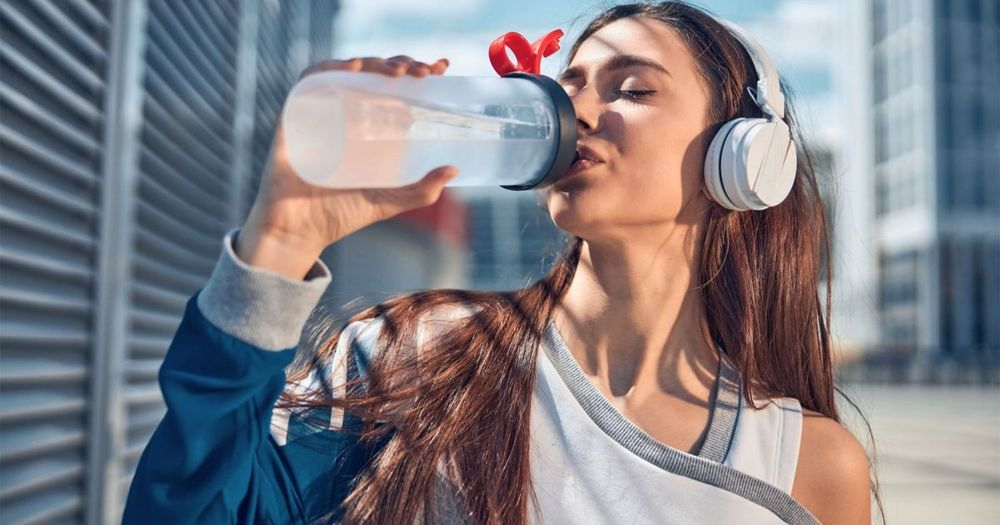
The standard hydration advice for athletes is a scaled-up version of the standard hydration advice for everyone: drink more water, drink before you feel thirsty, carry a bottle. Add a sports drink if you are working hard.
The person who follows this advice still cramps at mile eight. Still fades in the final sets. Still wakes the morning after a hard session with a headache and heavy legs that take three days to clear. They drink more water. The cramps come back. They buy a different sports drink. The recovery still drags. They conclude the problem is their fitness, their age, or their genetics — the one explanation that keeps them from finding the actual answer.
They are hydrating the wrong way for what exercise does to the body.
Exercise changes more than the amount of fluid the body needs. It reshapes the entire hydration equation — sweat composition, blood volume regulation, hormonal responses to fluid loss, and the specific mineral requirements that performance depends on. Understanding what changes is what separates hydration that works from hydration that produces the illusion of effort.

What Exercise Does to the Body's Fluid Balance
Blood volume and plasma expansion. Aerobic training produces a well-documented adaptation: plasma volume expansion. The blood literally contains more fluid. This increases oxygen delivery to muscles, improves heat dissipation, and enhances cardiovascular efficiency. But this adaptation also changes hydration requirements — a larger blood volume needs more fluid and more electrolytes to maintain its composition. Trained athletes have higher baseline fluid requirements than sedentary people — the driver is blood volume, not sweat rate per unit of effort.
The 2% threshold — where performance begins to decline. The research on dehydration and athletic performance points consistently to one specific threshold: a body mass loss of 2% is where measurable performance impairment begins. For a 75kg athlete, 2% is 1.5kg — achievable within a single moderate session in warm conditions without aggressive fluid replacement.
Under 2% body mass loss, performance typically holds. Above it, the effects compound. Core temperature rises approximately 0.15-0.20°C for every 1% of body mass lost. At 2% loss, that is an additional 0.3-0.4°C of core temperature elevation that would not otherwise occur — enough to accelerate fatigue, increase cardiovascular strain, and impair heat dissipation at exactly the point in a session when the athlete most needs those systems to function efficiently.
The 2% figure also gives athletes a practical monitoring target. If pre-session weight is 75kg and post-session weight is 73kg, the session produced a 2.7% loss — above the threshold where performance was already impaired during the session and where recovery takes longer.
Cardiovascular drift — why dehydrated athletes feel they are working harder than they are. As dehydration progresses and plasma volume falls, stroke volume — the amount of blood the heart pumps per beat — decreases because there is less blood available to fill the heart during each cycle. The heart compensates by increasing its rate to maintain the same cardiac output.
Heart rate climbs progressively at the same pace or power output — cardiovascular drift. Perceived exertion rises, and the athlete feels they are working far harder than the numbers on their watch suggest. The dehydrated runner whose pace has held steady for the last kilometre feels like they are sprinting. The dehydrated lifter whose load has not changed feels like they are at a personal record. The performance ceiling they are bumping against is not fitness — it is plasma volume.
Sweat rate and composition. Sweat rate varies dramatically between individuals — from under 0.5 litres per hour in low-intensity cool conditions to over 2.5 litres per hour in competitive endurance athletes in heat. The average falls around 1-1.5 litres per hour during moderate-intensity exercise in warm conditions.
Sweat carries sodium, potassium, chloride, and magnesium alongside fluid. Sodium is the dominant electrolyte in sweat — typically 400-1,000mg per litre depending on fitness level, heat acclimatisation, and individual variation. Fit and heat-acclimatised athletes lose less sodium per litre of sweat than unfit athletes in the same conditions — the body becomes more efficient at retaining sodium as training adaptation progresses. But the total sodium loss over a long session can be substantial regardless.
Hormonal regulation during exercise. Two hormones govern fluid balance during exercise. Aldosterone, released when sodium falls or blood volume drops, signals the kidneys to retain sodium and excrete potassium. Antidiuretic hormone (ADH), released when blood osmolality rises, signals the kidneys to retain water.
Both operate on a lag — they respond to changes in blood composition that have already occurred. This is why hydration strategy before exercise matters more than in-exercise strategy alone. The hormonal system is reactive, not predictive. By the time aldosterone and ADH are signalling the kidneys, the deficit has already affected performance.

The Sodium Problem in Athletic Performance
Sodium is the electrolyte that athletic hydration most consistently underaddresses. Water consumption is visible and trackable. Sodium replacement is invisible.
A 90-minute session in moderate heat can produce 1-1.5 litres of sweat containing 600-1,500mg of sodium. A two-hour endurance event in warm conditions can deplete 1,500-3,000mg of sodium — the equivalent of three-quarters to one-and-a-half teaspoons of salt. Plain water replaces none of this. Commercial sports drinks typically contain 200-300mg of sodium per 500ml serving — meaningful but often insufficient for long sessions in heat.
What sodium depletion feels like during exercise. The symptoms of sodium depletion during exercise are specific and often misattributed. Muscle cramping in well-hydrated athletes is almost always a sodium problem rather than a water problem. The cramp occurs because the sodium-potassium gradient across the muscle cell membrane — which governs electrical signalling in muscle fibres — has degraded below the threshold required for coordinated contraction. Adding water to this situation makes it worse by further diluting the sodium that remains.
Premature fatigue in athletes who are drinking adequate water but running low on sodium follows a different pattern from cardiovascular fatigue — a specific heaviness and inability to generate force that clears rapidly when sodium is replaced. Athletes who learn to recognise this pattern can resolve what felt like a fitness limitation with a pinch of salt.
Hyponatremia — dangerously low blood sodium — represents the severe end of this spectrum and is documented consistently in endurance events where athletes drink large volumes of plain water over several hours. The 2002 Boston Marathon produced 62 cases of hyponatremia among finishers. Every single case involved excessive plain water consumption without sodium replacement. The runners collapsed from overhydration, not dehydration.
Sodium loading before long sessions. For sessions lasting longer than 90 minutes, particularly in heat, sodium loading before training significantly improves performance and reduces cramping. In practice: 500-1,000mg of sodium from unrefined salt in water or food, consumed in the 60-90 minutes before a long session. This raises pre-exercise plasma sodium concentration, supporting the blood volume and osmolality that sustained performance requires.
The salt crystal diagnostic — identifying high sodium loss individuals. Athletes who consistently see white residue on dark training clothing, salt crust at the hairline, or a noticeably salty taste on skin after training are losing more sodium per litre of sweat than the population average. Sports dietitians call these people salty sweaters — their sweat sodium concentration runs significantly above typical ranges.
The white crystal observation is a free diagnostic requiring no equipment. An athlete who sees meaningful salt deposits after every hard session in heat should work from the higher end of every sodium recommendation above and likely exceed it. The protocol that works for a training partner who emerges from the same session without visible salt residue will consistently under-replace what a salty sweater loses. Two athletes training identically in identical conditions can have sweat sodium losses that differ by a factor of two or more — standard recommendations address neither of them accurately.
Potassium and Magnesium in Exercise
Potassium. Potassium is the dominant mineral inside muscle cells. During sustained exercise, potassium moves out of cells into the surrounding fluid and bloodstream as part of the electrical signalling process that drives muscle contraction. This extracellular potassium accumulation is one of the primary mechanisms of muscular fatigue — the gradient that drives contraction gradually loses its differential.
The sodium-potassium pump actively restores the gradient during and after exercise, but this process requires energy and time. Adequate dietary potassium provides the substrate the pump needs to restore the gradient efficiently. Athletes with chronically low potassium intake — common in people eating processed food or muscle-meat-only diets — have slower gradient restoration and extend their recovery timeline unnecessarily.
Animal foods — beef, salmon, chicken — provide substantial potassium alongside complete protein for muscle repair. Avocados and cooked leafy greens provide potassium with minimal antinutrient load for athletes who include plant foods.
Magnesium. Magnesium is required for ATP production — the energy currency of every muscle contraction — and for the sodium-potassium pump itself. Without adequate magnesium, the pump runs slower, the gradient restores more slowly, and both performance and recovery suffer.
Magnesium is lost in sweat at rates of 10-15mg per litre. Over a long training session, cumulative magnesium loss is meaningful. Athletes who train multiple times per week without deliberate magnesium replacement accumulate a deficit across the training week that manifests as poor sleep, muscle cramps, elevated resting heart rate, and extended recovery time.
Magnesium glycinate in the evening addresses both the deficit and sleep quality simultaneously — the documented relaxation and sleep effects of magnesium glycinate make it particularly useful for athletes whose training volume disrupts recovery sleep.
provide the most bioavailable form without the digestive side effects of cheaper compounds.
For in-session and post-session mineral replacement, provide sodium, potassium, and magnesium in the ratios that sustained training requires — without the sugar load of commercial sports drinks that slows gastric emptying when athletes need rapid fluid delivery most.

The Water Source Question for Athletes
The contamination concerns that apply to general hydration apply with greater force to athletes who consume larger total fluid volumes. Fluoride, chlorine, and PFAS accumulate proportionally to intake — an athlete consuming 3-4 litres of tap water daily accumulates these contaminants at a significantly higher rate than a sedentary person consuming 1.5 litres.
Filtered water through reverse osmosis or a quality carbon block filter is the appropriate foundation for athletic hydration. The mineral removal of reverse osmosis makes electrolyte replacement more important rather than less — RO water is clean but provides no sodium, potassium, or magnesium. This is resolved by the electrolyte replacement protocol that performance already requires.
removes the broadest range of contaminants including PFAS and is practical for athletes with high daily fluid volumes.
Athletes consuming 3-4 litres of fluid daily also face proportionally higher exposure to BPA and plasticisers from plastic bottles — the same contamination concerns that apply to general hydration multiply with volume. eliminates this layer entirely.
Timing: Before, During, and After
Before training. The highest-leverage hydration window is the 60-90 minutes before the session begins — not during it. By the time training starts, the hormonal regulation system has already been responding to whatever state the blood is in. A sodium deficit that existed at warm-up cannot be corrected mid-session.
Start with 500ml of mineral-rich fluid in the 60-90 minutes before training. This means water with a pinch of unrefined salt, bone broth, or an electrolyte solution rather than plain water. Plain water consumed in large volumes immediately before training dilutes plasma sodium and impairs the hormonal responses that support performance.
Avoid large volumes of plain water in the 30 minutes immediately before training. A small amount to take supplements or clear the mouth is fine. Volume pre-loading with plain water creates the dilution problem without the electrolyte foundation.
During training — sessions under 60 minutes. For sessions under 60 minutes in moderate conditions, in-session hydration has minimal performance impact for athletes who are adequately hydrated and minerally replete going in. Drinking to thirst is sufficient. Forcing fluid intake during short sessions produces no benefit and can create the sodium dilution problem in athletes who start a session already adequately hydrated.
During training — sessions over 60 minutes. For sessions over 60 minutes, particularly in heat, in-session sodium replacement becomes essential. Aim for 500-1,000mg of sodium per hour of sustained activity in warm conditions, alongside 500-750ml of fluid. This is substantially more sodium than most commercial sports drinks provide.
Sports drinks typically contain 200-300mg of sodium per 500ml. An athlete losing 800mg of sodium per litre of sweat at a sweat rate of 1 litre per hour has a net sodium deficit of 500mg per hour even while drinking a sports drink. For long sessions, supplemental salt — either in the drink or consumed separately — bridges this gap.
Sipping steadily is more effective than drinking in large volumes at intervals. Large fluid boluses trigger a diuretic response that clears the excess. Small steady intake maintains plasma osmolality within the range the kidneys interpret as appropriate and reduces obligatory fluid loss.
Why thirst alone fails during long sessions. There is a specific mechanism behind why athletes who drink to thirst during long sessions still finish dehydrated. When plain water enters the bloodstream, blood sodium concentration falls — even before the actual fluid deficit is corrected. This drop in sodium turns off the thirst mechanism prematurely. The brain reads the diluted sodium as a signal that hydration is complete. The athlete stops drinking. The fluid deficit remains.
Sodium in the drink prevents this. It keeps blood osmolality elevated enough to maintain the drive to drink until the deficit is genuinely corrected — rather than chemically masked by dilution. This is one of the primary reasons sodium-containing drinks outperform plain water for in-session hydration during long efforts — the sodium serves as an electrolyte replacement and as a mechanism for keeping the thirst signal accurate simultaneously.
After training — the recovery window. The 30-60 minutes after training is the window where sodium and fluid replacement has the most direct impact on recovery rate. Plasma volume is reduced. The sodium-potassium gradient in muscle cells is partially depleted. Aldosterone is elevated and signalling for sodium retention. The body is primed to absorb sodium and water efficiently.
Bone broth in the post-session window provides sodium, glycine for muscle and connective tissue repair, potassium, and magnesium in a form the intestinal transport system absorbs efficiently. provides the same mineral and collagen profile when fresh broth is impractical.
The 1.5x replacement rule: for every kilogram of body weight lost during a session (which equals approximately 1 litre of fluid), replace 1.5 litres of fluid in the hours following. The 50% excess accounts for ongoing fluid losses through urine and respiration during the recovery period. Weighing before and after sessions for a few weeks calibrates individual sweat rate more accurately than any formula.
Heat, Acclimatisation, and Altitude
Training in heat. Heat dramatically increases both sweat rate and sodium loss. An athlete who manages hydration well in temperate conditions may find their established protocol insufficient in summer or in a warm climate. The additional sodium requirement in heat can double the in-session replacement need — the increase is sharp, not gradual.
The pattern is consistent and largely preventable. An athlete trains through winter in a cool gym, dials in a hydration protocol that works reliably, then enters their first summer race or travels to a warm climate for competition. The protocol that served them for months fails at kilometre sixteen. They cramp. They slow. They attribute it to the heat itself rather than to a sodium requirement that doubled and a protocol that stayed the same.
Heat acclimatisation over 10-14 days of graduated heat exposure produces specific adaptations: increased plasma volume, earlier onset of sweating (improving heat dissipation), and reduced sodium concentration in sweat. Athletes who acclimatise before competing or training heavily in heat conditions require less sodium replacement and perform better in the heat than those who arrive unacclimatised.
During the acclimatisation period itself, sodium requirements are highest — the body is producing larger sweat volumes while the efficiency adaptation is still developing.
High altitude. Altitude above 2,500m increases fluid loss through two mechanisms: increased respiration rate (and therefore increased water vapour loss with each breath) and increased urine output from the diuretic effect of hypoxia-driven hormonal changes. Altitude headaches attributed to altitude sickness are frequently compounded by dehydration and electrolyte depletion. Athletes training at altitude benefit from increased fluid and sodium intake from day one — waiting for symptoms means the deficit is already established.

Practical Protocol by Training Type
Strength training (under 60 minutes, moderate temperature). Pre-session: 400-500ml mineral-rich fluid 60 minutes before. During: drink to thirst, small amounts only. Post-session: 500ml electrolyte solution or bone broth within 30 minutes, followed by a sodium-containing meal.
Endurance training (60-180 minutes). Pre-session: 500-750ml electrolyte solution 60-90 minutes before, with a small sodium-containing meal. During: 500-750ml per hour with 500-1,000mg sodium per hour. Post-session: 1.5x body weight loss in fluid, sodium-rich meal within 90 minutes.
High-intensity intervals. Short sessions but high sweat rate. Pre-session sodium loading matters more than in-session hydration. Post-session electrolyte replacement within 30 minutes.
Multi-day training blocks. Sodium and magnesium accumulate as the week progresses if replacement is inadequate. A rest day protocol — bone broth, mineral-rich food, electrolyte supplementation — is as important as training day hydration for maintaining performance across the week.
Why the training protocol fails on race day. An athlete who has dialled in their hydration protocol across months of training sometimes finds it fails in competition. The mechanism is specific: adrenaline and cortisol released during genuine competition stress increase sweat rate at the same pace or load. An athlete whose sweat rate runs 1.0L per hour in training may produce 1.3-1.5L per hour in a competitive event at identical intensity — because the hormonal environment is different, not because the effort is higher.
This explains the pattern of athletes who never cramp in training and cramp consistently in races despite following the same protocol. The protocol was calibrated in a low-stress environment and applied to a high-stress one. Run sweat rate calculations in the hard sessions that most closely simulate competition stress — threshold intervals, time trials, competitive training groups — rather than in easier sessions where the calculation is more comfortable to perform but less representative of the environment where it needs to work.
Calculating personal sweat rate — the most useful personalisation tool available. Every protocol above becomes more accurate when calibrated to individual sweat rate. The calculation is simple and requires only a scale. Before training, weigh yourself with minimal clothing after using the bathroom. After training, weigh again, towel-dried, same clothing. Record how much you drank during the session. Sweat rate in litres per hour equals pre-weight minus post-weight plus fluid consumed, divided by session hours.
For example: 75.0kg before, 74.1kg after, 0.5L consumed during a 90-minute session. That is (0.9kg + 0.5L) ÷ 1.5 hours = 0.93 litres per hour sweat rate.
One kilogram of body mass change equals approximately one litre of fluid. Running this calculation across several representative sessions — in heat, in cool conditions, at different intensities — builds a personal sweat rate profile across conditions. This turns every subsequent hydration decision from an educated guess into a calibrated target.
For the session above, the target for a similar future session would be approximately 930ml of fluid per hour rather than a generic 500-750ml guideline. For an athlete losing 1.5L per hour in summer heat, the same generic guideline leaves them 570ml short every hour of training — enough to push well beyond the 2% threshold across a 90-minute session.
Pre-training urine colour — the check that determines whether the protocol can work. The post-session weighing protocol tells you what happened. The pre-session urine check tells you what you are starting with — and whether the session's hydration protocol can succeed at all.
First morning urine colour on training days is the most accessible indicator of session-start hydration status. Pale straw means the athlete begins adequately hydrated and the session protocol can proceed as planned. Medium yellow means adding 500ml of mineral-rich fluid before training and giving it 30-45 minutes before starting. Dark yellow means the session should be pushed back, proper rehydration completed, and the colour reassessed before beginning.
Starting a hard session in a dark-yellow state compounds the dehydration the session produces rather than beginning from a recovered baseline. Professional sports environments use this as a team standard — coaches check it before morning training, particularly across multi-day tournaments where cumulative deficit builds invisibly across consecutive days.
Warning Signs That Hydration Is the Limiting Factor
Cramping in sessions where cardiovascular fitness is adequate. Muscle cramping in a well-trained athlete who is drinking adequate water is almost always a sodium problem. The cramp occurs because the sodium-potassium gradient across the muscle cell membrane — which governs electrical signalling in muscle fibres — has degraded below the threshold required for coordinated contraction. Adding water to this situation makes it worse by further diluting the sodium that remains. A pinch of salt resolves within minutes what stretching and rest leave unchanged.
Recovery taking longer than expected. When sleep is adequate and training load is appropriate but legs feel heavy for three or four days after a hard session, magnesium and potassium are the usual deficit. The sodium-potassium pump that restores the intracellular gradient after exercise runs on both minerals. Without them, restoration is slow. The athlete rests more. The recovery timeline stays the same.
Performance declining across a training week — cumulative electrolyte deficit from sessions that were never fully replaced.
Starting sessions already depleted. Many athletes arrive at training already partially depleted before the session begins. Caffeine in the morning increases sodium excretion. Poor sleep the night before alters fluid and hormonal regulation. A stressful day drives cortisol, which promotes magnesium loss. Dry office air, skipped meals, and alcohol from the previous evening all subtract from the baseline before the warm-up begins.
The session then compounds an existing deficit rather than creating a fresh one from neutral. A session that would produce 1.5% body mass loss from a recovered baseline produces 2.5% from a depleted one — pushing the athlete past the performance threshold before the hard work even begins. The pre-training urine colour check matters precisely because of this: the athlete who arrives dark-yellow is already in deficit — the session compounds it rather than creating it.
Headaches the morning after hard sessions — sodium depletion from the previous day's sweat loss, often compounded by sleeping without replacement.
Elevated resting heart rate on the morning after training — plasma volume remains below baseline. The heart compensates for reduced blood volume with increased rate. The athlete interprets this as overtraining. The cause is volume, not load.
Poor sleep after evening training — magnesium depletion from the session reducing what is available for the nervous system processes that govern sleep onset and depth.
Each of these resolves with appropriate electrolyte replacement. Additional rest, additional water, and another session to work through it leave the underlying mineral deficit intact.
The performance ceiling that most recreational athletes attribute to fitness is frequently a hydration ceiling. Fitness adaptations take months. Electrolyte balance changes within hours of a well-executed replacement protocol.
The person in the intro — cramping at mile eight, buying different sports drinks, concluding the problem is their age or their genetics — was solving a mineral problem with volume. The answer was in the salt, the bone broth, and the magnesium — not the extra miles.
The full mechanism behind why water alone fails — and what electrolytes do at the cellular level. Why "Drink More Water" Is Incomplete Advice — and What Hydration Requires Instead — the electrical organism framing, the sodium-potassium pump, and the clear urine obsession explained in full.
The dietary foundation that determines mineral availability for athletic performance. What a Diet That Supports Your Health Looks Like — and How It Differs From Everything You've Been Told — why animal-based diets provide the mineral density that athletic performance depends on.
Know an athlete who cramps, fades, or recovers slowly despite drinking consistently? The sodium depletion mechanism this article covers explains what water alone fails to fix. Worth sharing with anyone whose performance or recovery does not match their training investment.
Disclaimer: This article is for educational and informational purposes only. Athletes with medical conditions affecting fluid or electrolyte balance should consult qualified healthcare providers before modifying hydration protocols. Nothing in this article constitutes medical advice.
Affiliate Disclosure: This article contains affiliate links. If you purchase through these links, we may earn a small commission at no additional cost to you. We only recommend products we consider genuinely relevant to the topics discussed.