
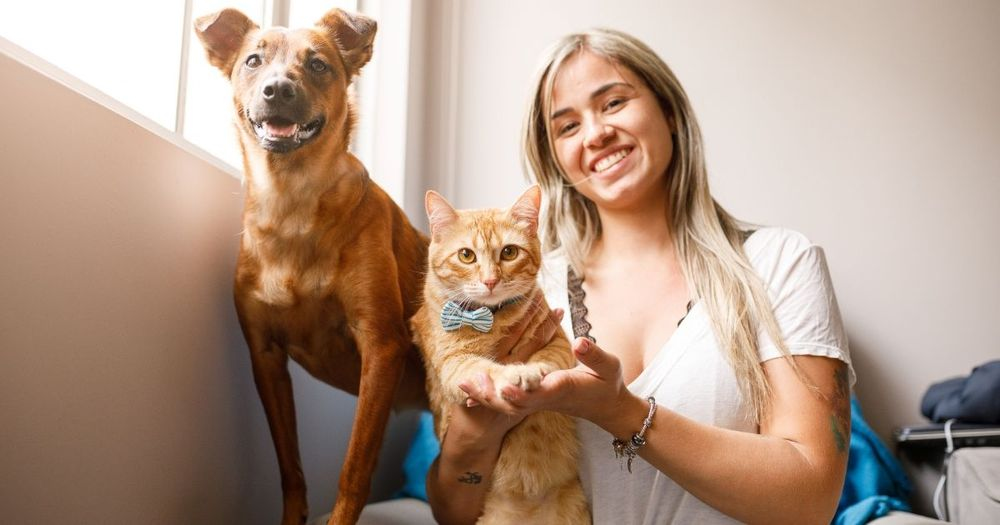
Feeding your pets the proper diet is one of the most important things you can do for their health and well-being. It is also one of the easiest to get wrong, because the bag of kibble in the cupboard was designed to suit the shop, the shelf and the price as much as the animal.
The best guide is the animal itself. A cat is a small hunter built around a mouse. A dog is a wolf that learned to live on our leftovers. Feed each one like the animal it is, and most of the rest follows.
The cat, a strict meat-eater
Cats, in particular, are obligate carnivores, requiring a diet high in meat to thrive. They need nutrients that plants do not supply, taurine and arginine among them, and a cat that runs short of taurine soon shows it. It must come from meat, which makes meat an irreplaceable part of their diet.
The world learned how much that matters in 1987. Thousands of pet cats were dying every year of a failing heart muscle, and nobody knew why. Then 21 cats fed on ordinary commercial cat food were found to have low taurine in their blood and failing hearts. When they were given taurine, their hearts recovered. Cat food today has taurine added.
There is a reason it has to be added. Taurine is partly destroyed by heat when food is baked or boiled, so cooked food can lose what the raw meat had. Raw feeding, or taurine added to the food, covers the need.
A cat cannot be talked into being a vegetarian. Its body never got the memo.
Meat-first does not mean one food forever, though. Cats fed only raw freshwater fish can run short of thiamine, vitamin B1, because some raw fish carry an enzyme that destroys it. Cats fed only liver can get too much vitamin A. Mix meat, fish and organs, the way a hunter's catch would.
What a cat tastes
A cat's tongue tells you what it is for. Cats have about 470 taste buds, against more than 9,000 on a human tongue. A change in one gene leaves them unable to taste sweetness at all. What they do taste well is protein and the savoury taste of meat and fish. Its palate was designed by mice. Tuna is a favourite because it is rich in two savoury compounds that strengthen each other.
Temperature matters too. Cats prefer their food at about 38 °C, the temperature of a fresh kill, and some turn away from cold food straight from the fridge. Let it come up to room temperature first.
Cats left to eat as they like take several small meals a day. They choose food by smell and texture as well, and they respond most to moist food rich in the building blocks of protein, much like meat. Even their drinking is precise: a cat laps about four times a second, curling the water up with the tip of its tongue.
And skip the saucer of milk. Most adult cats cannot digest the sugar in milk well, and it gives them loose stools.
Water is the other half of a cat's meal. Wet food is often more palatable and hydrating, especially for cats, who may not drink enough water alone. A cat on dry food alone needs water within easy reach, all the time.
The dog, a wolf at our table
Dogs are a different story. When the genes of dogs and wolves were compared, dogs turned out to carry changes for digesting starch that wolves lack. They picked them up as wolves became dogs, living beside people and eating what people left behind.
Not every dog took that road. Most dogs carry many copies of the gene for digesting starch, but dogs from Australia and the Arctic have few or none, matching the places where prehistoric farming did not spread.
So a dog is not a wolf. It can digest some starch. Ask a Labrador and it will claim it can digest anything. But it is still built for meat, and the quality of its protein still decides most of what its food is worth. Meat first, with the starch in a supporting role, is the honest version.
Read the label
Always read the ingredient list on pet food packaging. The first few ingredients should be high-quality protein sources like chicken, beef or fish, not by-products or fillers like cornmeal or soy.
Grain-free food deserves a careful look. It sounds like the meat-first answer, but some brands simply replace the grain with potatoes or peas. In 2019 the American food regulator named 16 brands while it investigated more than 500 cases of a heart-muscle disease in dogs eating food sold as grain-free. The link is still being investigated, not proven.
The other side has its own problem. In the same year, a test of dry dog foods made in the United States found mould toxins in 75% of the ones made with feed-grade grain, and in none of the grain-free ones. Low-grade grain that is left to go mouldy is the likely source.
Either way, what matters is not the word on the front of the bag, but how much real meat is in it.
Cheap plant protein has done worse than thin out the food. In March 2007, many brands of cat and dog food were recalled across North America, Europe and South Africa after pets went into kidney failure. Wet foods made with wheat gluten from a single Chinese company had been contaminated with the industrial chemicals melamine and cyanuric acid, and contaminated rice protein and corn gluten turned up later. By the end of that month, more than 100 deaths had been reported among nearly 500 cases, and the true toll may have run into the thousands.
Lean lives longer
One feeding test followed 48 Labradors for their whole lives. They were put into pairs at eight weeks old, and one dog in each pair got 25% less food than its partner. The leaner dogs weighed less and carried less fat. They lived longer, and the long-term illnesses of old age came later. Love is not measured in scoops.
Some dogs find staying lean harder than others. In Labradors, a change in one appetite gene, called POMC, turns up in about one gene copy in eight. Dogs that carry it are heavier, fatter and more driven by food, and the only other breed found with it is a close cousin, the flat-coat retriever. So the begging may be real hunger. The bowl still has to decide.
A pet counts as obese at 20% or more above its ideal weight, and the extra weight brings joint disease, diabetes and cancer with it. Regularly monitor your pet's health, weight and energy levels. In a dog at a good weight, you can feel the ribs easily under a very thin layer of fat without seeing them, and see a waist from above.
Treats count as food. A handful of dried meat between meals is still dinner. A single-ingredient treat such as at least tells you exactly what it is.
Raw, honestly
Raw feeding, meat and bones as a dog or cat would find them, has a devoted following, and the logic of feeding a carnivore meat is sound. But raw diets also come with risks, such as bacterial contamination. When 25 commercial raw diets for dogs and cats were tested, a fifth carried Salmonella and nearly two-thirds carried E. coli. Some raw foods are treated with high pressure, which kills most bacteria, though not all.
The risk is to the people in the house as much as to the pet. If you feed raw, treat it like raw meat in your own kitchen: separate boards and bowls, hot washing, and clean hands, above all around children. Stainless steel bowls that go in the dishwasher, such as these , make the hot washing easy.
What not to share
Some of the food on our plates is poison to them.
Chocolate. Dogs and cats break down theobromine, a stimulant in chocolate, far more slowly than we do. It can kill a dog, and the poisonous amount for a cat is even lower. Share the walk, not the dessert.
Grapes and raisins. In dogs they can cause sudden kidney failure. Why is still a puzzle. In one year, about 140 cases reached an American animal poison centre, 50 dogs fell ill and seven died. One theory blames the tartaric acid in grapes, because dogs react the same way to cream of tartar and tamarind, but the cause is still considered unknown.
Onions and garlic. Both are toxic to dogs and cats.
Xylitol. The sweetener in sugar-free gum and sweets is poisonous to dogs. 10 Eye-Opening Benefits of Cutting Out Sugar, linked below, has more on sweeteners.
Cooked bones and bone treats. In 2017 the American food regulator warned against processed bone treats, smoked or baked and sold in packets, after reports involving about 90 dogs, around 15 of which died. Choking, blocked guts and cuts in the mouth were among the problems. It has also warned against cooked chicken bones and the big bones from a ham or roast.
If your pet eats any of these, call your vet straight away.
Where pet food began
Pet food is younger than it looks. For most of history, dogs ate what people gave them. Around the year 70, the Roman writer Columella advised barley meal mixed with whey for farm dogs, or wheat bread with the liquid from cooked beans, served warm, "for boiling creates rabies". The Avesta, the holy book of ancient Persia, written down between 224 and 651, was plainer: "Bring ye unto him milk and fat with meat; this is the right food for the dog."
Bought pet food came much later. In the mid-1800s an American called James Spratt, living in London, watched dogs around a shipyard eating discarded biscuits. Soon after, he sold the first food made specifically for dogs, from wheat meal, vegetables and meat.
Cats waited longer. In 19th-century London they were fed horse meat sold by cats' meat men and women, who walked fixed routes and served a few hundred households each, followed by mewing cats. One estimate in 1851 put London's cats at 300,000. By the end of the century, Spratt's was selling cat food too, to replace the boiled horse meat that cats had been fed until then.
The dog biscuit started as a shipyard's leftovers. The habit of feeding pets from a bag is less than two centuries old. Marketing has been feeding dogs ever since.
The animal in front of you
A diet that works well for a young, active dog may not be suitable as it ages and slows down. A kitten, a lazy indoor cat and an old tom all need different amounts, even from the same food. Watch the animal, its weight, its coat, its energy, and let it tell you.
Tonight, turn the bag over and read the first three ingredients.
Wondering what your pet does for you? Why Petting an Animal Calms You and Looking Doesn't — calmer in ten minutes, more movement, more people, and what owning one really costs.
Is the sugar-free gum in your bag safe around the dog? 10 Eye-Opening Benefits of Cutting Out Sugar and Choosing Healthier Sweeteners — what counts as sugar, the "healthier" sweeteners one by one, and how to cut back.
Know someone whose dog gets a bit of everything from the table? Send them this, before the chocolate comes out.
Disclaimer: This article is general information. For advice about your own pet's health or diet, talk to your vet.
Affiliate Disclosure: This article contains affiliate links. As an Amazon Associate, All For Life earns from qualifying purchases, at no extra cost to you. We only link to products we would recommend without the commission.
Sources
Wikipedia. Cat food. en.wikipedia.org
Wikipedia. Taurine. en.wikipedia.org
Pion PD, Kittleson MD, Rogers QR, Morris JG (1987). Myocardial Failure in Cats Associated with Low Plasma Taurine: a Reversible Cardiomyopathy. Science 237(4816):764–768. doi.org/10.1126/science.3616607
Wikipedia. Thiaminase. en.wikipedia.org
Wikipedia. Cat. en.wikipedia.org
Axelsson E, Ratnakumar A, Arendt ML, et al. (2013). The genomic signature of dog domestication reveals adaptation to a starch-rich diet. Nature 495(7441):360–364. doi.org/10.1038/nature11837
Arendt M, Cairns KM, Ballard JWO, et al. (2016). Diet adaptation in dog reflects spread of prehistoric agriculture. Heredity 117(5):301–306. doi.org/10.1038/hdy.2016.48
Wikipedia. Dog food. en.wikipedia.org
Wikipedia. 2007 pet food recalls. en.wikipedia.org
Kealy RD, Lawler DF, Ballam JM, et al. (2002). Effects of diet restriction on life span and age-related changes in dogs. Journal of the American Veterinary Medical Association 220(9):1315–1320. doi.org/10.2460/javma.2002.220.1315
Raffan E, Dennis RJ, O'Donovan CJ, et al. (2016). A Deletion in the Canine POMC Gene Is Associated with Weight and Appetite in Obesity-Prone Labrador Retriever Dogs. Cell Metabolism 23(5):893–900. doi.org/10.1016/j.cmet.2016.04.012
Wikipedia. Obesity in pets. en.wikipedia.org
Wikipedia. Raw feeding. en.wikipedia.org
Wikipedia. Theobromine poisoning. en.wikipedia.org
Wikipedia. Grape toxicity in dogs. en.wikipedia.org
Wikipedia. Onion. en.wikipedia.org
Weaver J (2017). Processed bone treats may be deadly for dogs, FDA warns. NBC News, 28 November. nbcnews.com