
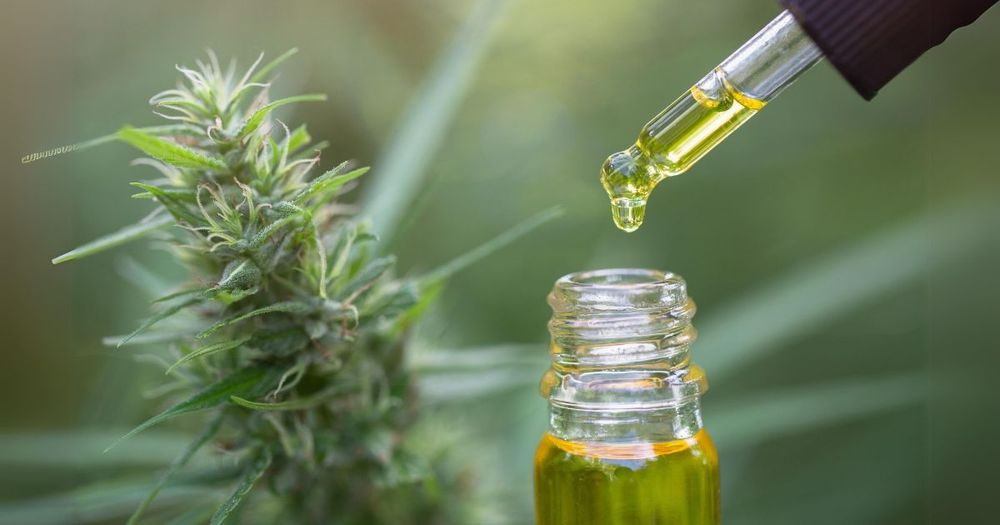
Forty-three healthy adults took a few drops of oil under the tongue, twice, on two different days. Both times it was plain hemp seed oil with no CBD in it at all. On one of those days, they were told it contained CBD.
Then they were put through a deliberately stressful lab test. On the "CBD" day, they felt more sedated, and their heart rhythms shifted the way they do when the body braces for stress. And the people who already believed that CBD calms anxiety reported feeling less anxious. From an oil with no CBD in it. Kitchen oil with a good story.
That is the first thing to know about CBD oil. Belief does a lot of the work, and the marketing knows it.
The second thing is that CBD is not nothing. For one narrow use, it has passed the toughest tests there are. For most of what the bottles promise, it has not been shown to work at all, and it is not as harmless as the labels suggest.
What CBD is
CBD, short for cannabidiol, is one of more than 100 compounds in the cannabis plant. Unlike THC, its better-known cousin, it does not get you high. For a product made from cannabis, that is quite a selling point. The shared plant is why CBD was lumped together with recreational cannabis for years. The missing high is why it now turns up in everything from oils to gummies.
It is not new. Cannabidiol was first examined in 1940, from wild hemp in Minnesota and cannabis resin from Egypt, and its structure was worked out in 1963. The plant itself reached Western medicine a century earlier. William O'Shaughnessy, an Irishman working in Calcutta from 1833, tried cannabis there on the muscle spasms of tetanus and rabies, which it eased without curing, and brought Cannabis indica back to England in 1841.
Your body makes its own cannabis-like chemicals. The first one found was named anandamide, from the Sanskrit ananda, meaning joy, bliss or delight. These chemicals and the receptors they act on form a signalling network involved in pain, mood, sleep, appetite and the immune system.
That is where the big marketing story starts. Stress, poor diet and modern life, it says, leave this system "depleted", and CBD tops it up. The idea has a name, clinical endocannabinoid deficiency, and it is exactly that: an idea. It was first proposed in 2001, and its own champion still describes it as a hypothesis and a theory. It has not been shown to be a real, measurable condition that CBD corrects. A shortage nobody can measure is a very convenient thing to sell a cure for.
1. Epilepsy: the real result
Here CBD has earned its place.
The story came before the tests. A high-CBD strain called Charlotte's Web was named after Charlotte Figi, a girl with Dravet syndrome whose parents reported fewer seizures once she started on it. Her story was featured in CNN's 2013 documentary Weed, and demand for high-CBD products took off. One of the first such strains had been nicknamed "Hippie's Disappointment", because it could not get anyone high. Marketing has rarely had a better origin story.
Then came the tests. Dravet syndrome is a severe childhood epilepsy, with seizures that resist the usual drugs. In a test with 120 children and young adults, half added CBD to their usual treatment and half added a placebo. With CBD, the number of convulsive seizures a month fell from a median of 12.4 to 5.9. With placebo, it barely moved, from 14.9 to 14.1.
Lennox-Gastaut syndrome is another. In 171 people with it, drop seizures, the sudden falls, fell by a median of 43.9% with CBD, against 21.8% with placebo.
On the strength of results like these, the FDA approved a CBD medicine, Epidiolex, for the two syndromes in 2018. In 2020, the approval was widened to seizures from a third rare condition, tuberous sclerosis complex.
The same tests also showed the cost. In the Lennox-Gastaut test, 86% of the people taking CBD had side effects, against 69% on placebo: diarrhoea, sleepiness, fever, poor appetite and vomiting. And 14% of the CBD group stopped because of them, against 1% on placebo.
So CBD is a real medicine, for a handful of rare epilepsies, at medicinal amounts, under supervision. That is a long way from a few drops for general wellness.
2. Anxiety: promising, and small
The anxiety claim rests on far less. The best-known human test gave 24 people with untreated social anxiety either one dose of CBD or a placebo before a simulated public speech. The CBD group felt less anxious, thought more clearly and was less uncomfortable while speaking.
That is interesting. It is also 24 people, one dose, one speech. You would not buy a car on the strength of one test drive.
Then there is the clinic that gave CBD to 72 patients alongside their usual treatment. Anxiety scores fell in the first month for 79% of them, and stayed down. There was no comparison group, so there is no way to know how much of that was CBD, how much was the usual treatment, and how much was the hemp oil effect from the start of this article.
People often say CBD calms them without leaving them feeling "out of it". Some of that is real. Some of it is belief. Nobody yet knows the split.
If calm is what you are after, Why Most Stress Supplements Fail (And the 9 Worth a Look), linked below, has the options with better evidence behind them, including L-theanine, the amino acid from tea leaves that eased stress and anxiety across nine tests. carries an independent NSF certificate.
3. Sleep: unclear
The same clinic tracked sleep. It improved in the first month for 67% of the patients and then went up and down over the following months. Again, no comparison group.
Natural Remedies for Insomnia: Match the Remedy to the Reason puts it plainly: the picture is still muddy, and much of the good news comes from products that also contain THC. For a mind that races at bedtime, by Colleen Carney and Rachel Manber is a practical guide to quieting it.
4. Pain: not shown
Pain relief is the big claim. When it was put to a proper test, it did not hold.
In one test, 136 people with hand osteoarthritis or psoriatic arthritis, still in moderate pain despite their treatment, took CBD or a placebo every day for 12 weeks. At the end, the two groups' pain was the same. A big drop in pain came for 22% of the CBD group and 21% of the placebo group. The placebo did exactly as well, and it was cheaper.
Taken as a whole, the evidence for CBD in pain, anxiety, addiction, psychosis and movement disorders is still not good enough to say that it works. For joints that hurt, by Scott Hogan is a practical guide to rebuilding them with movement and strength.
5. Inflammation, skin, heart, brain: the lab is not the body
The original list goes on: inflammation, bowel disease, acne, eczema, wrinkles, blood pressure, heart disease, Alzheimer's, Parkinson's, concussion.
Most of this comes from cells in dishes and from animals. Even the skin results come from pig skin in a dish and from mice. A compound that calms an inflamed cell in a lab may never reach that cell in your body, at that strength, without side effects. Plenty of promising lab results end there. For every item on that list, there are still no good tests in people showing that CBD treats it. A cell in a dish is a very easy patient.
The liver and your other medicines
"Natural" does not mean gentle on the liver. Arsenic is natural too.
In the epilepsy tests, raised liver enzymes were one of the warning signs. Then 16 healthy adults were given the amount of CBD used in the epilepsy medicine for about three and a half weeks. Seven of them had liver enzymes above the normal range. In five, the rise was large enough to meet the international definition of drug-induced liver injury. All the rises began within two to four weeks.
In 2023, the FDA concluded that the usual rules for foods and supplements are not fit for CBD. It listed the reasons: possible harm to the liver, interactions with certain medicines, and possible harm to the male reproductive system, with particular concern for children and for pregnancy.
The interactions matter most for anyone on regular medication. CBD is processed by the liver, and it can change how other drugs are handled there. Why Most Stress Supplements Fail, linked below, also has what supplements clash with and why to add only one at a time.
What is in the bottle
Now the bottle itself, starting with the law. In the United States, the 2018 Farm Bill took hemp and its extracts, CBD included, off the list of controlled substances. Selling CBD as a medicine, or as an ingredient in a supplement, still breaks FDA rules. The result is a shelf full of products that are legal to sell and approved by nobody.
The simplest check there is, buying the products and testing them, has been done with CBD.
Eighty-four CBD products from 31 companies were bought online and analysed. Only 26 held roughly the amount of CBD the label said. Thirty-six held more, and 22 held less. And 18 of the 84 contained THC, the compound that gets you high, in amounts the testers warned could be enough to cause intoxication or impairment, especially in children. THC is also what workplace drug tests look for. And sport tests for it. CBD has been taken off the World Anti-Doping Agency's banned list, and UK Anti-Doping says it is permitted, "though the intended benefits are unclear and not backed by clinical evidence". THC and every other cannabinoid are still banned in competition, so for an athlete, a mislabelled bottle can cost a result.
It matters on the road as well. Twenty-six occasional cannabis users drove 100 km on a public road after inhaling vaporised cannabis that was rich in THC, rich in CBD, an even mix, or a placebo. With the THC-rich and mixed cannabis, they weaved more within their lane in the first hours. With the CBD-rich cannabis, they drove no worse than on placebo, though the test could not rule out a smaller effect. CBD itself did not impair their driving. The THC hiding in a mislabelled bottle might. And heat can make THC out of CBD: at around 250–300 °C, some of it converts, so a CBD vape is not guaranteed to be free of THC.
Watch the word "hemp" too. Hemp seed oil is pressed from the seeds, which carry no THC, and it is not CBD oil: the CBD-free oil in the test at the start of this article was hemp seed oil. A bottle sold as "hemp oil" with no cannabidiol figure on the label may be a cooking oil at a CBD price.
So the label is often a guess, in more ways than one. You would not accept that from a petrol pump. Why Most Stress Supplements Fail, linked below, has the seals that mean someone independent has tested what is inside, and the printed claims that mean nothing.
How you take it changes things too. Swallowed on an empty stomach, only about 6% of the CBD reaches the blood. Taken with food, the share is several times higher. The same bottle can do very different things depending on whether you take it with breakfast.
If you still want to try it
Some people will, and that is their call. If so, a few checks make it safer.
Look for an independent test. A certificate of analysis from an outside lab, matched to the batch number on your bottle, showing how much CBD it holds and whether it contains THC.
Know what "full-spectrum" means. It means the product carries other compounds from the plant, including THC. It is sold as stronger. That has not been shown, and the THC can show up on a drug test.
Check your medicines. If you take anything regularly, check whether CBD affects it before you start, and stop and get advice if you feel unwell while taking it.
Leave it out if you are pregnant or breastfeeding, and keep it away from children.
And for the dog? CBD products for pets are easy to find, and as of December 2020 there was no registered veterinary CBD medicine in any major region. What is on sale are over-the-counter products of uneven quality. In some tests, dogs with arthritis were more active on CBD-rich food supplements, which is a start, and not much more.
Hype or healing?
Go back to the hemp oil with no CBD in it. It calmed the people who believed in it, and that is most of what the CBD industry is selling: a feeling, a hope, a few drops of belief. Belief is the cheapest ingredient in the bottle, and the most expensive one to buy.
For a handful of rare epilepsies, CBD is healing, and it has the tests to prove it. For almost everything else on the bottle, it is hype, and some of the risk is real. CBD is not a quick fix, and for most of what it promises, it is not a fix at all.
Before you buy a bottle, find its lab certificate, and if you cannot find one, put it back.
Bought CBD to take the edge off stress? Why Most Stress Supplements Fail (And the 9 Worth a Look) — which ones have evidence behind them, which are marketing, and how to tell a bottle you can trust.
Need calm right now, not in a bottle? Emergency Stress Relief: What to Do When You're Completely Overwhelmed — what to do in the moment, when the stress is too much.
Know someone with a cupboard full of CBD gummies? Send them this before they buy the next bottle.
Disclaimer: This article is general information. For advice about your own health, talk to a qualified health professional. If you take any regular medication, are pregnant or breastfeeding, or have a liver condition, get advice before trying CBD.
Affiliate Disclosure: This article contains affiliate links. As an Amazon Associate, All For Life earns from qualifying purchases, at no extra cost to you. We only link to products we would recommend without the commission.
Sources
Spinella TC, Stewart SH, Naugler J, Yakovenko I, Barrett SP (2021). Evaluating cannabidiol (CBD) expectancy effects on acute stress and anxiety in healthy adults: a randomized crossover study. Psychopharmacology 238(7):1965–1977. doi.org/10.1007/s00213-021-05823-w
Wikipedia. Cannabidiol. en.wikipedia.org
Wikipedia. William Brooke O'Shaughnessy. en.wikipedia.org
Wikipedia. Anandamide. en.wikipedia.org
Russo EB (2016). Clinical Endocannabinoid Deficiency Reconsidered: Current Research Supports the Theory in Migraine, Fibromyalgia, Irritable Bowel, and Other Treatment-Resistant Syndromes. Cannabis and Cannabinoid Research 1(1):154–165. doi.org/10.1089/can.2016.0009
Wikipedia. Charlotte's Web (cannabis). en.wikipedia.org
Devinsky O, Cross JH, Laux L, et al. (2017). Trial of Cannabidiol for Drug-Resistant Seizures in the Dravet Syndrome. New England Journal of Medicine 376(21):2011–2020. doi.org/10.1056/NEJMoa1611618
Thiele EA, Marsh ED, French JA, et al. (2018). Cannabidiol in patients with seizures associated with Lennox-Gastaut syndrome (GWPCARE4): a randomised, double-blind, placebo-controlled phase 3 trial. The Lancet 391(10125):1085–1096. doi.org/10.1016/S0140-6736(18)30136-3
Bergamaschi MM, Queiroz RHC, Chagas MHN, et al. (2011). Cannabidiol Reduces the Anxiety Induced by Simulated Public Speaking in Treatment-Naïve Social Phobia Patients. Neuropsychopharmacology 36(6):1219–1226. doi.org/10.1038/npp.2011.6
Shannon S, Lewis N, Lee H, Hughes S (2019). Cannabidiol in Anxiety and Sleep: A Large Case Series. The Permanente Journal 23:18-041. doi.org/10.7812/TPP/18-041
Williams JL, Everett JM, D'Cunha NM, et al. (2020). The effects of green tea amino acid L-theanine consumption on the ability to manage stress and anxiety levels: a systematic review. Plant Foods for Human Nutrition 75(1):12–23. doi.org/10.1007/s11130-019-00771-5
Vela J, Dreyer L, Petersen KK, et al. (2022). Cannabidiol treatment in hand osteoarthritis and psoriatic arthritis: a randomized, double-blind, placebo-controlled trial. Pain 163(6):1206–1214. doi.org/10.1097/j.pain.0000000000002466
Watkins PB, Church RJ, Li J, Knappertz V (2021). Cannabidiol and Abnormal Liver Chemistries in Healthy Adults: Results of a Phase I Clinical Trial. Clinical Pharmacology & Therapeutics 109(5):1224–1231. doi.org/10.1002/cpt.2071
U.S. Food and Drug Administration (2023). FDA Concludes that Existing Regulatory Frameworks for Foods and Supplements are Not Appropriate for Cannabidiol, Will Work with Congress on a New Way Forward. fda.gov
Bonn-Miller MO, Loflin MJE, Thomas BF, et al. (2017). Labeling Accuracy of Cannabidiol Extracts Sold Online. JAMA 318(17):1708–1709. doi.org/10.1001/jama.2017.11909
Arkell TR, Vinckenbosch F, Kevin RC, et al. (2020). Effect of Cannabidiol and Δ9-Tetrahydrocannabinol on Driving Performance: A Randomized Clinical Trial. JAMA 324(21):2177–2186. doi.org/10.1001/jama.2020.21218
Wikipedia. Hemp oil. en.wikipedia.org