
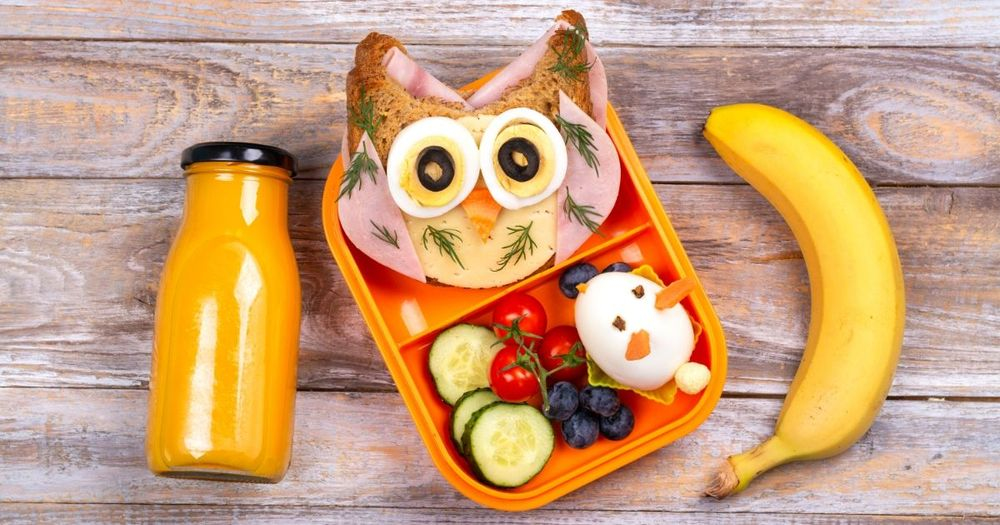
At nine child-care centres in Texas, someone went through 705 packed lunches with a temperature gun, an hour and a half before the children sat down to eat them. Every lunch held at least one food that needed keeping cold. Of the 1,361 perishable items, 22 were cold enough to be safe. That is 1.6%. Even the lunches packed with several ice packs were mostly too warm.
What went into those lunches had been thought about. The hours in between had not. That is the part of the job no recipe mentions.
So a school lunch has two jobs. It has to be food our children will eat, somewhere between a fussy appetite and a busy morning, and it has to arrive at lunchtime in a state worth eating. Here are seven school lunch ideas built on meat, fish and eggs, each with the time it takes on the morning itself, and then how to keep them cold, or hot, until the bell.
1. Cold roast drumsticks (2 minutes)
When we roast a chicken for dinner, we roast four extra drumsticks alongside it. Rub them with butter or lard and salt, roast them until the skin is crisp and brown, and cool them in the fridge overnight. In the morning they go straight into the box, cold.
Drumsticks come with their own handle, which matters at seven years old. Food with a handle feels like a treat at that age. Keep the skin on. It is the best part, and it is usually the part that gets eaten first.
2. Meatballs in a flask (5 minutes)
At the weekend, mix minced beef, or beef and pork, with an egg, salt and whatever herbs our children will put up with. Roll it into small balls, brown them in tallow, such as , and freeze them in lunch-sized portions.
On a school morning, heat a portion through in a pan with a spoonful of the fat. While it heats, fill a food flask, such as , with boiling water and let it stand. Pour the water away, tip the hot meatballs in and close the lid quickly. A warmed flask holds its heat far longer than a cold one, and food that goes in piping hot never spends the morning lukewarm.
The flask began in a laboratory. In 1892 James Dewar needed to hold a metal called palladium at a steady temperature while he measured it, so he built one chamber inside another and pumped most of the air out of the gap between them, leaving the heat almost nowhere to go. He never patented it. In 1904 two German glassblowers, Reinhold Burger and Albert Aschenbrenner, made a sturdier version for keeping drinks hot or cold, and called it Thermos.
3. Roll-ups, the wrap without the wrap (3 minutes)
The old trouble with wraps was that they went soggy, and the old fix was a good one: pack the fillings separately and let our child build it at lunchtime. We keep the idea and drop the wrap.
Pack slices of good ham or cold roast beef, a few sticks of cucumber or a gherkin or two, and a small pot of soft butter. At lunchtime they spread the slice, lay the stick across one end and roll it up. It is a sandwich with the bread taken out, and building it is half the fun. And there is nothing left to go soggy.
The sandwich itself began with roast beef. It is named after John Montagu, the 4th Earl of Sandwich, who is said to have asked for roast beef between two pieces of toasted bread during long card games, so that he could eat without leaving the table. The roll-up keeps his beef and leaves out the bread.
4. Bacon and egg muffins (no time on the day)
These are the weekend mini muffins, rebuilt. Fry chopped bacon in its own fat and divide it between the holes of a greased muffin tin, with a little chopped pepper or spring onion if our children will eat it. Pour beaten egg over the top, about one egg to each hole, and bake until set all the way through.
Cool them, freeze them, and put one in the box straight from the freezer. It thaws by lunchtime, and while it thaws it keeps the food beside it cold. Lunch and ice pack, in one.
5. The bento box (4 minutes)
The bento box earned its place in the old version of this list, and it keeps it. Compartments let a child graze, a little of several things: two boiled eggs, peeled at home, a few slices of salami, sticks of cucumber, carrot and pepper, and a small pot of soured cream with chives to dip them in.
Japan has been packing lunches to carry for a long time. In the Kamakura period, in the 12th century, people carried hoshi-ii to work, "dried meal", cooked rice dried so that it kept, in a small bag. By the Edo period, travellers carried a koshibentō, a "waist bento". The box we pack keeps the old idea, food made at home to be eaten somewhere else, and fills it with meat, eggs and fish.
The salami is the useful one. It is a dry-cured sausage, made to keep, and the bacteria that spoil fresh meat do not readily grow in it. Boil six eggs on a quiet evening, as 7 Healthier Snack Swaps, linked below, suggests, and the box is four minutes' work.
6. Last night's chicken (5 minutes)
Leftovers are the easiest lunch of all. Pull the meat off last night's roast chicken, skin and all, chop it with a stick of celery and stir it through mayonnaise. Pack it in a pot with a few crisp lettuce leaves to scoop it up with, and do it the night before, so the morning stays clear.
Then read the jar. Shop mayonnaise can be as much as 80% oil, usually soybean, rapeseed, sunflower or corn. Where Seed Oils Are Hiding in Your Food — and How to Read Labels Around Them has why the oil matters, the jars sold as avocado oil mayonnaise that put soybean oil first, and where else it turns up in children's food, from toddler snacks to crackers and biscuits. A jar made with avocado oil and nothing else does the same job.
7. Salmon fishcakes (no time on the day)
The least typical of the seven. Drain a tin of salmon, soft bones and all, and mash it with an egg, a spoonful of mayonnaise, salt and a few chopped chives. Shape small cakes, chill them for half an hour so they hold together, and fry them in lard until golden on both sides. They are good cold, and they freeze. The bones mash in without anyone noticing.
None of the seven has nuts in it, which matters more every year. Between about 1.5% and 3% of children in the Western world are allergic to peanuts, the number has been rising, and peanut is a common cause of fatal and near-fatal reactions to food. Check the school's rules before packing anything new.
Keep it cold, or keep it hot
Now the hours in between. In the Texas centres, 39% of the lunches had no ice pack at all and 45% had one, and the food still warmed up. Even with several ice packs, more than 90% of the lunch items were at unsafe temperatures. An ice pack thrown in on top is not enough on its own.
So we work from the other end. Cold food goes in straight from the fridge, the last thing before we leave, into an insulated bag, such as , with the ice pack against the food. A frozen bottle of water does two jobs: it chills the bag through the morning and has thawed into a cold drink by lunch. A frozen egg muffin or fishcake does the same for the food beside it. Salami forgives a warm morning better than cooked chicken does.
And on a hot day, or with a bag that is more fabric than insulation, we send the hot lunch instead: the meatballs, or last night's stew, piping hot in a warmed flask.
Piping hot matters. Clostridium perfringens, a common cause of food poisoning in the United States, makes spores that survive normal cooking, and its outbreaks come from food cooked in large batches and then held at unsafe temperatures, roughly between 4°C and 60°C, most often poultry, beef and pork. A big batch of meatballs is exactly that kind of food. So we cool the batch quickly before it goes into the freezer, and heat each portion until it is steaming all the way through before it goes into the flask.
Leave out the sweet thing
The old version of this list ended on a treat, a granola bar or a yogurt with honey, as if every lunchbox needed one. Nearly half already have one. When 28 papers on US lunches brought from home were pulled together, half the lunches held snacks, 48% held sweets and 31% a sugary drink. Compared with school lunches, they carried less protein and less iron, and more carbohydrate and saturated fat.
The iron is the easiest to put right. 7 Essential Nutrients Your Brain Craves (and Where to Find Them) has why the source matters: the body absorbs anywhere from about 5% to as much as 35% of the iron in food, depending on where it comes from, and the best-absorbed iron comes from animal foods. Red meat in the box is the simplest answer, in the meatballs or the roast beef in the roll-ups.
The drink is the easiest thing to change. Send water. When 58 children aged seven to nine were randomly given extra water or none, the ones who drank it felt less thirsty and did better on tests of visual attention. The Hidden Cost of Your Daily Sugary Drink has what Britain's levy on sugary drinks did for children's teeth: within two years, hospital admissions to have decayed teeth pulled were 12% lower than the trend predicted among children, and 29% lower among the under-fives. It also has the 641 schoolchildren given one drink a day for 18 months, sugary or sugar-free, without knowing which. The sugar-free group gained about a kilo less.
A lunch of meat, eggs and fish does not need a pudding to finish it. If the box has always had something sweet in it, we take it out slowly: a smaller one, then a few days without, then none. Taste shifts as the sugar comes down.
Getting them to eat it
A lunch only counts if it comes home eaten. The Hidden Ingredient That Changes Every Meal You Cook has two findings worth more than any recipe. Children offered a taste of sweet red pepper every day for eight days came to like it and ate more of it, while a sticker reward did less. Repetition beats pressure. And children aged six to ten who cooked lunch with a parent ate 76% more salad and 27% more chicken than children whose parent cooked alone.
So we let them roll the meatballs and crack the eggs into the muffin tin at the weekend. A child who made the lunch has a reason to eat it.
In Japan, school lunch is something the children take part in. The country's first school meals were given in 1889, at an elementary school in what is now the city of Tsuruoka, free, to children who could not bring food from home. Today the children usually serve the food to each other.
The small touches from the old version still work. Cut the ham into stars with a biscuit cutter before it is rolled. In Japan the shapes have gone much further: kyaraben, character bento, arrange the food to look like characters from cartoons and games. Stars are a gentler start. None of us needs to sculpt a cartoon out of ham on a school morning. Tuck a note into one of the compartments. Neither takes a minute, and both say that someone thought about this lunch.
Children have wanted characters on their lunch for a long time. Early in the 20th century they carried their meals to school in old tobacco tins. The first lunchbox with a famous character on it, Mickey Mouse, came out in 1935, and in 1950 a box printed with the television cowboy Hopalong Cassidy sold 600,000 in its first year, at $2.39 each. The box can carry the character. The food inside can stay real.
From 1906 to the lunchbox
British councils were first allowed to feed schoolchildren in 1906, because hungry children struggled to learn. A century later, when the school dinners in Greenwich, in south London, were rebuilt, the number of 11-year-olds reaching level 4 or 5 in science rose by 8%, and in English by 6%. What a child eats at midday shows up in the afternoon.
A packed lunch can do the same, as long as it is real food and it arrives the way it left home, cold or hot, which is more than the lunches in Texas managed.
This week, make one batch at the weekend, meatballs or egg muffins, and freeze it in lunch-sized portions.
Want the whole family cooking? The Cooking Skills That Keep Your Family Healthy and Safe — planning the week, the food safety basics, and how to bring the children into the kitchen.
Need something for the afternoon slump, too? 7 Healthier Snack Swaps to Beat the Mid-Day Slump Without Sugar Crashes — boiled eggs, cold meat and a tin of fish in place of the sweet bar.
Know someone who packs a lunchbox every school morning? Send them this, and a spare ice pack.
Disclaimer: This article is general information. For advice about your child's health or diet, including allergies, talk to a qualified health professional.
Affiliate Disclosure: This article contains affiliate links. As an Amazon Associate, All For Life earns from qualifying purchases, at no extra cost to you. We only link to products we would recommend without the commission.
Sources
Almansour FD, Sweitzer SJ, Magness AA, et al. (2011). Temperature of foods sent by parents of preschool-aged children. Pediatrics 128(3):519–523. doi.org/10.1542/peds.2010-2885
Wikipedia. Vacuum flask. en.wikipedia.org
Wikipedia. Sandwich. en.wikipedia.org
Wikipedia. Bento. en.wikipedia.org
Wikipedia. Salami. en.wikipedia.org
Wikipedia. Mayonnaise. en.wikipedia.org
Wikipedia. Peanut allergy. en.wikipedia.org
Wikipedia. Clostridium perfringens. en.wikipedia.org
Song S, Tabares E, Ishdorj A, Crews M, Dave J (2024). The Quality of Lunches Brought from Home to School: A Systematic Review and Meta-Analysis. Advances in Nutrition 15(8):100255. doi.org/10.1016/j.advnut.2024.100255
Wikipedia. Human iron metabolism. en.wikipedia.org
Edmonds CJ, Burford D (2009). Should children drink more water?: the effects of drinking water on cognition in children. Appetite 52(3):776–779. doi.org/10.1016/j.appet.2009.02.010
Rogers NT, Conway DI, Mytton O, et al. (2023). Estimated impact of the UK soft drinks industry levy on childhood hospital admissions for carious tooth extractions: interrupted time series analysis. BMJ Nutrition, Prevention & Health 6(2):243–252. doi.org/10.1136/bmjnph-2023-000714
de Ruyter JC, Olthof MR, Seidell JC, Katan MB (2012). A trial of sugar-free or sugar-sweetened beverages and body weight in children. New England Journal of Medicine 367(15):1397–1406. doi.org/10.1056/NEJMoa1203034
Wise PM, Nattress L, Flammer LJ, Beauchamp GK (2016). Reduced dietary intake of simple sugars alters perceived sweet taste intensity but not perceived pleasantness. American Journal of Clinical Nutrition 103(1):50–60. doi.org/10.3945/ajcn.115.112300
Wardle J, Herrera ML, Cooke L, Gibson EL (2003). Modifying children's food preferences: the effects of exposure and reward on acceptance of an unfamiliar vegetable. European Journal of Clinical Nutrition 57(2):341–348. doi.org/10.1038/sj.ejcn.1601541
van der Horst K, Ferrage A, Rytz A (2014). Involving children in meal preparation. Effects on food intake. Appetite 79:18–24. doi.org/10.1016/j.appet.2014.03.030
Wikipedia. School lunch in Japan. en.wikipedia.org
Wikipedia. Lunchbox. en.wikipedia.org
Wikipedia. Education (Provision of Meals) Act 1906. en.wikipedia.org
Wikipedia. Jamie's School Dinners. en.wikipedia.org