
Open a jar of chest rub and you know the smell before you read the label. It's the smell of being small and ill, a parent's warm hand rubbing something cool into your chest. That cool, sharp note is camphor, one of the oldest remedies on the shelf.
It's also one of the few household remedies that can put a toddler in hospital within the hour, and a psychiatrist once injected it into patients to set off seizures on purpose. The same crystal soothes in a weak rub and poisons in a strong bottle. Even the cooling it's famous for never happens at all.
What camphor is
Camphor is a waxy white crystal with a smell that hits the back of your throat. It comes from the wood of the camphor laurel, a big evergreen tree from East Asia, and today it's mostly made from turpentine, the oil distilled from pine trees. The two are the same molecule, so "natural" camphor and the factory kind behave exactly alike in your body.
It also skips the liquid stage. A block left in a drawer slowly shrinks as it turns straight into vapour, which is how it keeps moths away, and why a block sitting in a warm room fills the air you breathe.
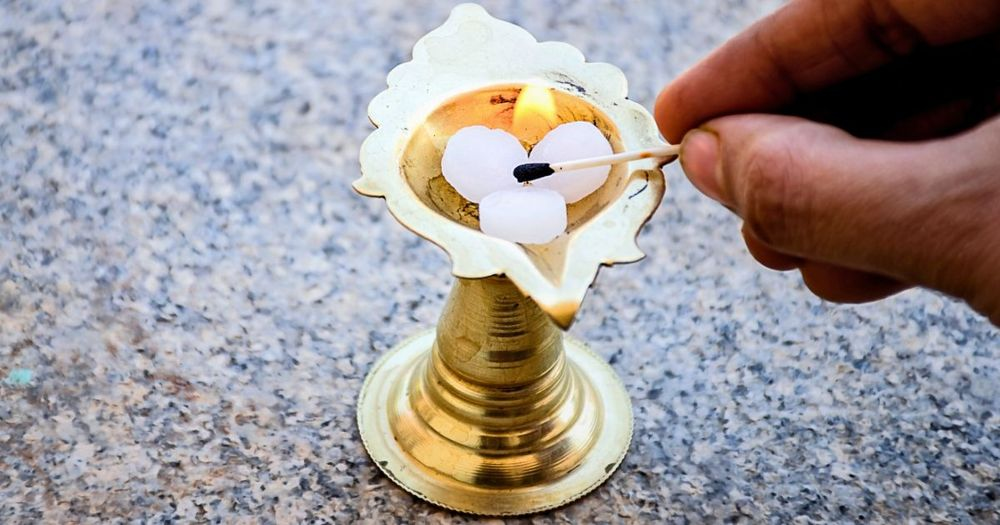
Camphor has had a busy career. It was the ingredient that turned early plastic into celluloid, the material of the first photographic film. A recipe for ice cream from Tang dynasty China includes it. It's burned in Hindu temples during worship and rubbed on chests across the world.
The cooling trick
The chill you feel from camphor is invented by your nerves. Your skin holds tiny sensors that fire when they meet cold or warmth, and camphor switches several of them on directly, so the nerves report a chill that was never there. It also does something subtler: after the first tingle, it quietens one of the sensors that carries burning pain, which is part of why the area feels soothed.
That's the whole basis of camphor as a remedy. It's a counter-irritant, a mild, distracting sensation that crowds out an ache or an itch. The muscle underneath stays exactly as it was. It just hurts less for a while, and for a stiff back or an itchy bite, that can be enough.
The same trick explains the clear nose. Menthol, which usually sits alongside camphor in chest rubs, makes the nose feel clearer while the measured airflow is unchanged. The nerves report cool, fresh air, and the brain believes them.
The claims that fall apart
Camphor gets credited with a long list of powers: boosting immunity, calming anxiety, aiding sleep, clearing acne and fungal infections. None of these has decent evidence behind it in people. Rubbing chest rub on fungal toenails is a popular trick too, and the evidence for it is thin and inconclusive. Breathing camphor over a steam bowl adds risk to a habit that does little for blocked sinuses in the first place. The cooling sensation is the real gift, and for a few jobs it's enough.
Where it earns its place
Night-time coughs in children over two. When 138 children aged 2 to 11 with a cold had a chest rub, plain petroleum jelly or nothing applied to the chest and neck at bedtime, the rub came out best for cough, a blocked nose and sleep, for the children and for their parents. The jelly did no better than nothing. The rub did cause more stinging and redness on the skin.
Aches and itches. Low-strength camphor creams and balms soothe sore muscles, stiff joints and itchy skin through the same cooling trick. They ease the feeling for a while, which is all they promise.
Both work at low strength, on unbroken skin, rubbed in and left there. Every serious problem with camphor starts when one of those three conditions is broken.
Never under the nose
The chest rub belongs on the chest. A toddler developed severe breathing trouble after a rub was put directly under her nose, and when the rub was tested on the airways of ferrets, it made them pour out 63 per cent more mucus and slowed the tiny hair-like brushes that clear it. A baby's airways are narrow enough that a little extra mucus matters.
Habits kept up for months do more damage. When reports of harm from chest rubs were gathered together, eleven described lung damage from oily rub breathed in after long-term use inside the nose, a kind of pneumonia caused by oil in the lungs. Others described eye injuries and camphor poisoning. Nearly all of them came from misuse: heating the rub, swallowing it, or putting it in the nose, mouth or eyes.
So the rules are simple. Chest and neck only, never in or under the nose, never heated, never on the face of a small child, and never for children under two.
Swallowed, it's a poison
In 1934, a Hungarian psychiatrist, László Meduna, injected camphor into patients on purpose to set off seizures, believing a fit could shake loose severe mental illness. It was the forerunner of electroconvulsive therapy. The seizures were the point, which tells you exactly what camphor does to a brain.
Camphor acts fast once it's swallowed. It reaches the brain within minutes and can trigger seizures, sometimes as the first sign of trouble. Poison centres in the US logged around ten thousand camphor swallowings a year, from jars and bottles left within reach. A child who still seems well four hours later is usually in the clear, and the danger is in those first hours.
The strength of the product decides how much harm a mouthful can do. Products stronger than 11 per cent camphor were taken off sale in the United States because of poisonings, while stronger camphorated oil stayed on shelves elsewhere for years after. In India, camphor tablets kept at home for temple rituals are a known cause of seizures in young children.
A low strength is gentle on skin and far less gentle on a curious toddler. A 15-month-old had a seizure after eating about 70 millilitres of an ordinary chest rub, the kind that holds under 5 per cent camphor.
Watch for vomiting, unsteadiness, unusual drowsiness or agitation, twitching and seizures. Eucalyptus oil, sold in little dropper bottles just like camphor oil, does the same to children.
If a child swallows anything containing camphor, call emergency services or a poison helpline straight away, even if they seem fine. Keep every camphor product, mothballs included, sealed and out of reach, and a with a code keeps small hands out of the whole medicine collection.
The bottle problem
Camphor oil sold online in little dropper bottles is another matter. Used neat or barely diluted, it puts far more camphor on the skin and into the air than any chest rub. The usual home tips make it worse: drops on the pillow, drops in a steam bowl, drops dabbed on spots, drops in a diffuser running all night. Camphor soaks through skin, especially broken or irritated skin and a baby's thin skin, and it's breathed in from steam and diffusers. Every one of those habits adds up.
The same goes for camphor burned at home for worship: in a closed room the vapour builds up, so open a window and keep small children back.
A glance at the label shows which kind you're holding. A standard chest rub holds a little under 5 per cent camphor, well below the US ceiling, while camphor oil in a dropper bottle can be close to pure. A ready-made rub or cream at a standard, labelled strength, such as , does the job, and you know exactly how much you're using.
Camphor turns up in more places than the chest rub. Muscle balms like Tiger Balm Red sit right at the 11 per cent ceiling, ultra-strength muscle creams carry it, and so do mothballs and the tablets burned for worship. Anything strong enough to tingle on the skin is strong enough to harm a toddler who eats it.
Who should leave it out
Children under two, and anyone pregnant or breastfeeding, should leave camphor alone. So should anyone with epilepsy, because camphor lowers the threshold for seizures. Keep it off broken, burnt or irritated skin and well away from the eyes. If a rub stings, reddens or blisters the skin, wash it off with soap and water, and if any gets into an eye, rinse it with lukewarm running water for several minutes.
Pets belong on this list too. Camphor is toxic to dogs and cats, swallowed or soaked up through the skin, and cats are the more sensitive of the two. Keep diffusers out of rooms where they sleep, and keep freshly rubbed skin away from a pet that likes to lick.
Respect the jar
Camphor is a real remedy with a narrow lane. In a low-strength rub on the chest of a child over two, or in a cream on a stiff shoulder, it does what it promises. Out of that lane, in a bottle, a mouth or a nostril, it's one of the more dangerous things in the medicine cabinet.
So keep the chest rub on the chest, keep the camphor oil off the pillow, and put every jar well beyond small hands. That way the smell stays a good memory.
Blocked nose on top of the cough? Natural Sinus Relief: What Works, and What Makes It Worse — the fixes that help, the ones that backfire, and why the rinse water matters.
Catching one cold after another? Why You Keep Getting Sick: The Causes of Frequent Colds — what keeps wearing your defences down, and the everyday habits that rebuild them.
Know a parent who reaches for the chest rub every time their toddler coughs? Send them this before the next cold.
Disclaimer: This article is general information. For advice about your own health, talk to a qualified health professional. If anyone swallows camphor, call emergency services or a poison helpline straight away.
Affiliate Disclosure: This article contains affiliate links. As an Amazon Associate, All For Life earns from qualifying purchases, at no extra cost to you. We only link to products we would recommend without the commission.