
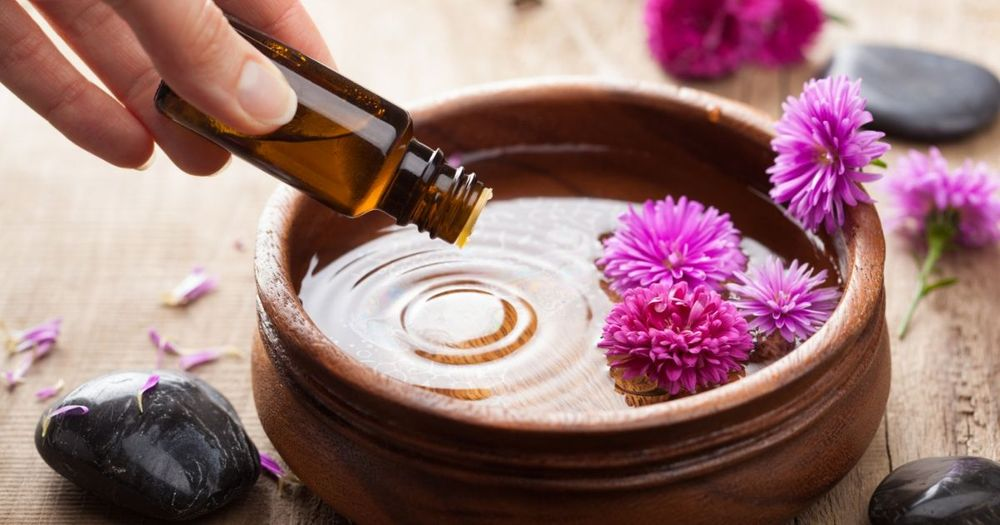
Smell a campfire and you're eleven years old again, sitting too close to the flames with sticky fingers. No photograph does that. No song does it quite as fast. Your nose has a shortcut into the part of you that feels things, and it uses it without asking.
That shortcut is what aromatherapy runs on, and it's more interesting than the brochures make it sound. In a careful test, lemon lifted people's mood even when they had no idea what they were smelling. Lavender calmed people down and also made them slower at memory tasks. And the same smell can register as delicious or disgusting depending on the word printed next to it.
Pick your scents with that in mind and they become a useful tool. Pick them from a list of miracle cures and you'll be disappointed.
Why smell hits your mood first
Every other sense takes the long way round. Sight and sound pass through a sort of relay station in the brain before they reach the areas that handle emotion. Smell skips the queue. The nerves in the top of your nose connect almost directly to the amygdala, the brain's alarm and emotion centre, and the hippocampus, where memories are filed.
You can see it on a brain scan. When people were given a scent tied to a personal memory, their amygdala and memory regions lit up more than for any other cue, including a photo of the same thing. In everyday terms, memories brought back by smell felt more emotional and transporting than the same memory brought back by a picture or a sound. Fresh-cut grass, popcorn and a campfire did more as smells than as images or noises.
Marcel Proust built a seven-volume novel on this shortcut. In In Search of Lost Time, a madeleine cake dunked in tea throws his narrator straight back into childhood, and a memory that ambushes you like that is still called a "madeleine moment".
That's why a scent can change your mood in seconds.
The label in your head
The brochures leave this part out. In one brain-scan test, people smelled the same mixture twice. Labelled "cheddar cheese", it was pleasant. Labelled "body odour", it turned people's noses. Their brain scans changed with the label. Even clean air felt nicer when it was called cheddar.
So what you expect a scent to do shapes what it does. Tell yourself that lavender means bedtime, use it only at bedtime, and it starts to mean bedtime. Call it a trick if you like. It's your brain's own habit, and you can put it to work on purpose.
Scents that lift
Lemon. A reliable mood lifter. In a carefully blinded test, lemon oil lifted positive mood compared with lavender and plain water, whether or not people were told what they were smelling and whether or not they believed in aromatherapy. Stress hormones, blood pressure and pain stayed the same, so think of it as a brighter mood and leave the medicine claims to the brochures. A bowl of cut lemons or a squeeze of peel works too, and for a desk or a bag, a small bottle of and a cotton pad do the same job.
Orange. In a dental waiting room, where nobody's mood is at its best, a gentle scent of orange in the air cut anxiety and lifted mood compared with no scent at all. Lavender did the same. If you want a calmer waiting room at home, before an exam or a hard phone call, orange is a pleasant place to start.
Rosemary. The one for working. "There's rosemary, that's for remembrance," says Ophelia in Hamlet, and the herb still turns up at funerals and war commemorations. When people did memory and attention tests in a room scented with rosemary, the overall quality of their memory improved and they stayed more alert than people in an unscented room, though they were a touch slower. For once, the old saying has a little behind it. A drop of on a tissue by the keyboard is all it takes.
Peppermint. Sharp, cold and bracing, peppermint is the scent for the slump in the middle of a long afternoon. In a room scented with it, people did better on memory tests and felt more alert than people with no scent at all, so the jolt has more behind it than you might think.
Scents that calm
Lavender. The classic calming scent, and it earns the title: in that dental waiting room, it eased anxiety as well as orange. But it calms in both directions. In that rosemary test, people in a lavender-scented room did worse on working memory and were slower to react. Lavender is a scent for winding down, so keep it away from the desk, the exam room and the car. A few drops of on a cotton ball by the bed are enough.
Ylang-ylang. Sweet, heavy and tropical. In the same tests that favoured peppermint, ylang-ylang left people with worse memory and slower thinking, and noticeably calmer. Like lavender, it belongs to the evening and stays away from the desk.
Chamomile and rose. Both are soft, warm scents that suit the evening. The evidence for them is thin, and that's fine. If a scent makes you feel looked after, that feeling is the point.
Frankincense. Resinous and a little smoky, it's the smell of old churches and slow rituals, which is exactly why it suits meditation. It sets a mood, and it does that job well.
Build your own scent library
The scents that move you most are often your own. Your grandmother's soap, the beach you went to every summer, the bakery near your first flat. Those carry an emotional charge no bottle can match, because the memory is yours.
So do the people you love. When 96 women went through a stressful public-speaking test, those who smelled their partner's worn T-shirt felt less stressed before and after it, while a stranger's scent raised their stress hormone. When you're apart, a partner's T-shirt is a library entry no bottle can copy.
Use that. Pick one scent for winding down and keep it for that moment only: the bath, the book, the light off. Fold it into a wind-down routine, with the lights dimmed and the screens put away, and use the same scent every night. Pick a different one for focus and use it only at the desk. Over time, each scent becomes a switch. The label in your head does the rest.
Scent can even help you learn while you sleep. People who learned a memory task with a rose scent in the air, then smelled the same rose again during deep sleep, remembered more the next morning. It did nothing during dreaming sleep, while awake, or if the rose was missing while they learned. A drop on a tissue while you revise and the same scent by the bed is an easy thing to try before an exam. It's the one time your focus scent belongs by the bed.
How to enjoy them
Small amounts and short bursts work best. A drop of oil on a tissue, a pocket inhaler, a cut lemon or a sprig of rosemary on the desk all do the job without filling the house. A diffuser is fine for a short spell in a room with a window open. Essential oils are strong, so dilute them before they touch skin, keep them away from children and pets, and never swallow them.
Think about the people around you, too. In a national US survey, 34.7 percent of adults reported health problems from fragranced products, and 15.1 percent had lost workdays or even a job over fragrance at work. Keep strong scents for your own space, and at a shared desk, stick to an inhaler or a tissue.
Your nose also goes blind to what it lives with. Even a pleasant fragrance fades within minutes of steady sniffing, and people who lived with one scent at home for two weeks became less sensitive to it, an effect that lasted up to two weeks after the scent was gone for most of them. So the diffuser that seems to have stopped working probably still works. Your nose has filed the smell as background. Use scent in bursts, give the air a break, and rotate between a few favourites.
When your sense of smell fades
Losing your sense of smell takes more than flavour. It takes away the shortcut to mood and memory, which is why losing it can leave the world feeling flat.
Viruses are a frequent thief. A cold or flu is one of the commonest causes of a lost or changed sense of smell, and it can take weeks or months to come back. Few treatments help, and smell training has become the mainstay of recovery, because smell can be trained. People with smell loss who sniffed four strong scents, rose, eucalyptus, lemon and cloves, regularly over several months got measurably better at detecting smells, while those who skipped the training stayed where they were.
Take a fading sense of smell seriously, too. In a national sample of 3,005 older Americans, those who had lost their sense of smell were four times as likely to die within the next five years as those who could smell normally. The lost sense works like a warning light on the dashboard, so get it checked.
Follow your nose
A bottle that promises to fix your life is selling something else. What scent can do is quick and real: lift your mood, settle your nerves, sharpen your focus for an hour, or bring back a memory you'd forgotten you had, campfire and all.
Choose two scents this week, one to lift and one to calm. Keep each one for its moment, and let your nose learn the difference.
Want to know what the oils can do for your health? Essential Oils: What They Can Do and How to Use Them Safely — the uses that hold up, and how to stay safe with them.
Lying awake despite the lavender? Chronic Insomnia: Why Trying Harder Keeps You Awake — why effort keeps you awake, and how to retrain the bed for sleep.
Know someone who always ends up in the candle shop? Send them this. Their nose is smarter than the labels.
Disclaimer: This article is general information. For advice about your own health, talk to a qualified health professional. Essential oils are strong: dilute them before they touch skin, never swallow them, and keep them away from children and pets.
Affiliate Disclosure: This article contains affiliate links. As an Amazon Associate, All For Life earns from qualifying purchases, at no extra cost to you. We only link to products we would recommend without the commission.